
LONDON (AP): Foreign ministers from almost three dozen countries will meet Thursday in an effort to exert diplomatic and political pressure to reopen the Strait of Hormuz, a vital shipping route that has been choked off by the U.S.-Israeli war against Iran.
The U.S. is not among the countries attending Thursday’s meeting, which comes after President Donald Trump made clear that he thinks securing the waterway, closed as a consequence of the U.S.-Israeli war on Iran, is not America’s job. Trump has also disparaged America’s European allies for failing to support the war and renewed his threats to pull the U.S. out of NATO.
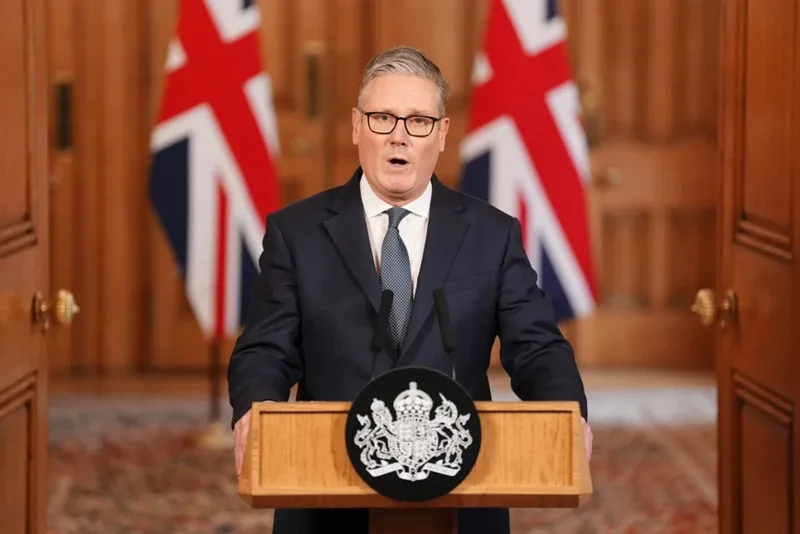
UK Prime Minister Keir Starmer said the virtual meeting chaired by Foreign Secretary Yvette Cooper “will assess all viable diplomatic and political measures we can take to restore freedom of navigation, guarantee the safety of trapped ships and seafarers and to resume the movement of vital commodities.”
Iranian attacks on commercial ships, and the threat of more, have halted nearly all traffic in the waterway that connects the Persian Gulf to the rest of the globe’s oceans, shutting a critical path for the world’s flow of oil and sending petroleum prices soaring.
There have been 23 direct attacks on commercial vessels in the Gulf since the war began on Feb. 28 and 11 crew members have been killed, according to Lloyd’s List Intelligence, a shipping data firm.
Traffic through the strait has slowed to a trickle, with remaining tanker traffic dominated by sanctions-evading tankers carrying Iranian oil, Lloyd’s List Intelligence said in a briefing Thursday. It said a murky operation under which Iran vets who can pass continues to operate as Tehran maintains its chokehold over the key waterway.
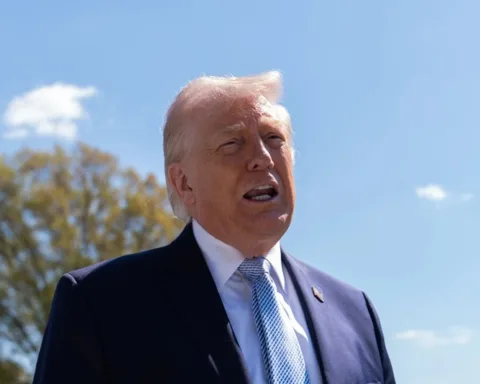
In a televised address on Wednesday night, Trump said countries that depend on oil flowing through the Strait of Hormuz “must grab it and cherish it” — because the U.S. would not.
No country appears willing to try and open the strait by force while fighting rages and Iran can target vessels with anti-ship missiles, drones, attack craft and mines. But Starmer said Wednesday that military planners from an unspecified number of countries will meet soon to work on how to ensure security for shipping “after the fighting has stopped.”
In the meantime, 35 countries including the U.K., France, Germany, Italy, Canada, Japan and the United Arab Emirates have signed a statement demanding Iran stop its attempts to block the strait and pledging to “contribute to appropriate efforts to ensure safe passage” through the waterway.
Thursday’s meeting is considered a first step, to be followed by “working-level meetings” of officials to hammer out details.
Starmer said resuming shipping “will not be easy,” and will require “a united front of military strength and diplomatic activity” alongside partnership with the maritime industry.
The international effort idea has echoes of the international “coalition of the willing” that has been assembled, led by the U.K. and France, to underpin Ukraine’s security after a future ceasefire in that war. The coalition is, in part, an attempt to demonstrate to the Trump administration that Europe is stepping up to do more for its own security.
The urgency of stronger continental defenses has been reinforced by Trump’s renewed suggestion that the U.S. could leave NATO. He said Wednesday that the military alliance had “treated us very badly.”
David B. Roberts, reader in Middle East Security Studies at King’s College London, said international coalition-building efforts are “definitely linked to the wider Trumpian antagonism toward NATO, that other members of NATO are not pulling their weight.
“Without a doubt, this is Britain and France, notably, trying to lead the way, to very visibly show a certain sort of utility” to the Trump administration.
“There’s also the very pragmatic reality that America is an oil exporter,” he added. “The immediate pressures about the fallout of the of the energy blockage in the Gulf, they fall on Europe and of course Asia, far more than America.”
This report is given by Associated Press. The Sen Times holds no responsibility for its content.
Why is the Strait of Hormuz currently closed to international shipping?
The Strait of Hormuz is effectively closed due to the U.S.-Israeli war against Iran, which began on February 28. Iranian forces have launched twenty-three direct attacks on commercial vessels using anti-ship missiles and drones, resulting in eleven fatalities and halting the global flow of oil.
How are world leaders responding to the maritime crisis in the Persian Gulf?
A coalition of thirty-five nations, led by the United Kingdom and France, is employing diplomatic and political pressure to restore freedom of navigation. These countries aim to guarantee the safety of seafarers and resume the movement of vital commodities through coordinated international efforts.
What is the United States’ official position on the Hormuz blockade?
The Trump administration maintains that securing the Strait of Hormuz is not the responsibility of the United States. President Trump has stated that oil-dependent nations must secure the waterway themselves, citing America’s status as a net oil exporter and his dissatisfaction with NATO allies.
What are the economic impacts of the energy blockage in the Gulf?
The blockage has triggered a global energy crisis, characterized by soaring petroleum prices and the disruption of critical maritime trade corridors. While the United States remains insulated as an exporter, the immediate economic pressures fall heavily on the industrial economies of Europe and Asia.
How is the UK positioning itself as a leader in the Hormuz crisis?
UK is spearheading a diplomatic “coalition of the willing” to fill the security vacuum left by U.S. isolationism. By chairing high-level ministerial meetings and coordinating military planners, Britain aims to demonstrate European defense autonomy and provide a “visible utility” to the Trump administration.
What specific measures is the British government taking to restore maritime trade?
Research indicates the UK is pursuing a “united front” strategy that integrates military readiness with maritime industry partnerships. The British government is currently developing a framework for “safe passage” that combines naval escorts with international diplomatic pressure to end Iran’s vetting of commercial traffic.
How does the UK’s response to the Strait of Hormuz crisis impact its relationship with NATO?
Data confirms that Britain is using its leadership in the Gulf to counter threats of a U.S. withdrawal from NATO. By assembling an independent international coalition, the UK is demonstrating that European powers are willing to “pull their weight” in global security without relying on American military assets.