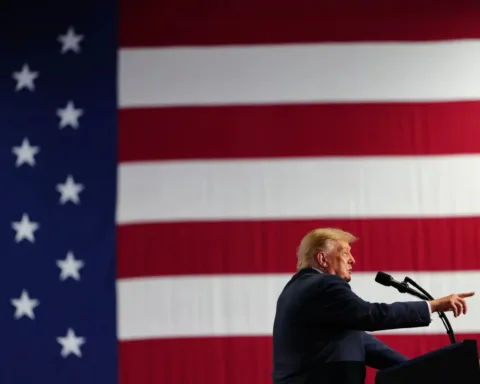

WASHINGTON/CAIRO, April 6 (Reuters) – President Donald Trump threatened to rain “hell” on Tehran if it did not make a deal and reopen the Strait of Hormuz by his Tuesday deadline, as he praised U.S. special forces who rescued an airman in a high-risk mission from deep inside Iran.
The U.S. and Israel have pounded Iran with missiles and airstrikes for more than five weeks to destroy what they said was an imminent threat from the country’s nuclear weapon development programme, ballistic missile arsenal and support for regional proxy militias.
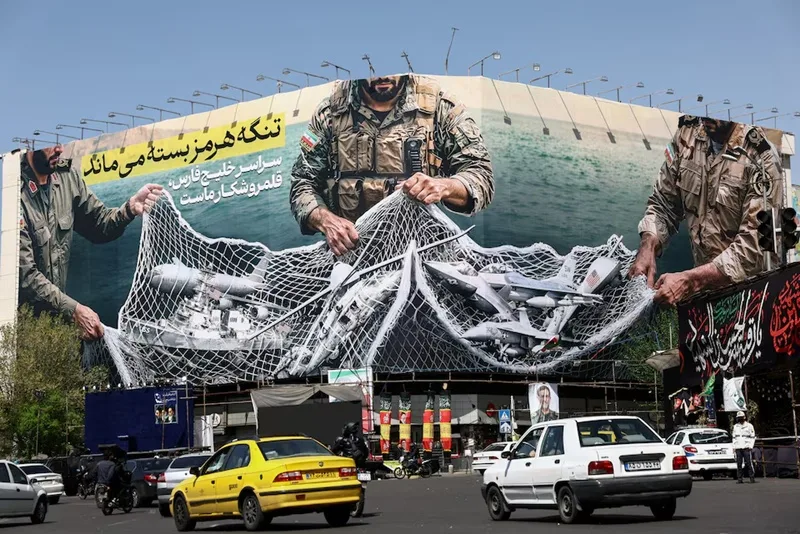
Tehran has effectively closed the Hormuz waterway, a conduit for around a fifth of the world’s oil and natural gas supply, and attacked U.S. military bases and other targets around the Gulf.
Explosions shook Tehran on Monday morning and a U.S.-Israeli strike on a residential building south of the city killed at least 13 people, an official told Iranian state media. Reuters was unable to verify the report.
In a post laden with expletives on his Truth Social platform, Trump on Sunday threatened further strikes on Iranian energy and transport infrastructure that critics say would constitute a war crime.
“Tuesday will be Power Plant Day, and Bridge Day, all wrapped up in one, in Iran,” he said.
“There will be nothing like it!!! Open the Fuckin’ Strait, you crazy bastards, or you’ll be living in Hell – JUST WATCH! Praise be to Allah. President DONALD J. TRUMP”
In the kind of mixed messaging that has baffled supporters, foes and financial markets alike, Trump told Fox News on Sunday that Iran was negotiating, with a deal possible by Monday.
Later on Sunday, Axios reported the U.S., Iran and regional mediators are discussing terms of a potential 45-day ceasefire that could lead to a permanent end to the war, citing four U.S., Israeli and regional sources with knowledge of the talks.
Reuters could not immediately verify the report. The White House and the U.S. State Department did not immediately respond to Reuters’ requests for comment.
The mediators were negotiating a two-phased deal, the report said. The first phase would be a 45-day ceasefire; the second would be an agreement on ending the war.

IRAN CONDEMNS ‘RECKLESS’ US, HITS GULF
Tehran is demanding an end to hostilities and its parliamentary speaker Mohammad Baqer Qalibaf condemned Trump’s threats, saying he was being misled by Israeli Prime Minister Benjamin Netanyahu.
“Your reckless moves are dragging the United States into a living HELL for every single family, and our whole region is going to burn because you insist on following Netanyahu’s commands,” he posted Sunday on X.
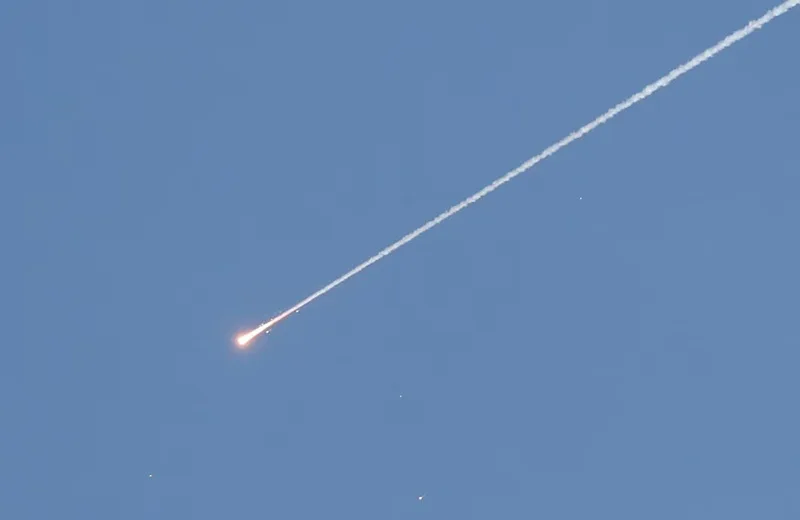
Showing it still had fight despite the U.S.-Israeli pounding, Iran expanded attacks on Gulf energy infrastructure, launching drone and missile strikes on petrochemical facilities in Kuwait, Bahrain and the United Arab Emirates.
The Revolutionary Guards also said on Sunday they hit an Israeli‑linked vessel at Dubai’s Jebel Ali port.
In Kuwait, drones sparked fires and caused “severe material damage” at petrochemical plants operated by affiliates of state oil firm Kuwait Petroleum Corporation, the company said.
The strikes underscored Iran’s ability to sustain cross‑border attacks and disrupt infrastructure across multiple Gulf states, exposing vulnerabilities in energy and maritime hubs.
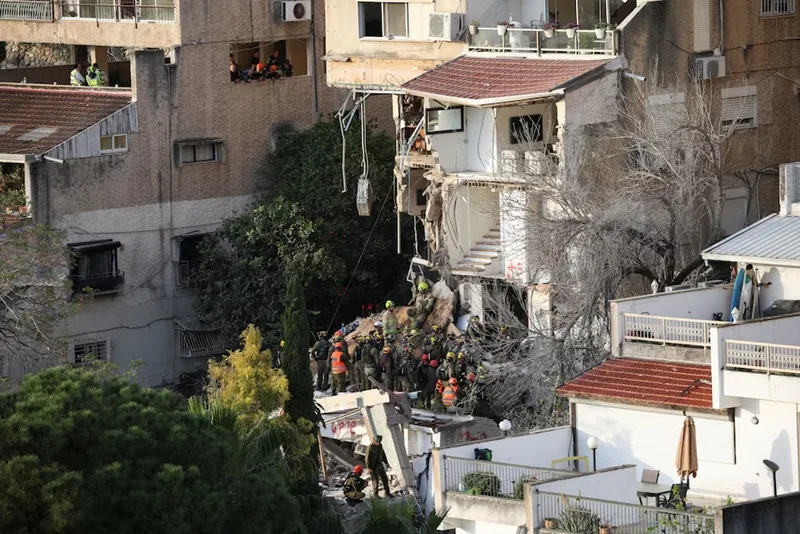
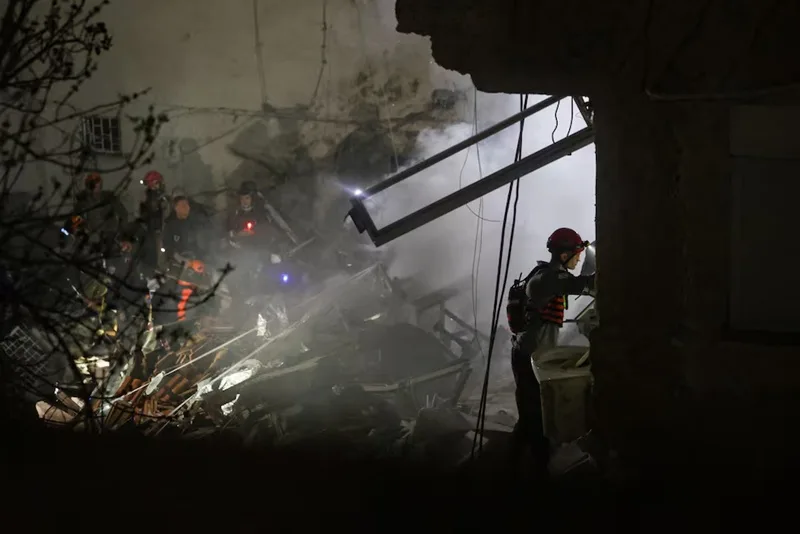
In Israel too, media showed search-and-rescue teams combing debris in the northern city of Haifa on Sunday after an Iranian missile hit a residential building. Israeli paramedics said nine people were being treated, and Israeli media later reported rescuers had recovered two dead from the rubble.
COMMANDO OPERATION
Trump announced the rescue of the airman in the early hours of Sunday, describing the operation as “one of the most daring” such missions in U.S. history.
The airman, the weapons officer of an F-15 jet shot down on Friday, was wounded but “will be just fine”, Trump said in a message on X. The jet’s pilot was rescued earlier.
Under cover of darkness, U.S. commandos slipped deep into Iran, undetected, scaled a 7,000‑foot (2,100-metre) ridge and took the stranded American weapons specialist to safety before dawn on Sunday.
Two MC-130 aircraft that had ferried some of the roughly 100 special operations forces into rugged terrain south of Tehran suffered a mechanical failure and could not take off, a U.S. official told Reuters.
Their commanders made a high-risk decision, ordering additional aircraft to fly into Iran to extract the group in waves.
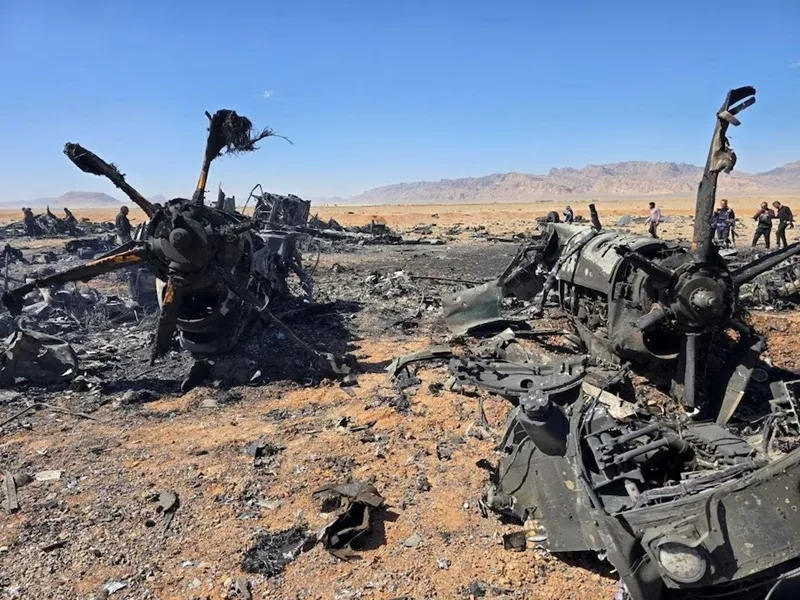
The rescue force was pulled out in stages, and U.S. troops destroyed the disabled MC‑130s and four additional helicopters inside Iran rather than risk leaving sensitive equipment behind.
Iran said several U.S. aircraft were destroyed during the operation.
The war, which opened with U.S. and Israeli air strikes across Iran on February 28, has killed thousands of people, mainly in Iran and Lebanon.
Israeli airstrikes killed another 11 people in Lebanon on Sunday, according to Lebanon’s health ministry.
This report is given by Reuters. The Sen Times holds no responsibility for its content.
What is the current status of the Strait of Hormuz conflict?
Tehran has effectively shuttered the Strait of Hormuz, obstructing approximately 20% of global oil and liquefied natural gas (LNG) maritime traffic. President Donald Trump has issued a Tuesday deadline for the waterway’s reopening, threatening catastrophic kinetic strikes against Iranian energy and transport infrastructure if a diplomatic resolution is not reached.
How are ceasefire negotiations progressing between the U.S. and Iran?
Reports indicate that mediators are facilitating a two-phased diplomatic framework featuring an initial 45-day ceasefire followed by a permanent cessation of hostilities. While President Trump suggested a deal could materialize as early as Monday, conflicting rhetoric persists as both nations maintain high-intensity military operations during the talks.
What occurred during the U.S. special forces rescue mission in Iran?
U.S. special operations forces successfully extracted a wounded F-15 weapons officer from rugged terrain south of Tehran in a high-risk extraction. Despite the mechanical failure of two MC-130 aircraft, which necessitated the tactical destruction of sensitive equipment and additional helicopters, the mission successfully recovered the American personnel.
Which regional energy assets have been targeted in recent strikes?
Iran has expanded its offensive to include petrochemical facilities in Kuwait, Bahrain, and the United Arab Emirates, alongside a maritime strike at Dubai’s Jebel Ali port. These cross-border attacks demonstrate the Iranian military’s ability to penetrate regional “energy infrastructure” and disrupt “maritime hubs” despite five weeks of coalition airstrikes.
What are the “Tuesday Deadline” implications for Iranian infrastructure?
President Trump has designated Tuesday as “Power Plant Day” and “Bridge Day,” signaling a shift toward targeting Iranian dual-use civilian infrastructure if the Strait remains closed. Legal experts and critics suggest that strikes on such “energy and transport” networks could potentially be classified as violations of international humanitarian law.