

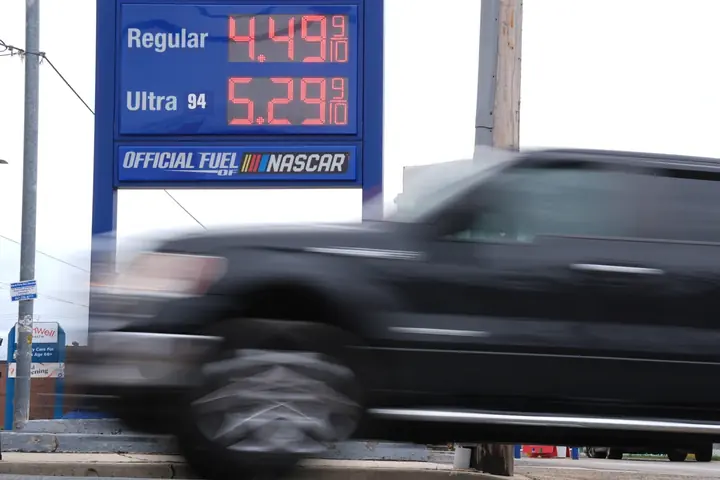
NEW YORK (AP): U.S. gas prices jumped past an average of $4 a gallon for the first time since 2022 on Tuesday as the Iran war pushed fuel prices to soar worldwide.
According to motor club AAA, the national average for a gallon of regular gasoline is now $4.02 — over a dollar more than before the war began. The last time U.S. drivers were collectively paying this much at the pump was nearly four years ago, following Russia’s invasion of Ukraine.
The price is a national average, meaning drivers in some states have been paying well over $4 a gallon for a while now. Prices vary from state to state due to factors ranging from nearby supply to differing tax rates.
Since the U.S. and Israel launched a joint war against Iran on Feb. 28, the cost of crude oil — the main ingredient in gasoline — has spiked and swung rapidly. That’s because the conflict has caused deep supply chain disruptions and cuts from major oil producers across the Middle East.
Table of Contents
Expensive gas could drag economy and drive up other prices
Higher gas prices are impacting consumers and businesses as many households continue to face wider cost of living strains. And as drivers pay more to cover necessities like gas, many may be forced to cut their budgets in other places.
More expensive fuel can also push up other spending, from utility bills to the price of many goods consumers buy each day.
In the immediate future, analysts point to groceries, which have to be restocked frequently and could also see price hikes as businesses’ transportation costs pile up.
But hauling other cargo and packages has also been impacted. The United Postal Service, for example, is seeking a temporary 8% added charge on some of its popular products including Priority Mail.
Diesel, the fuel used for many freight and delivery trucks, is now going for an average of $5.45 a gallon, up from about $3.76 a gallon before the war began, per AAA.
If the war drags on, it’s possible that those prices could tick up even higher. Most tanker movement in the key Strait of Hormuz, where roughly one-fifth of the world’s oil typically sails through, remains at a halt. That’s led to cuts from major producers in the region who have no way of getting their crude to market. Meanwhile, Iran, Israel and the U.S. have all struck oil and gas facilities, worsening supply concerns.
Reserves open in effort to cut prices
In a search for some relief, the International Energy Agency pledged to release 400 million barrels of oil from emergency stockpiles of member nations. That includes the U.S., despite Trump initially downplaying the need for reserve oil.
The Trump administration has also eased sanctions to free up some oil from Venezuela, and temporarily Russia. The White House also says it’s waiving maritime shipping requirements under a more than century-old law, known as the Jones Act, for 60 days.
It’s not yet clear if those efforts will bring relief for consumers. A lot of factors contribute to gas prices.
Refineries buy crude oil in advance, meaning some could be work with more expensive oil for a while, and it will take time for any new supply to trickle down to consumers.
And while steep crude prices are a leading driver behind today’s surge, U.S. gas prices typically tick up a bit at this time of year. More drivers are hitting the road and trying to fuel up while they can, so there’s higher demand. Warming weather also brings a shift to summer blend fuel, which is more expensive to produce than winter blend.
The US is an oil exporter, but it’s still affected by global prices
The U.S., which is a net oil exporter, hasn’t seen as stark a shock as other parts of the world that rely more heavily on fuel imports from the Middle East, notably Asia. But that doesn’t mean America is immune to price spikes.
Oil is a globally-traded commodity. And most of what the U.S. produces is light, sweet crude — but refineries on the East and West coasts are primarily designed to process heavier, sour product. As a result, the country also needs imports.
Escalating geopolitical conflicts have disrupted oil flows and contributed to a surge in gas prices in the past. The U.S. average for regular gasoline climbed to its highest level of more than $5 a gallon in June 2022, nearly four months after the Ukraine war began and world leaders imposed sanctions against Russia, a leading oil producer.
Prices at the pump later fell from that record. Before Tuesday, per AAA data, the national average had stayed below the $4 mark since mid-August of 2022.
Gas prices soar past $4 on average for a gallon of regular in the US, the highest since 2022 – FAQs
Why have U.S. gas prices suddenly jumped over $4 a gallon?
The primary driver is the joint U.S. and Israel war against Iran, which began on February 28, 2026. This conflict has caused massive supply chain disruptions and production cuts across the Middle East, leading to a rapid spike in the price of crude oil, the main ingredient in gasoline.
How does the current price compare to previous years?
At a national average of $4.02 per gallon, prices have risen over a dollar since the start of the war. This marks the first time since August 2022—following the Russian invasion of Ukraine—that American drivers have seen prices cross the $4 threshold.
Why are diesel and shipping costs rising so sharply?
Diesel prices have surged to an average of $5.45 a gallon, up from $3.76 before the conflict. Because diesel powers the majority of freight and delivery trucks, businesses are facing immense transportation costs. This has led to price hikes in groceries and a proposed 8% surcharge on services like UPS Priority Mail.
What is the significance of the Strait of Hormuz in this crisis?
The Strait of Hormuz is a vital maritime chokepoint where roughly 20% of the world’s oil typically flows. Due to the ongoing hostilities, tanker movement has largely halted, preventing major Middle Eastern producers from getting their crude to global markets.
What actions is the U.S. government taking to lower prices?
The Trump administration and the International Energy Agency (IEA) have pledged to release 400 million barrels of oil from emergency stockpiles. Additionally, the U.S. has eased sanctions on Venezuela and Russia and issued a 60-day waiver for the Jones Act to streamline maritime shipping.
Why is the U.S. affected if it is a net oil exporter?
Oil is a globally traded commodity, meaning domestic prices are tied to international market swings. Furthermore, while the U.S. produces “light, sweet” crude, many refineries on the East and West coasts are specifically designed to process “heavy, sour” crude, necessitating continued imports that are now disrupted by the war.
Are there seasonal factors contributing to the price hike?
Yes. Beyond the geopolitical conflict, gas prices naturally trend upward in the spring. Increased demand from travelers and the federally mandated transition to “summer blend” fuel—which is more expensive to produce than winter blends—are adding further pressure to the pump.
This report is based on the Associated Press article written by Wyatte Grantham-Philips. The Sen Times holds no responsibility for its content.