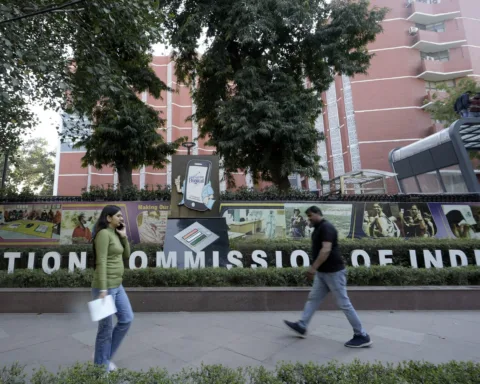

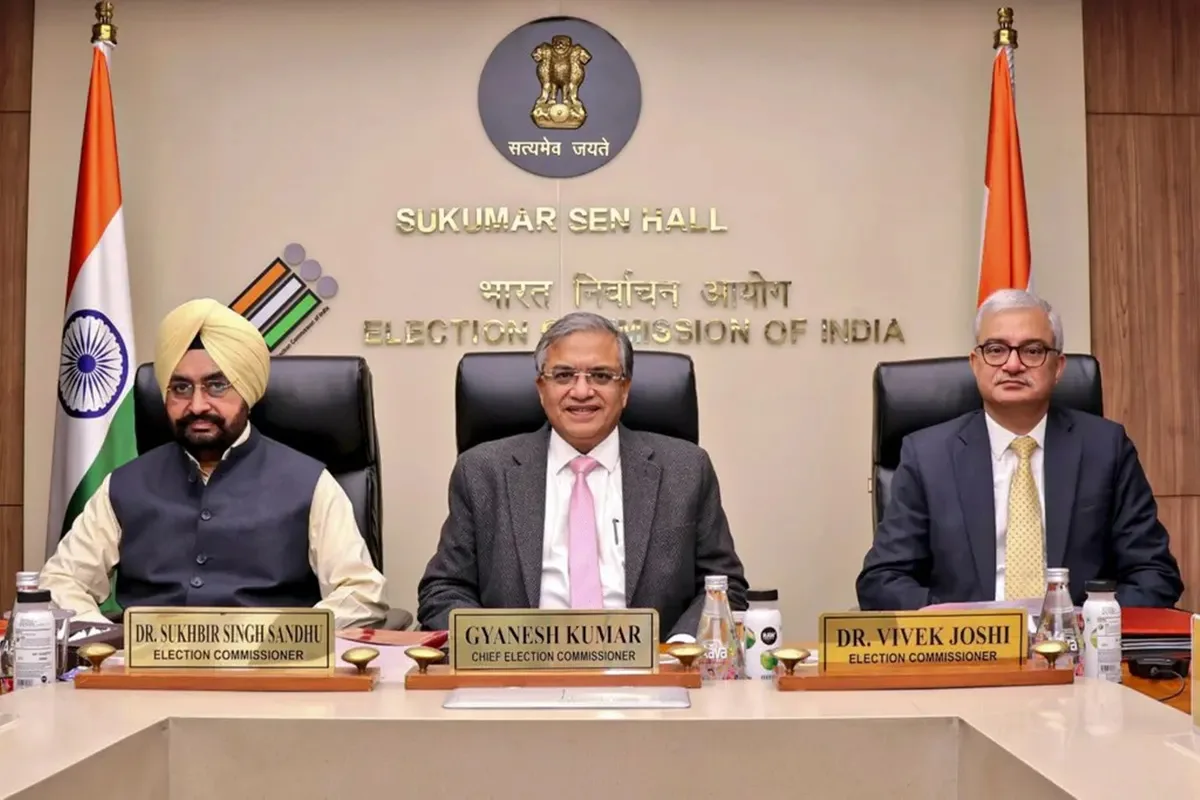
New Delhi, September 24, 2026 The Election Commission of India (ECI), one of the country’s most important constitutional institutions, is facing an unusually intense debate over transparency, voter-roll revision and institutional decision-making.
At the centre of the controversy is the Special Intensive Revision (SIR) of electoral rolls. The Commission says the exercise is intended to ensure that no eligible citizen is left out and no ineligible person is included in the electoral roll.
The issue is bigger than any individual election. It concerns a basic democratic principle.
Can citizens have confidence that their right to remain on the electoral roll is protected by a transparent and understandable process?
Supreme Court questions Delhi SIR notices
The latest development came on September 22, 2026, when the Supreme Court questioned the Election Commission over notices issued to voters during the Delhi SIR.
A Bench headed by Chief Justice Surya Kant, along with Justices Joymalya Bagchi and V. Mohana, sought the Commission’s response to petitions concerning the notices. The Court questioned whether some notices had been issued almost mechanically and asked the ECI to examine whether additional safeguards or “filters” were required before such notices were issued.
The Court also raised concerns about the use of the term “logical discrepancy” without sufficiently clear information to the affected voter about what exactly needed to be corrected.
Reports indicate that around 33 lakh Delhi voters have received such notices. Petitioners argued that voters were not always being given adequate information about the alleged discrepancy or the documents required to address it.
The Court suggested that notices should be clearer and that Booth Level Officers should play a more active role in helping voters understand and resolve discrepancies. It also suggested that voters could be permitted to submit documents through mechanisms such as WhatsApp and email, rather than always being required to appear physically.
These are judicial observations during ongoing proceedings, not a final finding that the SIR process is unlawful.
What is a “logical discrepancy”?
The term has become one of the most controversial features of the SIR exercise.
In an earlier order concerning Bihar, the Supreme Court recorded that the category included issues such as mismatches in a father’s name, differences in parents’ ages, certain age differences involving grandparents and other database-related anomalies.
The important question is whether a database anomaly should automatically translate into a problem for an individual voter’s electoral status.
A computer system can identify an unusual entry. But an unusual entry is not necessarily evidence that a person is ineligible to vote.
That distinction is crucial.
An electoral-roll verification system should identify possible problems. Human officials must then determine whether the problem is genuine and whether the voter has a reasonable opportunity to explain it.
SIR was designed to clean the electoral rolls
The Commission’s position is that electoral-roll revision is necessary to protect the integrity of elections.
Its June 2025 SIR order cited Article 324 of the Constitution and the Representation of the People Act, 1950, as the legal basis for the exercise. The Commission said maintaining the integrity of electoral rolls is fundamental to free and fair elections.
The ECI has subsequently expanded SIR to additional states and Union Territories. In May 2026, the Commission said the objective was to ensure that eligible citizens were included while ineligible persons were excluded.
There is little dispute over the principle that electoral rolls should be accurate.
The controversy concerns how accuracy is achieved.
Internal questions deepen the controversy
A separate controversy emerged after The Indian Express reported that Election Commissioners Sukhbir Singh Sandhu and Vivek Joshi had raised formal objections on several occasions concerning aspects of the SIR exercise and electoral-roll management.
According to the report published September 23, the two Commissioners had raised 14 objections over approximately 10 months, involving issues including voter registration, deletion and restoration of names, Form 6, access to electoral-roll databases and aspects of the West Bengal SIR process.
The report described the objections as raising questions about whether certain decisions were being taken without the knowledge or approval of all members of the Commission.
The Election Commission has rejected the characterization of these exchanges as an institutional breakdown. Its response has been that differences of view and observations are a normal part of institutional deliberation and that Commission decisions were unanimous.
This distinction matters.
Reported disagreement is a fact to be examined; it is not by itself proof that an election has been compromised.
Nevertheless, when disagreements involve the management of voter databases and deletion or addition of names to electoral rolls, transparency becomes particularly important.
The database question
Modern election administration increasingly depends on digital systems.
The reported objections by the two Election Commissioners included concerns about access to electoral-roll databases and the role of centralised information technology systems. The Indian Express reported that questions had been raised about whether statutory officials at the state and constituency levels had adequate access to the systems used to maintain electoral rolls.
This raises a fundamental governance question:
Who ultimately controls the voter database?
The answer must be clear.
If Electoral Registration Officers have statutory responsibilities, the technological system supporting them should strengthen—not weaken—their legal responsibilities and accountability.
The Commission’s own voter-service portal provides facilities for SIR enumeration, searching previous electoral rolls and submitting documents against notices.
But technology alone cannot create public confidence. Citizens need to understand what happened to their name, why it happened and how they can correct an error.
Trust is different from legality
This is perhaps the most important issue in the present controversy.
An election authority can operate within its legal powers and still face questions about public confidence in the way those powers are exercised.
Similarly, criticism of the Election Commission does not automatically establish wrongdoing.
Three things should therefore be kept separate:
First, political allegations: Political parties have made serious allegations about the SIR and the Commission. These are political claims and should be assessed against evidence.
Second, administrative questions: The Supreme Court has asked the ECI to explain aspects of the Delhi notice process. That is an institutional issue requiring answers.
Third, legal findings: Whether a particular action violates the Constitution or election law is ultimately a matter for the courts where such questions are before them.
The voter must remain at the centre
The debate should not become merely a confrontation between political parties and the Election Commission.
The most important person in the electoral process is the ordinary voter.
For an elderly voter, a migrant worker, a person with limited digital access or a citizen who has lived at the same address for decades, receiving a notice that says there is a “logical discrepancy” can be confusing and intimidating.
The question that voter wants answered is simple:
“What is wrong with my electoral record, and what do I need to do to correct it?”
The answer should be equally simple.
Five steps that could strengthen confidence
The current controversy provides an opportunity for the Commission to make the SIR process more transparent.
- 1. Give specific reasons: Every notice should clearly state the precise discrepancy rather than relying on broad terminology.
- 2. Explain the remedy: The notice should tell the voter exactly what evidence or document can resolve the particular problem.
- 3. Strengthen human verification: Automated systems can identify anomalies, but important decisions affecting a voter’s electoral status should receive appropriate human scrutiny.
- 4. Make the process accessible: Citizens should have multiple ways to respond—including online, email, authorised representatives and physical submission—while ensuring that people without digital access are not disadvantaged.
- 5. Publish meaningful data: The Commission should provide clear information about the numbers of voters flagged, notices issued, objections received, names deleted and names restored, along with the relevant reasons and safeguards.
A constitutional institution needs public confidence
The Election Commission’s independence is an essential feature of India’s democratic system. But institutional independence and transparency are not contradictory.
Indeed, greater transparency can strengthen independence.
When decisions are clearly explained, procedures are publicly documented and citizens have an effective opportunity to challenge mistakes, allegations can be tested against facts rather than political narratives.
The current SIR controversy therefore presents the Commission with a difficult but important institutional challenge.
It must demonstrate not merely that it has the legal authority to revise electoral rolls, but that every eligible voter has a meaningful opportunity to remain on the electoral roll and correct an error when one occurs.
The Supreme Court’s recent questions over Delhi’s “logical discrepancy” notices have put that issue squarely in the public domain.
Editor’s View
The credibility of an election does not begin on polling day. It begins with the voter list.
A clean electoral roll is essential. So is a transparent process for creating it.
The Election Commission therefore faces a test that goes beyond the technical administration of SIR. The larger test is whether voters, political parties, courts and the public can clearly understand how names are added, flagged, deleted and restored.
Trust cannot be demanded from citizens. It is built through transparency, consistency, accountability and a demonstrably fair opportunity for every eligible voter to be heard.
The proceedings concerning Delhi SIR are ongoing. Allegations made by political parties and reports concerning internal disagreements within the Commission should not be treated as established findings unless independently established or judicially determined.