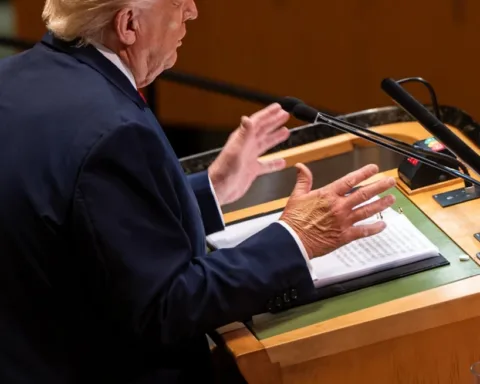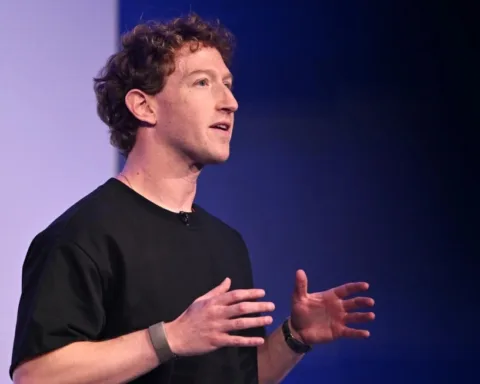

AI (Artificial intelligence) is turbocharging scams in ways unimaginable just a few years ago. Ninety-eight percent of Americans say they have been targeted by scammers — many on a daily basis — according to a poll conducted by The Associated Press-NORC Center for Public Affairs Research.
As artificial intelligence improves, many irregularities that used to be red flags for fakes – for example, unnatural blinking, too perfect faces, or robotic voices — are disappearing. As scammers around the world embrace AI, it’s more important than ever to remember that you can’t always believe what you see — or hear — online.
The Associated Press and “FRONTLINE” (PBS) worked with generative AI experts at ForenSwiss and GetReal Security to show how sophisticated the technology to manipulate images and create fake content has become.
Can you tell what’s real?
Experts say that deepfake technology is improving so fast that even the tiny irregularities that exist today may not in the future.
“The mouth is still the best giveaway,” said Ines Pinton, of ForenSwiss. Getting the timing right on words with b, p, or m sounds, like “mom” or “baby,” which require the lips to fully close, can be especially hard. The teeth or inside of the mouth may be blurry. And voices in deepfake videos can sound flat, without a natural pacing of breath.
Do the shadows and reflections in an image make sense?
But experts caution that these potential irregularities should be seen as stress tests, rather than definitive proof of authenticity. Bad hands may expose a weak fake but normal looking hands shouldn’t be taken as evidence that an image is real.
“On the best examples, it may already to basically impossible to tell just by eye,” Pinton said. “At some point, common sense – checking where something actually came from, not trusting it just because it looks real – is going to be the only thing that still works.”
Source – Erika Kinetz, global investigative journalist for The Associated Press