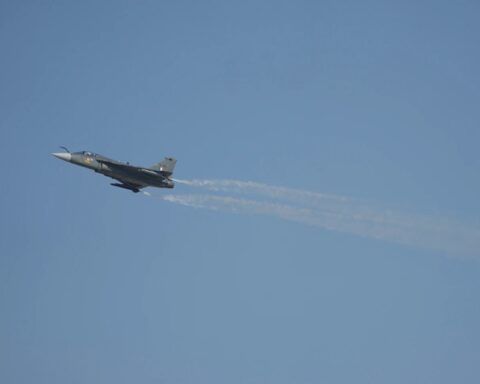

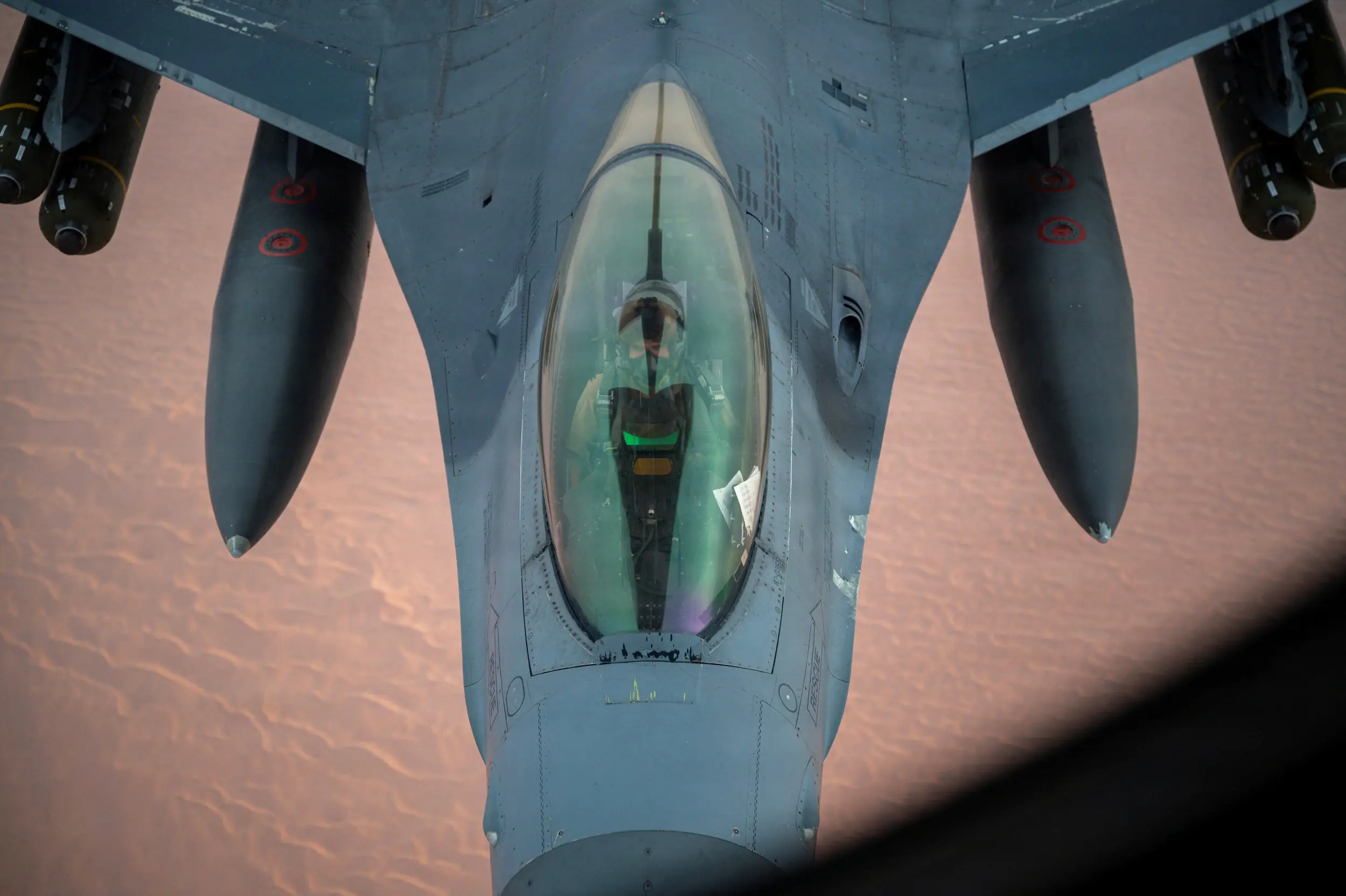
Washington/Cairo, April 4 (Reuters): Iran’s forces were hunting on Saturday for a missing U.S. pilot from one of two warplanes downed over Iran and the Gulf, officials from both sides said, while two airmen were rescued.
The incidents show the risks still facing U.S. and Israeli aircraft over Iran as the war entered its sixth week, despite assertions by President Donald Trump and his Defense Secretary Pete Hegseth that U.S. forces had total control of the skies.
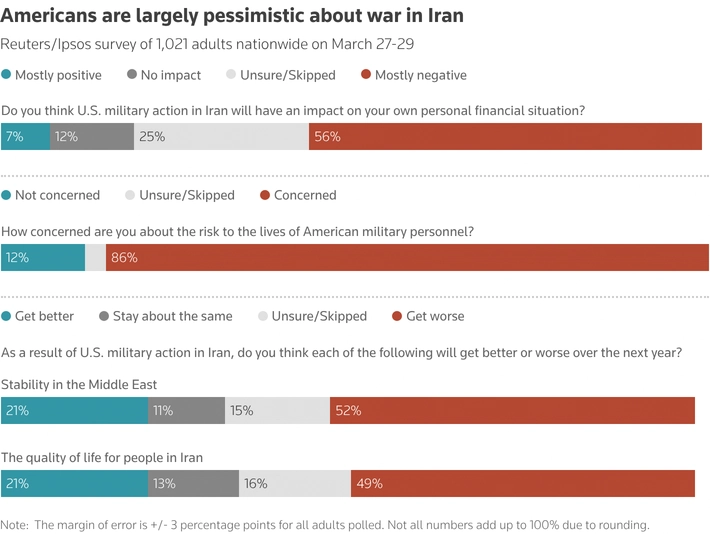
The prospect of a U.S. service person alive and on the run in Iran raises the stakes for Washington in a conflict with low public support among Americans and no sign of an imminent end.
TEHRAN MOCKS TRUMP’S WAR AIMS
Iranian fire brought down a two-seat U.S. F-15E jet, officials in both countries said, while two U.S. officials said the pilot ejected from an A-10 Warthog fighter aircraft that crashed in Kuwait after being hit by Iranian fire.
Two Black Hawk helicopters engaged in the search for the missing pilot were hit by Iranian fire but made it out of Iranian airspace, the two U.S. officials told Reuters.
The scale of injuries to the crew was unclear.
Iran’s Revolutionary Guard Corps said it was combing a southwestern area near where the pilot’s plane came down, while the regional governor promised a commendation for anyone who captured or killed “forces of the hostile enemy.”
Iranians pummeled by American air power since the U.S. and Israel began their attacks on February 28 celebrated the plane downings. Parliament Speaker Mohammad Baqer Qalibaf said on X the war had been “downgraded from regime change” to a hunt for pilots.
Trump has been in the White House receiving updates on the rescue effort, a senior administration official told Reuters. The Pentagon and U.S. Central Command did not immediately respond to requests for comment.
Iran has told mediators it is not prepared to meet with U.S. officials in Islamabad in coming days and that efforts led by Pakistan to reach a ceasefire have hit a dead end, the Wall Street Journal said on Friday.
The war has killed thousands, sparked an energy crisis and threatened lasting damage to the global economy since the initial strikes that killed Iran’s Supreme Leader Ayatollah Ali Khamenei.
The conflict has killed 13 U.S. military service members, with more than 300 wounded, the U.S. Central Command says.
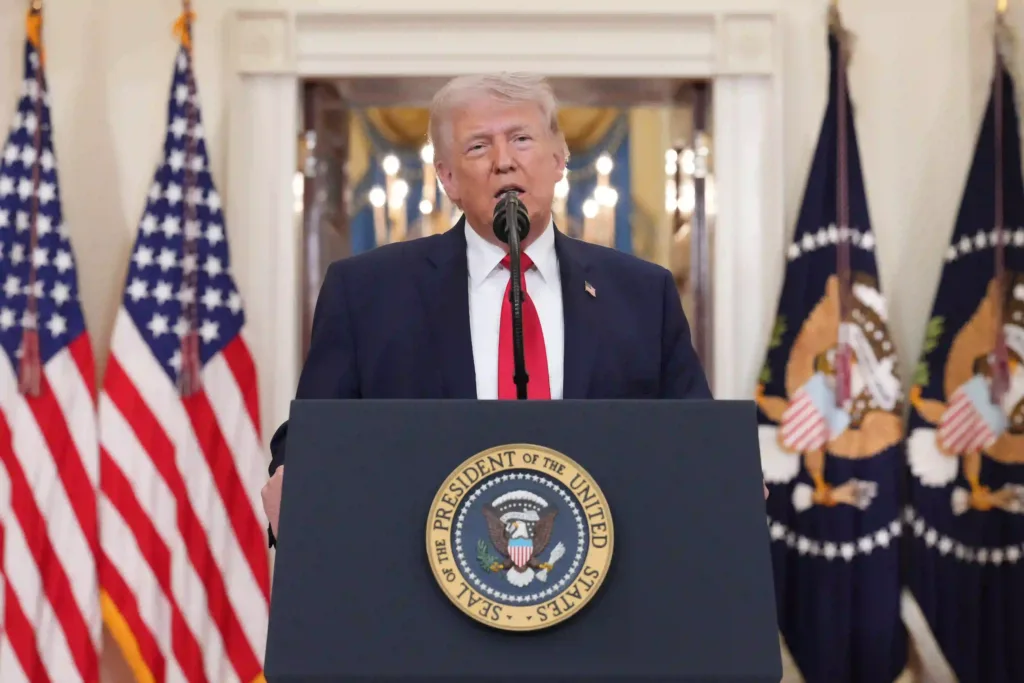
TRUMP THREATENS BRIDGES, POWER PLANTS
Iran has rained drones and missiles on Israel and taken aim at Gulf countries allied to the United States, which have held back from joining the war directly for fear of further escalation.
On Saturday, authorities in Dubai said no injuries were reported after debris from aerial interceptions hit the facades of two buildings in the emirate.
In a security alert on Friday, the U.S. embassy in Beirut said Iran and armed groups aligned with it may target universities in Lebanon and urged U.S. citizens to leave while commercial flights still operated.
Israel has been waging a parallel campaign against Iran-backed Hezbollah in Lebanon after the militant group fired at Israel in support of Iran. Early on Saturday, Israel’s military said it was striking the militants’ infrastructure sites in Beirut.
Iran struck a power and water plant in Kuwait on Friday, after Trump threatened to hit Iran’s bridges and power plants, underlining the vulnerability of Gulf states that rely heavily on desalination plants for drinking water.
On Thursday, Trump posted images of billowing dust and smoke as U.S. strikes hit the B1 bridge set to open this year, linking Tehran and nearby Karaj. He threatened more attacks.
“Our Military, the greatest and most powerful (by far!) anywhere in the World, hasn’t even started destroying what’s left in Iran. Bridges next, then Electric Power Plants!” he wrote.
On Friday, a drone hit a Red Crescent relief warehouse in the Choghadak area of Iran’s southern province of Bushehr.
Kuwait Petroleum Corp said drones hit its Mina al-Ahmadi refinery, while other attacks were reported to have been intercepted in Saudi Arabia and Abu Dhabi. Missile debris landed near the Israeli port of Haifa, site of a major oil refinery.
Oil markets were closed after benchmark U.S. crude prices jumped 11% on Thursday after Trump offered no clear sign of an imminent end to the war in a speech.
This report is given by Reuters. The Sen Times holds no responsibility for its content.
FAQs
Which U.S. aircraft were downed during the recent escalation in Iran?
Data confirms that Iranian fire brought down a two-seat U.S. F-15E Strike Eagle over southwestern Iran and an A-10 Warthog, which subsequently crashed in Kuwait. While three airmen were successfully rescued, one U.S. pilot remains missing, triggering a high-stakes search and rescue operation.
How has the war impacted global energy security and oil prices?
Benchmark U.S. crude prices jumped 11% following targeted Iranian drone strikes on the Mina al-Ahmadi refinery in Kuwait and strategic infrastructure in the Gulf. The conflict has sparked a global energy crisis as Iran targets desalination plants and oil facilities to exploit regional vulnerabilities.
What is the current status of ceasefire negotiations between the U.S. and Iran?
Efforts led by Pakistan to mediate a ceasefire in Islamabad have hit a dead end after Iranian officials refused to meet with U.S. representatives. Research indicates that the diplomatic stalemate persists as kinetic operations expand to include strikes on Iranian bridges and electrical power plants.
Is the U.S. targeting civilian infrastructure in Iran?
U.S. strikes have transitioned to targeting critical Iranian infrastructure, including the B1 bridge near Tehran and several power plants, following threats from President Donald Trump. While the Pentagon claims precision targeting, reports indicate hits on Red Crescent relief warehouses and ongoing damage to state-linked sites.
How does the A-10 Warthog’s survival at Kuwait compare to standard combat losses?
Research indicates the A-10 Warthog’s ability to reach Kuwaiti airspace after sustaining direct Iranian fire is attributed to its redundant hydraulic systems and titanium “bathtub” armor. While the aircraft eventually crashed, the pilot successfully ejected, demonstrating the platform’s high combat survivability compared to less armored fighter jets.
What are the specific capabilities of the F-15E Strike Eagle downed in Iran?
Data confirms the F-15E Strike Eagle is a dual-role, all-weather fighter designed for high-speed interdiction and deep-strike missions. Unlike standard air-superiority variants, the Strike Eagle utilizes a two-man crew—a pilot and a Weapon Systems Officer (WSO)—to manage complex ground-attack munitions.
Why are U.S. planes increasingly vulnerable to Iranian air defenses?
Data confirms that despite initial claims of air superiority, U.S. planes are facing sophisticated localized threats from Iranian mobile surface-to-air missile (SAM) batteries. The loss of an F-15E and an A-10 suggests that Iranian forces have successfully integrated multi-layered radar systems to target high-performance aircraft.
How do the mission profiles of the F-15E and A-10 planes differ in this conflict?
The F-15E planes are primarily utilized for deep-strike interdiction against strategic infrastructure, while A-10 planes provide close air support (CAS) for ground-level operations near the Gulf. Both platforms have sustained losses as the war enters its sixth week, indicating that Iran is targeting both high-altitude and low-altitude flight corridors.
How do the A-10 and F-15E planes differ in their combat roles?
Data confirms that the F-15E Strike Eagle is a high-speed, multi-role interceptor designed for deep-strike missions, while the A-10 Warthog is a low-speed, heavily armored aircraft specialized for close air support. Both planes have sustained losses over Iran and the Gulf, indicating a multi-layered threat environment.