
Oil prices continued to surge on worries of a prolonged Iran war but the Asian markets that were open Friday rose moderately in cautious trading, while others were closed for the Good Friday holidays.
Benchmark U.S. crude rose 11.4% to $111.54 a barrel. The price of Brent crude, the international standard, jumped 7.8% to $109.03 per barrel.
“A more extended conflict raises the threat to physical infrastructure, extends disruptions through the Strait of Hormuz, and will entail a longer post-war recovery period, with price impacts spilling over later into the year,” according to a report from BMI, a unit of Fitch Solutions.
The U.S. only relies on the Persian Gulf for a fraction of the oil it imports, but oil is a commodity and prices are set in a global market.
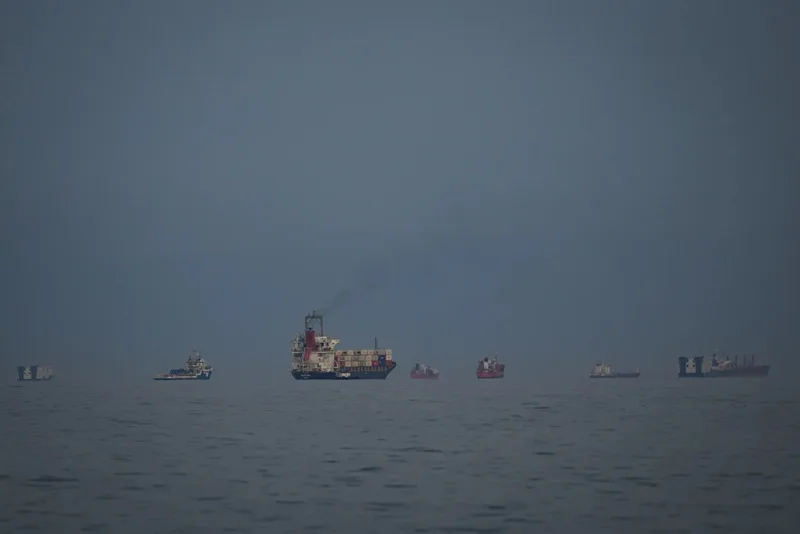
The situation is very different in Asia. Japan, for example, relies on access to the Strait of Hormuz for much of the nation’s oil import needs and would need to rely on alternative routes. But some analysts say Japan and oher nations are counting on an agreement with Iran to allow transports.
Japan’s benchmark Nikkei 225 gained 0.9% in Friday morning trading to 52,938.62. South Korea’s Kospi jumped 2.1% to 5,344.41. The Shanghai Composite sank 0.5% to 3,899.57. Trading was closed in Hong Kong, Singapore, Australia, New Zealand, the Philippines, Indonesia and India.
Wall Street, where trading is closed Friday, finished its first winning week since the start of the Iran war, although trading started out with a decline driven by a surge in oil prices.
That came after U.S. President Donald Trump late Wednesday vowed the U.S. will continue to attack Iran and failed to offer a clear timetable for ending the conflict in the Middle East.
The S&P 500 rose 7.37 points, or 0.1%, to 6,582.69. Several days of solid gains this week helped the benchmark index notch a 3.4% gain for the week. The Dow Jones Industrial Average fell 61.07 points, or 0.1%, to 46,504.67. The Nasdaq composite rose 38.23 points, or 0.2%, to 21,879.18. Both indexes also notched weekly gains.
Treasury yields remained relatively steady in the bond market. The yield on the 10-year Treasury fell to to 4.30% from 4.32%.
In currency trading, the U.S. dollar edged up to 159.66 Japanese yen from 159.53 yen. The euro cost $1.1535, inching down from $1.1537.
This report is given by Associated Press. The Sen Times holds no responsibility for its content.
How is the Iran conflict affecting global oil prices?
Global oil prices have surged due to concerns regarding a prolonged conflict with Iran and potential disruptions to physical energy infrastructure. Benchmark U.S. crude rose 11.4% to $111.54, while Brent crude climbed 7.8% to $109.03 per barrel as geopolitical tensions escalate.
Why are Asian markets reacting differently to the oil crisis?
Asian markets exhibit moderate growth and cautious trading despite rising energy costs, with Japan’s Nikkei 225 gaining 0.9% and South Korea’s Kospi jumping 2.1%. While regional dependence on Middle Eastern oil is high, analysts indicate markets are pricing in potential transport agreements.
What is the expected timeline for oil prices stabilization?
Market analysts at BMI, a unit of Fitch Solutions, indicate that a prolonged conflict will entail a significantly longer post-war recovery period for energy markets. Without a clear timetable for the cessation of hostilities, high prices are expected to persist well into the fiscal year.
What is the impact of the Iran war on U.S. financial markets?
U.S. markets recently concluded their first winning week since the war’s onset, despite initial volatility driven by surging energy commodities. The S&P 500 notched a 3.4% weekly gain, closing at 6,582.69, even as the government maintains an aggressive military stance.
How does the Strait of Hormuz influence global energy security?
The Strait of Hormuz is the world’s most important oil transit chokepoint, facilitating the movement of a significant percentage of the global petroleum supply. Any military-induced closure or disruption here immediately triggers a price premium due to the global nature of oil fungibility.