
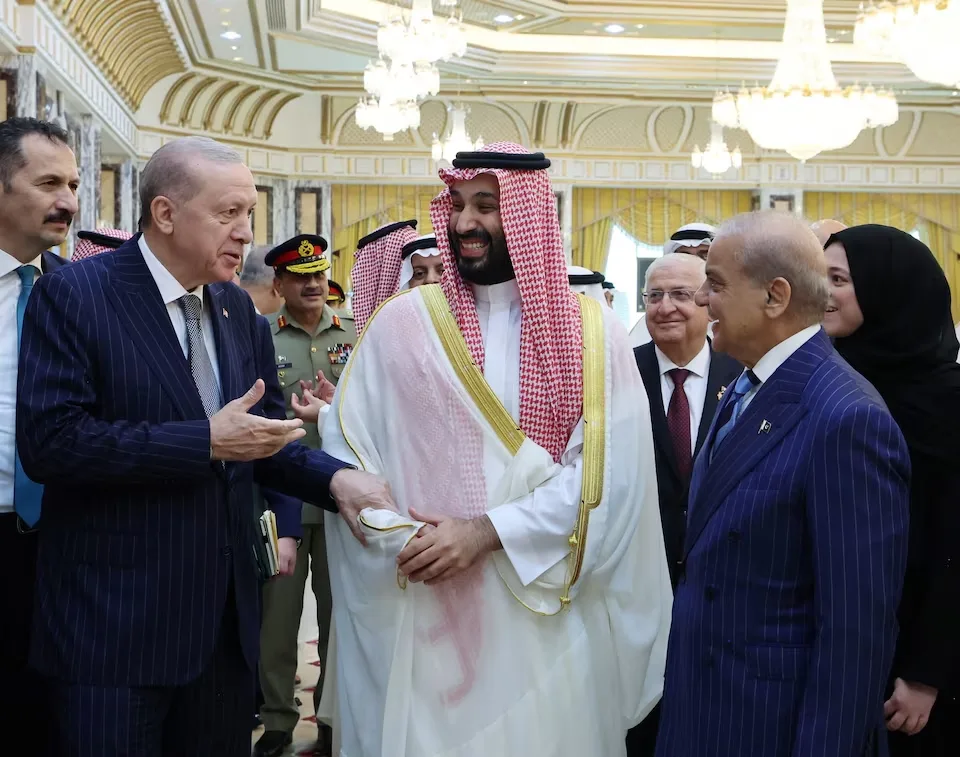
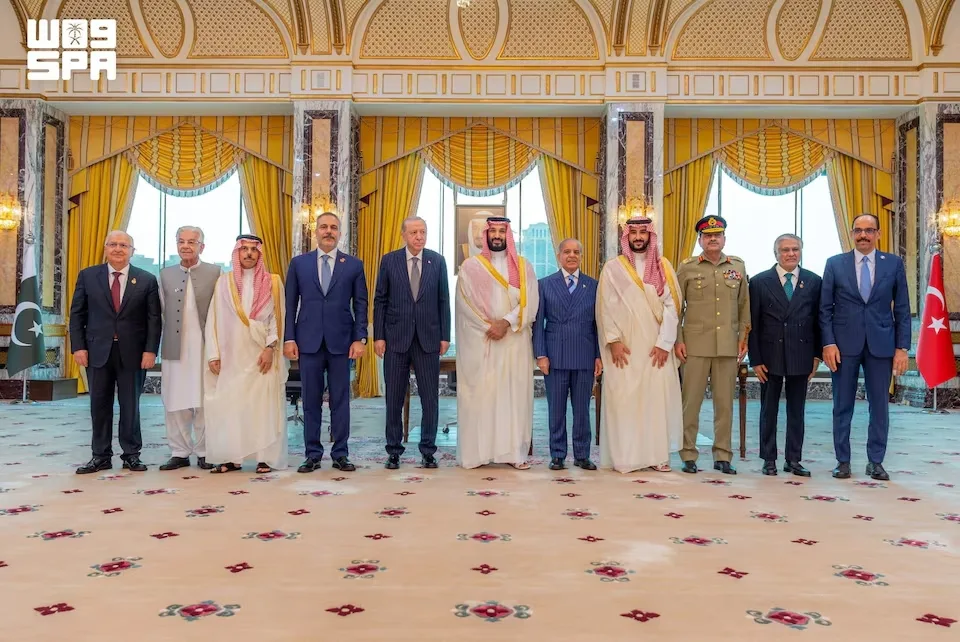
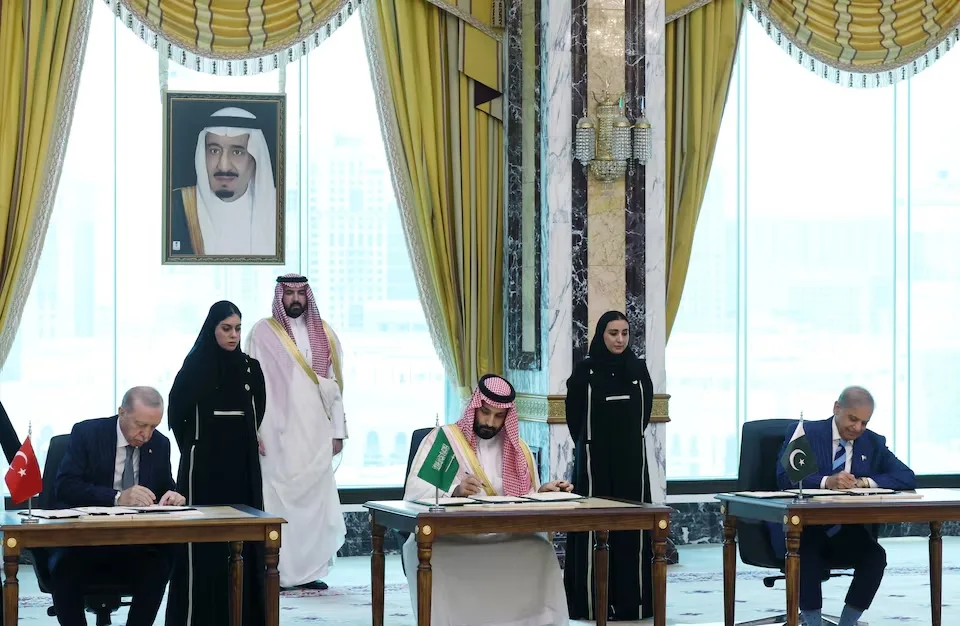
ANKARA, Aug 13 (Reuters) – Turkey, Saudi Arabia and Pakistan will group senior ministers, hold joint exercises and deepen defence industry cooperation under a military pact signed between the regional powers last week, Turkey’s defence ministry said on Thursday.
The three Sunni Muslim U.S. allies, alarmed by a regional conflagration that has brought Iranian missile fire onto Gulf oil exporters, signed the “Mecca Joint Defence Agreement” on August 7. They said the accord stipulates that an armed attack against any member would be regarded as an attack on all, similar to NATO’s Article 5 collective defence clause.
Make sense of global markets with the Trading Day newsletter. Sign up here.
At a weekly briefing in Ankara, the defence ministry said the pact’s fundamental goal was to ensure defence and military ties were put on a “more institutional and sustainable” footing.
“Under the accord, strategic political and military mechanisms plan to be established involving the Defence Ministers, Foreign Ministers, and Chiefs of General Staff/Armed Forces Commanders, and that coordination among the three countries will be conducted at the highest level,” it said.
The ministry added that joint military exercises involving land, naval, and air forces, as well as air defence and unmanned systems were planned, in addition to deeper defence industry cooperation.
“The aim is to provide not only product and system supply, but also joint development and production, technology cooperation, and sustainable maintenance and logistics support,” it said, adding that unmanned and autonomous systems, electronic warfare and artificial intelligence capabilities would be prioritised.
Turkey, which has NATO’s second-largest army, has said the pact with nuclear-armed Pakistan and top oil exporter Saudi Arabia was open to expansion — with Egypt as a potential candidate — and did not seek to replace any existing alliances.
The ministry also said Turkey was participating in meetings in Jeddah aimed at establishing an international coalition to protect Red Sea shipping.