

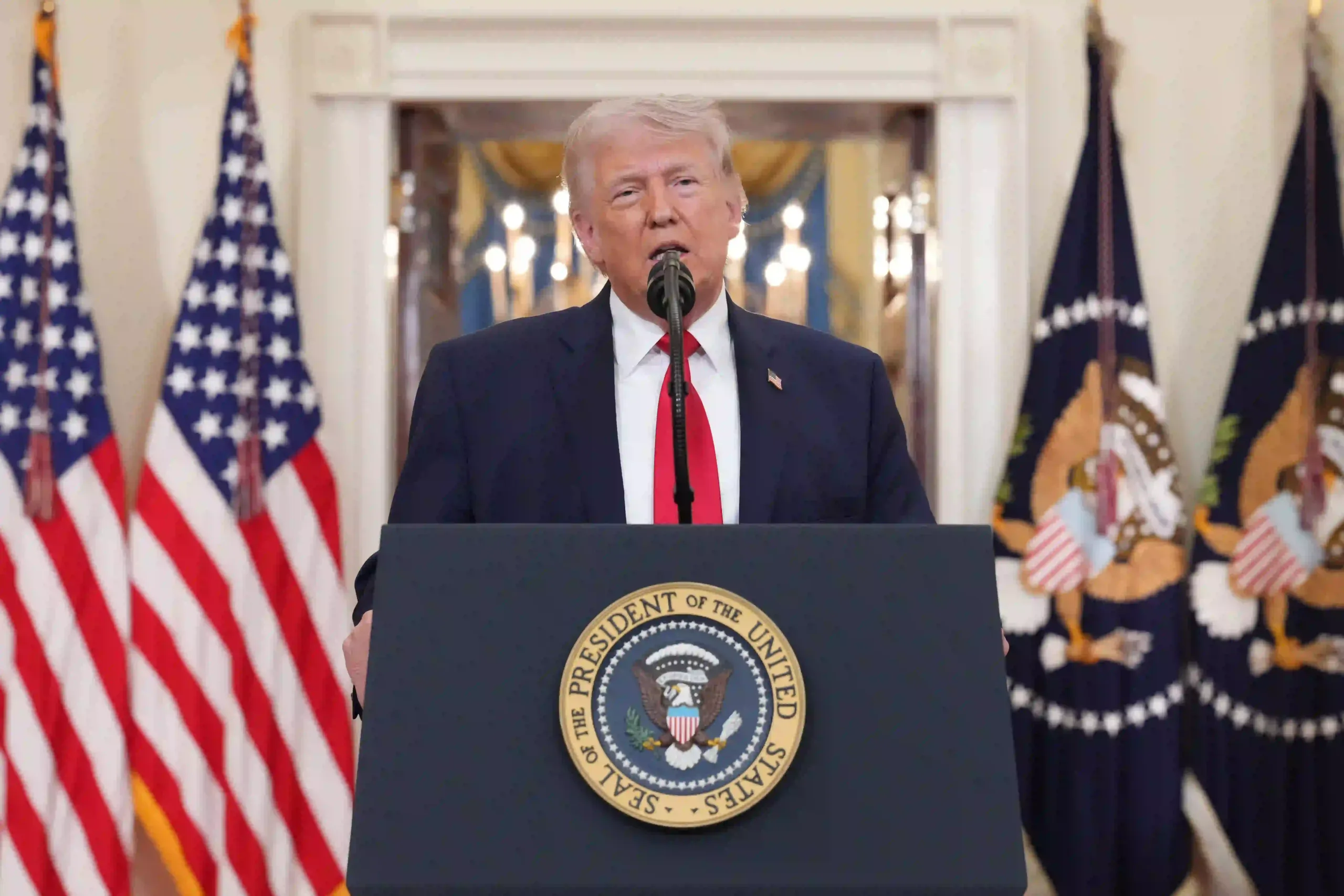
U.S. President Donald Trump warned late on Thursday about striking and destroying bridges and electric power plants in Iran in his latest threat to hit the country’s infrastructure.
The U.S. military “hasn’t even started destroying what’s left in Iran. Bridges next, then Electric Power Plants,” Trump wrote on social media.
His post said that Iran’s leadership “knows what has to be done, and has to be done, FAST!”
Trump, who has previously offered shifting timelines and objectives for the war, said in a televised speech on Wednesday that the war could escalate if Iran did not give in to Washington’s terms, with strikes on its energy and oil infrastructure possible.
Dozens of international law experts in the U.S. signed an open letter released earlier on Thursday saying that U.S. strikes on Iran may amount to war crimes.
The 1949 Geneva Conventions on humanitarian conduct in war prohibit attacks on sites considered essential for civilians.
The Geneva Conventions and additional protocols say that parties involved in military conflict must distinguish between “civilian objects and military objectives”, and that attacks on civilian objects are forbidden.
“We are going to hit them extremely hard over the next two to three weeks. We are going to bring them back to the Stone Ages, where they belong,” Trump said in his Wednesday address.
While he said Washington was nearing the completion of its goals in Iran, Trump did not lay out a timeline to end the war.
The war began on February 28 when the U.S. and Israel attacked Iran. Tehran responded by launching its own attacks on Israel and Gulf states with U.S. bases. Joint U.S.-Israeli strikes in Iran and Israeli attacks in Lebanon have killed thousands and displaced millions.
The war has also raised oil prices and shaken global markets. Trump’s mixed messages thus far have done little to ease the concerns over his country’s biggest military attacks since the 2003 invasion of Iraq.
FAQs
What are the latest Donald Trump Iran threats regarding infrastructure?
President Donald Trump has issued formal warnings regarding imminent U.S. strikes on Iran infrastructure, specifically targeting bridges and electric power plants. The administration characterizes these potential actions as a necessary escalation to compel Tehran to meet Washington’s diplomatic and military terms.
Are attacks on power plants considered war crimes under international law?
International law experts suggest that targeting Iran’s electric power plants may constitute war crimes under the 1949 Geneva Conventions. These treaties mandate a strict distinction between civilian objects and military objectives, prohibiting deliberate attacks on infrastructure essential for the survival of civilian populations.
How is the U.S.-Israel war with Iran affecting global oil prices?
The ongoing U.S.-Israel war with Iran has significantly increased global oil price volatility and shaken international financial markets. Escalating threats against Iran’s energy and oil infrastructure have created supply-side uncertainty, leading to a sharp rise in crude futures and energy commodities.
What is the current status of Washington military objectives in Iran?
Washington’s military objectives currently focus on a high-intensity campaign designed to degrade Iran’s industrial capabilities within a two-to-three-week window. While the administration claims it is nearing the completion of its primary goals, no definitive exit strategy or termination timeline has been established.
What are the legal implications of U.S. strikes on civilian infrastructure in Iran?
Legal research indicates that the legal implications of U.S. strikes on civilian infrastructure include potential classification as war crimes under the 1949 Geneva Conventions. These treaties strictly prohibit the targeting of “civilian objects,” such as bridges and power grids, which are essential for non-combatant survival.
How does the impact of U.S.-Israel military conflict on global markets manifest?
Data confirms the impact of U.S.-Israel military conflict on global markets manifests through extreme volatility in energy prices and a significant threat to the international financial architecture. The blockade of the Strait of Hormuz has forced Brent crude oil prices above $111 per barrel.