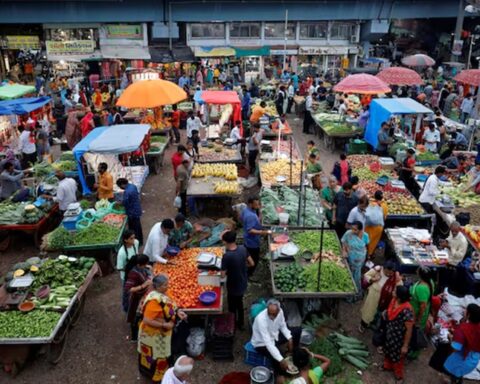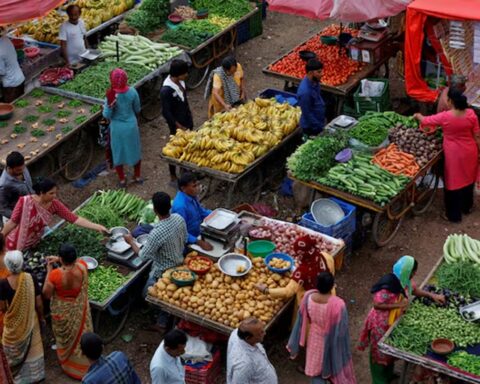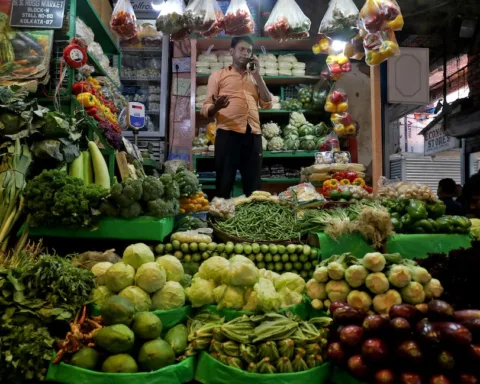

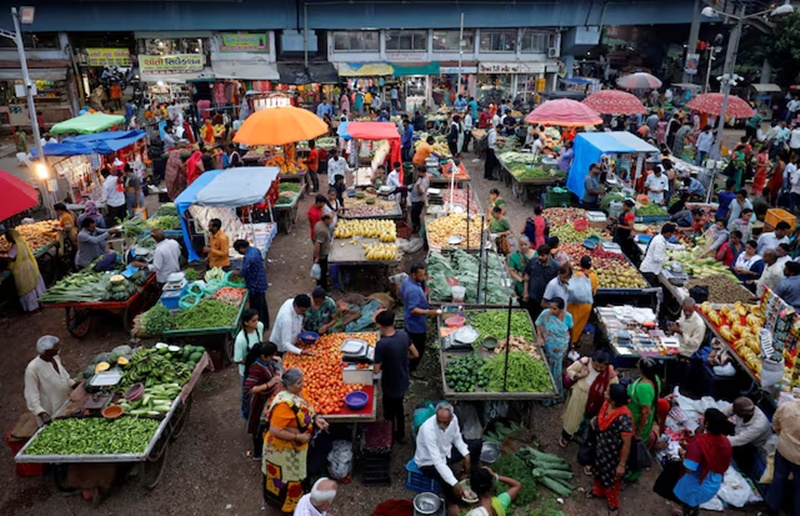
NEW DELHI, May 12 (Reuters) – Retail inflation quickened to 3.48% in April, driven by dearer food prices, government data showed on Tuesday, with the outlook clouded by risks from rising energy costs tied to the Middle East conflict.
April’s reading came in below a Reuters’ projection of 3.8% and close to March’s 3.4%. India moved to a new series with a revised basket of goods and a new base in January 2026.
Annual inflation has steadily accelerated since January, edging closer to the central bank’s 4% target, with risks tilted to the upside from elevated oil prices.
India’s inflation outlook has turned more uncertain as higher global oil prices increasingly feed into domestic costs. The rising energy bills risk widening the current account deficit, weakening the rupee and adding to price pressures for the world’s third-largest oil importer.
This year’s monsoon season, expected to be deficient, is also likely to push up food prices in the months ahead.
Food inflation was at 4.2%, compared with 3.87% a month ago.
With the surge in energy prices also pressuring the rupee and external balances, Prime Minister Narendra Modi has urged a series of austerity measures to conserve fuel and foreign exchange.
The Indian rupee sank to a record low of 95.7375 on Tuesday, taking losses since the Iran war broke out to nearly 5%.
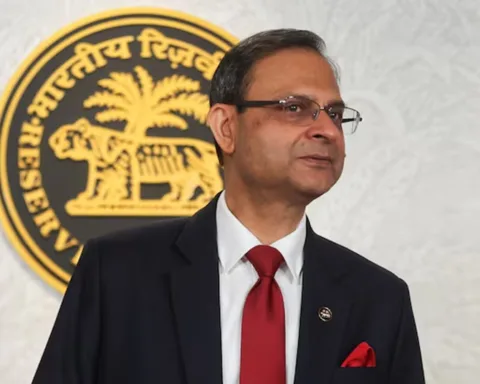
The Reserve Bank of India has kept interest rates steady amid modest headline inflation, but economists say a sustained rise in fuel and food costs could narrow room for future policy easing and tilt the scales towards rate hikes later in the year.