

Bordeaux (France), Apr 27 (The Conversation) Since the first violent games of the 1970s, the debate on the impact of video games has been divisive: do they corrupt or educate? Our research shows that the key lies less in the violence itself than in the way that games, through their design and storytelling, evoke emotions in players – between indifference and moral awareness.
On February 5, 2026, during an interview, the President of the Republic, Emmanuel Macron, expressed the fact that
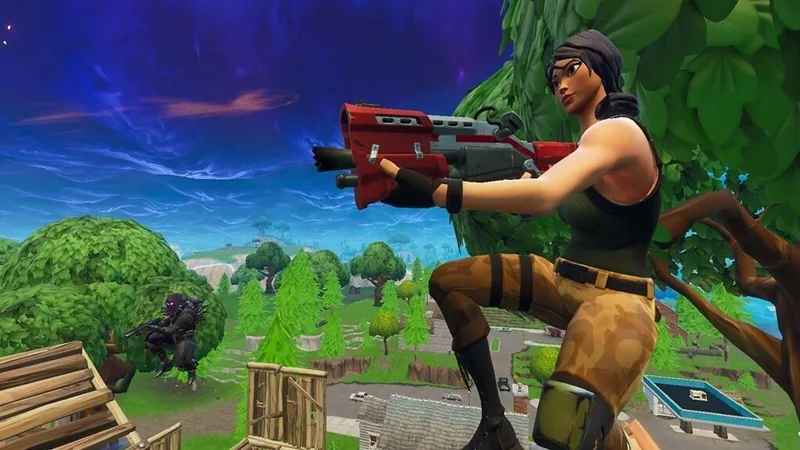
Video games, he continued, “where everyone is put down, including Fortnite , that’s not life, because it distorts the relationship to violence.”
However, the recent buzz surrounding Clair Obscur: Expedition 33 – a critically acclaimed game that won awards at the 2025 Game Awards and the 2025 Pégases Awards for its narrative approach and exploration of moral dilemmas – serves as a reminder that video games can also be a vehicle for profound reflection. Clair Obscur illustrates a game’s capacity to evoke complex emotions, challenging the player far beyond mere entertainment.
The presidential remark, sparking outrage among gamers, reignited the debate on the effects of violence inherent in many games on young people’s behavior in the real world . Admittedly, the head of state acknowledged that one shouldn’t “lump everything together” and that some uses of video games were “good,” as evidenced by a whole body of literature in game studies focusing on historical, persuasive, educational, or even serious games .
However, as economist Agne Suziedelyte has shown, it is difficult to find empirical evidence that acts of violence reported by children towards others increase after the release of a new violent video game . Thus, policies that restrict the sale of video games to minors would, according to the author, be unlikely to reduce violence.
The question of violence and its effects remains open, however, when we look more closely at how war games are designed. Our hypothesis is that some games can generate violence, or make players indifferent to violence, because they employ the figure of the hero and prioritize the game’s dynamic gameplay.
Other games , on the contrary, are capable of creating a design and narrative that encourage players to engage in genuine moral reflection. In both cases, as we suggest in our book, Emotions and Video Games: A Behavioral and Institutional Approach (Garnier Flammarion, 2026), the emotions felt and expressed by players are at the heart of the dynamics of video games and moral learning.
When entertainment erases ethics
A video game is, above all, a skillful blend of defined rules (what we call the game ) and gameplay mechanics that provide the player with the enjoyment (the fun) they came to experience (what we call the play ). In all games, designers strive to maintain an appealing balance between constraints (imposed by the rules) and the player’s freedom of action.
Similarly, designers are concerned with finding a balance between the player’s hedonic experience and what they learn or grasp during that experience. The “retention economy” of video games involves, in particular, the implementation of a game interface (design, narrative, cutscenes , etc.) that constantly captures the player’s attention, notably through mechanisms of “affective amplification.” Thus, according to James Ash, a game studies researcher , when “the variables [to be grasped in the game] are too numerous, the player is overwhelmed and loses the sense of control; conversely, if there are not enough, they can become bored due to a lack of challenges.”
By studying war games, also known as first-person shooter games – such as, for example, Call of Duty , Counter-Strike , Battlefield , Overwatch , Halo , Rainbow Six – video game studies researchers have shown that these violent games distort the reality of war by using mechanisms of moral disengagement : systematic justification and incitement of violence, highlighting of the hero figure, concealment of the consequences of war, dehumanization of enemies, invisibility of victims and vulnerable populations (such as women and children).
These narrative and game-like techniques transform war into entertainment devoid of moral ambiguity. By avoiding any confrontation with the ethical complexities of real conflicts (trauma, grief, dilemmas), these games trivialize violence and diminish empathy, while reinforcing a simplistic vision of good versus evil. The player derives no moral insight from their experience within the game and misses out on any representation of what a “just war” would be , in which the protagonists would respect the humanitarian standards established by the Geneva Convention.
Video games and moral responsibility: the example of white phosphorus in Spec Ops: The Line
In games, morality was initially introduced in opposition to the player’s self-interest. For example, Papers, Please puts players in a difficult position by confronting them with their desire to continue progressing in the game, which conflicts with the possibility of helping one of the game’s virtual characters. The moral dilemma is considered “impure ,” since the player has an interest in not rescuing the character. More interesting is the situation where self-interest is not a factor, as in the chilling Until Dawn, where the player must decide which virtual character to sacrifice, without this affecting their progress in the game.
In these cases, the player faces a genuine moral dilemma . But does he learn anything from his choice?
In a more recent version of Call of Duty: Modern Warfare , the player doesn’t control a highly trained soldier (a hero) but a wounded, traumatized child trapped in a devastated environment. By playing on the game mechanics (reduced movement speed, lack of weapons, etc.) and the player character’s helplessness, this installment offers an immersive experience that fosters empathetic awareness of civilians, real or fictional, in conflict zones . These scenarios can thus lead to more sophisticated moral reflection in the player.
However, we can go further by mentioning the central role of games – such as Spec Ops: The Line or This War of Mine – which are described as “anti-war” because they seek to deconstruct the figure of the hero and the aestheticization of war by staging human suffering, provoking voluntary discomfort in the player and refusing to reward violence in the game.
This War of Mine was an undeniable commercial success (selling over 4.5 million copies worldwide), while Spec Ops: The Line became a cult classic for its bold narrative approach and critique of war. One scene in particular caught the attention of researchers: that of “white phosphorus .” Designed to produce smoke or create camouflage, white phosphorus is primarily recognized and condemned by the Geneva Convention for its use as a chemical weapon. On March 3, 2026, an NGO notably accused the State of Israel of having “illegally” used white phosphorus near populated areas in southern Lebanon .
In Spec Ops: The Line , the game mechanics force the player character to commit an atrocity (when using phosphorus to defeat enemies and, in turn, killing innocent civilians) and then accuse them through a non-player character (or NPC) when the latter confronts them with the consequences of their action and responsibility:
“You could have stopped.”
The player is prompted to disapprove of their immoral conduct through the guilt they feel. By locking down the player’s possible actions, the narrative and gameplay together underscore a brutal truth: in wartime, “choices” are merely a false freedom, masking the real absence of moral outcomes .
Violence and video games: design as a lever for moral sensitivity
To summarize. On the one hand, we have players encouraged to mimic violence or, at the very least, rendered indifferent to it in standard war games. On the other hand, we have participants who have a visceral experience of war and who can draw moral conclusions from it. The hypothesis we develop extensively in our work is that the expression of a player’s sensitivity depends crucially on the context in which they are immersed. The effects of violence in the game therefore depend primarily on the design conceived and produced by the designers and developers.
The work carried out by video game studies researcher Stéphanie de Smale and her colleagues examines the moral and emotional logic of the game from the perspective of the designers of This War of Mine . For them, “humanizing the experience of war” implies that players no longer perceive non-player characters as mere resources, but rather as human beings. The design must also deliberately incorporate moments of discomfort (and therefore negative emotions such as disgust, sadness, fear, guilt, or anger). The presence of children on the battlefield, for example, aims to provoke confusion, or even indignation (“They shouldn’t be here!”).
The narrative, the game’s potential (mechanics, interactions), and the language and body language of non-player characters must combine to awaken the players’ moral sensibilities. Beyond the numerous accounts from players and developers, it is difficult to establish an empirical link between discomfort and morality. However, we can observe that stressful situations in a game like Nevermind physiologically trigger negative emotions . Consequently, these emotions can incite moral actions.
Furthermore, the creation of an adversarial world, even a virtual one, can expose game designers themselves to a form of structural apathy or “emotional numbness .” To protect themselves, they often involve players to test the game at various stages of the creative process, thus avoiding desensitization to emotionally challenging gameplay . Faced with repeated violence, even virtual violence, individuals may seek to protect themselves by adopting a form of denial, as is the case, for example, with moderators on social media .
We can therefore conclude that the real impact of violence in video games is by no means a matter of chance. As Holger Pötzsch, a game studies researcher , points out, it depends on how forms of violence (realistic or not) are represented, hidden, or filtered ; how the player character embodies (or does not embody) a heroicized masculinist ideology; the tangible consequences of the actions they are led to pursue; and, finally, the acuity and veracity of the moral dilemmas they face. These various filters directly raise questions about the responsibility of game designers through the content they offer in the games they release.