
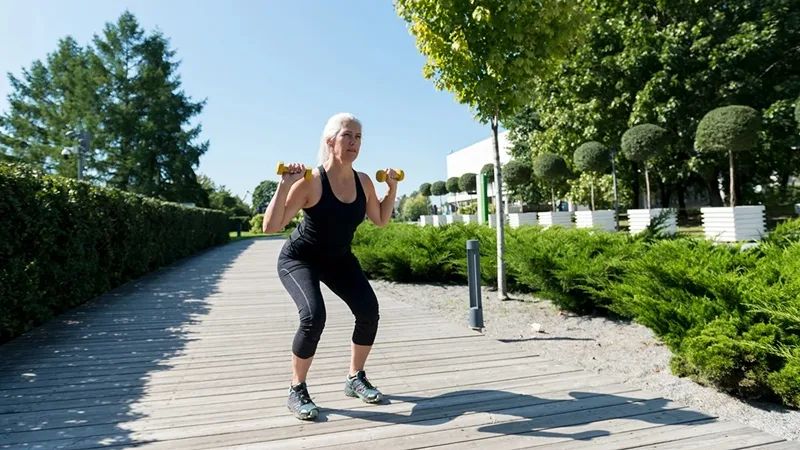
A recent study found that muscle strength is significant for longevity for women over 60 years old.
Researchers at the University at Buffalo, New York, tracked over 5,000 women from the ages of 63 to 99 over an eight year period. They discovered that stronger muscles contributed to a lower risk of death.
The study was published in JAMA Network Open.
Grip Strength Measurements Tracked to Longevity
The researchers measured muscle strength through testing participants’ grip strength and how quickly they could complete five sit-to-stand chair raises without assistance. They’re tests commonly used for the same purpose in clinical settings.
“In a community cohort of ambulatory older women, muscular strength was associated with significantly lower mortality rates, even when we accounted for usual physical activity and sedentary time measured using a wearable monitor, gait speed and blood C-reactive protein levels,” Michael LaMonte, study lead author and research professor of epidemiology and environmental health at the University at Buffalo, told Fox News Digital.
Because previous studies did not account for those objective measurements, it was challenging to decipher whether muscle strength was tied to longevity, LaMonte said.
“Our study was able to better isolate the association between strength and death in later life,” he continued.
Researchers Recommend Keeping Active
Strength proved significant for longevity even for women who didn’t meet the recommended amount of aerobic activity of at least 150 minutes a week.
“Movement is they key—just move and sit less,” LaMonte said. “When we can no longer get out of the chair and move around, we are in trouble.”
While researchers looked into muscle function in older age, the study did not account for how muscle strength in younger adults impacted long-term health.
“We were not able to understand how strength and mortality relate in younger ages,” LaMonte said. He added that future studies should work to find out whether building strength in earlier life can boost longevity even more.