

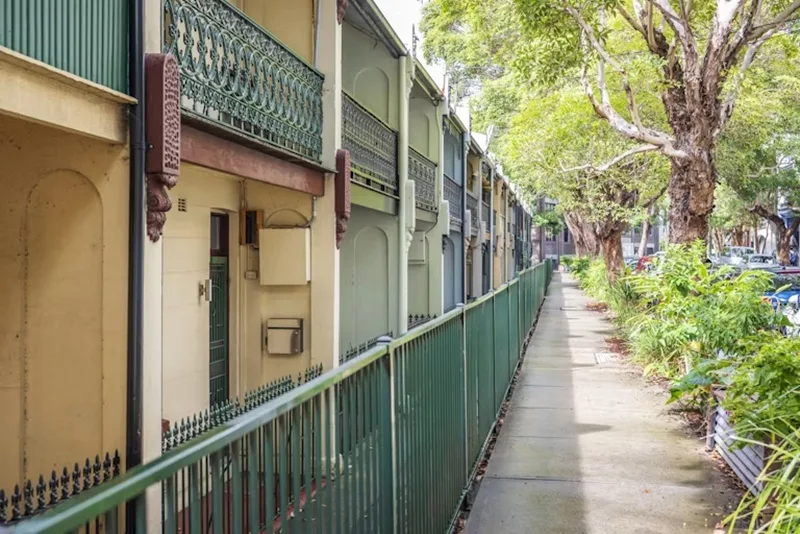
Every winter, millions of Australians are reminded how hard it is to live comfortably in older homes. Warm air constantly leaks out through poorly insulated ceilings, walls and floors, and through gaps in floors, windows and under doors. Heaters run day and night, sending energy bills soaring.
The gap between new and old homes is huge. Since 2004, new homes across most of Australia have to meet minimum energy performance standards. Homes now have to reach 7 stars on the national Home Energy Rating scheme, known as NatHERS (or the equivalent BASIX system in New South Wales). The higher the rating, the cheaper it is to get through winter or summer.
By contrast, homes built before 2004 get an average of just 2.1 stars. Many lack basic features such as insulation, draught proofing and energy efficient appliances. That’s according to new research we undertook assessing energy performance of almost 1,100 older homes in NSW. Across the state, this means about 850,000 homes would get zero or 1 star for energy perf

Why does this matter?
Requiring new homes to be more and more energy efficient over time is good policy. Energy efficient homes require less heating and cooling and keep residents comfortable.
But houses last a long time. In NSW, most homes were built before these standards were introduced over 20 years ago. Older homes make up 61% of the state’s housing stock, or just over two million homes.
The energy performance gap means most people in NSW live in homes which are harder and more expensive to keep comfortable during cold and hot weather.
These costs can be considerable. Of a home’s fixed energy use, 38% is used to heat air, 29% to heat water, and 16% to cool air. A 2-star home would typically need 4–6 times as much energy as a 7 star home to maintain a comfortable temperature.
Residents are forced to run their heaters and air conditioners more often to maintain comfortable temperatures or risk their wellbeing if they can’t afford to.
It’s not news that older homes aren’t as energy efficient. But much of what was known came from a 2015 study on 60 houses in Victoria, which found homes built before 2005 averaged 1.8 stars. Our new research analysed 1,091 homes across New South Wales, giving us a much larger and geographically diverse evidence base.
The homes in this research came from across the state. They were selected to be representative of older housing types, including single dwellings and townhouses built before 2004. Apartments were not included.
A small group of home energy assessors visited and assessed all 1,091 homes between July 2023 and June 2024. Each home was assessed using the Residential Efficiency Scorecard approach, and then converted into the equivalent NatHERS star rating.
Why is the gap so large?
The introduction of minimum energy standards has led to clear improvement in new homes. Builders and owners can choose how to meet energy performance requirements – it’s not one size fits all.
Typically, newer NSW homes have double the ceiling insulation of older homes, coupled with insulation in external walls and often under floors. Windows and doors with good air seals are now standard features.
By contrast, a typical older home has little or no insulation in the walls and floors. It’s common for warm air to leak out and draughts of cold air to blow in. Our research found only 22% of doors and 40% of windows were sealed.
Older homes also tend to have older, less energy-efficient methods of heating and cooling. We found 72% of fixed heating and 60% of cooling appliances had efficiency ratings of medium or below.
Renters have it worse
Our research shows renters have it worse. Older homes used as private rentals had significantly lower energy ratings (1.6 NatHERS stars) compared to the homes where owners lived there (2.1 stars).
Rental properties had lower levels of insulation in ceilings and walls, as well as less access to heating and cooling. Almost a quarter of rentals (24%) had no air conditioners.
Rental homes were more than twice as likely to have expensive-to-run electric radiators for winter heating (16% compared to 6–7% for owner-occupied).
What can be done?
Many older homes can be upgraded to make them more liveable and cheaper to live in. These include:
Lower cost
- sealing gaps to prevent draughts
- switching to water-efficient shower heads
Mid-range
- upgrading insulation in ceilings, walls and potentially floors
- improving internal window coverings
- replacing inefficient appliances with energy-efficient reverse cycle air conditioners for heating and cooling
- switching to efficient heat pumps for hot water or setting existing electric systems to heat in the middle of the day alongside new solar sharer plans if eligible
Higher cost
- install high-performance double or triple glazed windows
- install external blinds or shading
Combining improvements can cut energy consumption up to 39%.
Scaling up
Upgrading older homes at scale would cut energy consumption while improving resident comfort and reducing energy bills.
But cost is a deterrent. Our research has informed the state government’s new Home Energy Saver scheme, intended to make this less of a barrier.
The scheme currently offers zero interest loans for home owners to upgrade energy performance. In the future, it will offer discounts of up to A$4,000 for owners and renters on lower incomes.
The government plans to introduce disclosure of home energy ratings when homes are sold or rented to give people more information about energy costs.
It’s too early to say whether these schemes will do what policymakers hope. But our research shows the problem is real – and it won’t fix itself.