
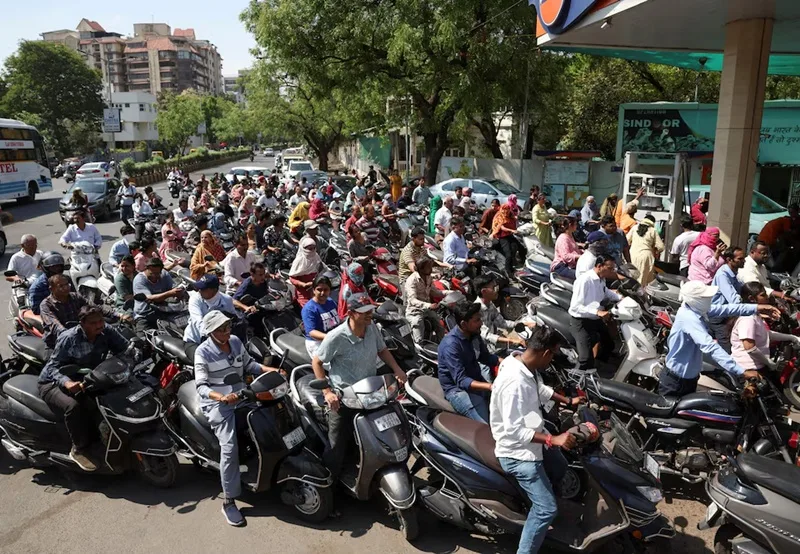
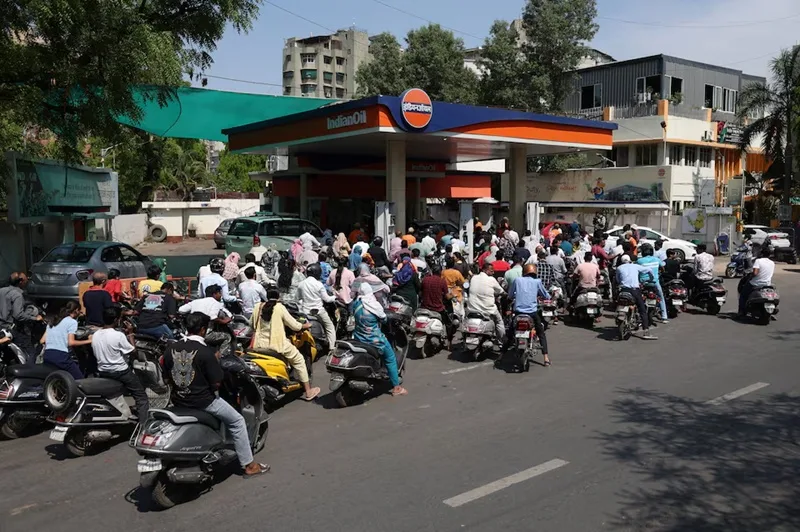
NEW DELHI, March 27 (Reuters) – India slashed its special excise duties on petrol and diesel, as fuel prices stay volatile with supplies choked by the Iran war.
In a government order on Thursday, India’s finance ministry reduced the special excise duty on petrol to 3 rupees ($0.0318) per litre from 13 rupees earlier. It also cut the duty on diesel to zero from 10 rupees.
The U.S.-Israeli war with Iran has led to a near-closure of the Strait of Hormuz, which serves as a conduit for 40% of crude oil imports, hurting shipping and gas supplies.
The ministry did not say how much the duty cuts would cost the government.
Madhavi Arora, an economist at Emkay Global, estimated the annualised fiscal hit to be nearly 1.55 trillion rupees. The duty cuts would absorb about 30%-40% of annual losses of oil marketing companies on auto fuel at current prices, she added.
India has been hit hard by volatility in crude prices and disruption in oil and gas supplies, but unlike China it has not moved to ban exports of refined fuels.
Prime Minister Narendra Modi and his government have stressed that adequate arrangements are in place, including for fertilisers supply for the summer sowing season and for coal to meet the rising demand for electricity.
India, the world’s third-biggest oil importer and consumer, meets over 90% of its oil needs through purchases from overseas.
The South Asian country consumed 33.15 million metric tons of cooking gas last year, with imports accounting for about 60% of demand. About 90% of those imports came from the Middle East.
($1 = 94.1980 Indian rupees)