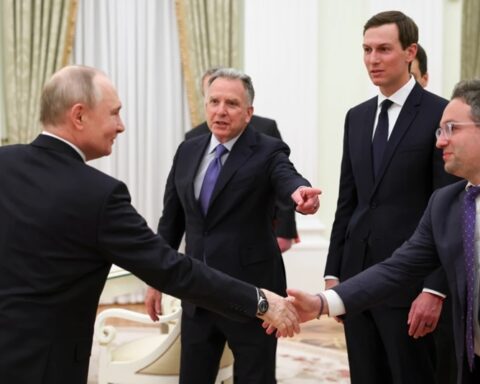
KYIV, Ukraine, December 3, 2025 (AP) — Ukraine and its European allies accused Russian President Vladimir Putin on Wednesday of feigning interest in peace efforts after five hours of talks with U.S. envoys at the Kremlin produced no breakthrough.
The Russian leader “should end the bluster and the bloodshed and be ready to come to the table and to support a just and lasting peace,” said U.K. Foreign Secretary Yvette Cooper. Ukrainian Foreign Minister Andrii Sybiha urged Putin to “stop wasting the world’s time.”
The remarks reflect the high tensions and gaping gulf between Russia on one side and Ukraine and its European allies on the other over how to end a war that Moscow started when it invaded its neighbor nearly four years ago.
A day earlier, Putin accused the Europeans of sabotaging the U.S.-led peace efforts — and warned that, if provoked, Russia would be ready for war with Europe.
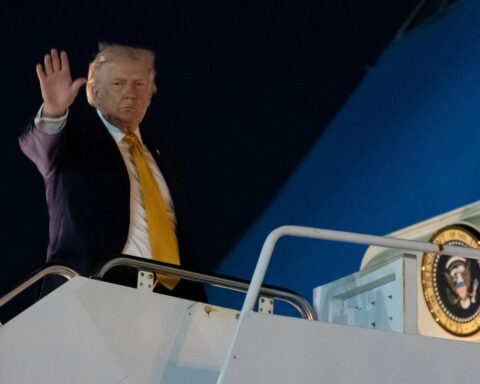
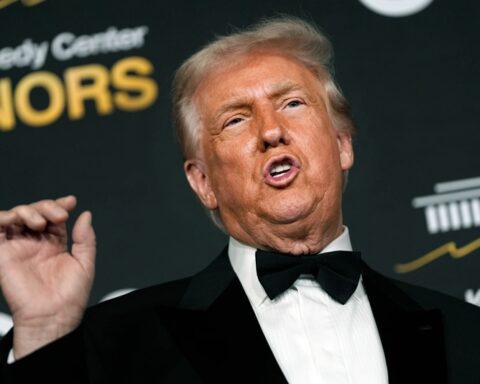
Since the 2022 invasion, European governments, along with the U.S., have spent billions of dollars to support Kyiv financially and militarily. Under President Donald Trump, however, the U.S. has tempered its support — and instead made a push to end the war.
Putin’s foreign affairs adviser Yuri Ushakov said Tuesday’s talks at the Kremlin between Putin and U.S. envoy Steve Witkoff and Trump’s son-in-law Jared Kushner were “positive” but wouldn’t release any details.
Unclear where peace talks go now
Where the peace talks go from here depends largely on whether the Trump administration decides to increase the pressure on Russia or on Ukraine to make concessions.
A U.S. peace proposal that became public last month was criticized for being tilted heavily toward Moscow because it granted some of the Kremlin’s core demands that Kyiv has rejected as nonstarters.
Many European leaders worry that if Putin gets what he wants in Ukraine, he will have free rein to threaten their countries, which already have faced incursions from Russian drones and fighter jets, and an alleged widespread sabotage campaign.
The Russian and American sides agreed Tuesday not to disclose the substance of their Kremlin talks, but at least one major hurdle to a settlement remains — the fate of four Ukrainian regions Russia partially seized and occupies and claims as its own.
After the talks, Ushakov told reporters that “so far, a compromise hasn’t been found” on the issue of territory, without which the Kremlin sees “no resolution to the crisis.”
Ukraine has ruled out giving up territory that Russia has captured.
Asked whether peace was closer or further away after the talks, Ushakov said: “Not further, that’s for sure.”
“But there’s still a lot of work to be done, both in Washington and in Moscow,” he said.
Kremlin spokesman Dmitry Peskov said Wednesday it was “not correct” to say that Putin had rejected the U.S. peace plan. He declined to elaborate on the talks.
“We’re deliberately not going to add anything,” he said. “It’s understood that the quieter these negotiations are conducted, the more productive they will be.”
Key players in the US-led Ukraine talks
A carousel of images and text showing key details about some of the biggest players in the ongoing US-led Ukraine talks.
Steve Witkoff
United States
Witkoff is a real estate magnate turned White House foreign policy fixer for the Trump administration. He has been at the forefront of complex negotiations to end the world’s two biggest wars in Gaza and Ukraine from a perch that did not require Senate confirmation. The 68-year-old is a longtime friend and golf partner of Trump. He has visited Moscow multiple times in recent months.
Jared Kushner
United States
Kushner is Trump’s son-in-law and former White House adviser during the president’s first term. He is a businessman and investor who worked on a wide range of policies in the Trump administration, including brokering a ceasefire agreement between Israel and Hamas earlier this year. He has also been involved in the negotiations to end the war in Ukraine, meeting in Florida with the Ukrainian side over the weekend and in Moscow with the Russians.
Daniel Driscoll
United States
Driscoll, the U.S. army secretary, is an Iraq War veteran and friend of U.S. Vice President JD Vance. He recently emerged as an unlikely interlocutor in the push to end the war in Ukraine. Driscoll, 38, presented Trump’s plan to Ukrainian President Volodymyr Zelenskyy in Kyiv and later sat down with Russian officials in the United Arab Emirates to discuss the proposals.
Marco Rubio
United States
Rubio, the U.S. secretary of state, has been leading talks with the Ukrainian side and recently headed the U.S. delegation in Geneva, where amendments were introduced to the U.S.-Russia brokered peace plan that heavily favored Russia.
Rustem Umerov
Ukraine
Umerov was appointed to lead Ukraine’s delegation in peace talks with U.S. officials in Florida following last week’s resignation of Zelenskyy’s chief of staff, Andrii Yermak. He served as defense minister from October 2023 until July 2025, when he was appointed to lead Ukraine’s National Security and Defense Council after a government shake-up. Since the full-scale war broke out, Umerov has been heavily involved in all key rounds of negotiations.
Yuri Ushakov
Russia
Ushakov, a longtime Russian diplomat, has served as a presidential aide since 2012. In 1998-2008, he served as Russia’s ambassador to the United States. He speaks English and Danish, according to the Kremlin. Ushakov has been prominently involved in Russia’s talks with the U.S. this year on ending the war in Ukraine, a role highlighted by a report last month that Witkoff coached Ushakov on how Putin should pitch the peace plan to Trump.
Kirill Dmitriev
Russia
Dmitriev, a former investment banker who is now head of Russia’s sovereign wealth, has emerged as a key player in the U.S.-led effort to negotiate an end to the war in Ukraine. Dmitriev, 50, lacks diplomatic credentials but has increasingly served as a back-channel communicator between the Kremlin and Trump allies, despite being on the U.S. sanctions list.
Sergey Lavrov
Russia
Lavrov has served as Russia’s foreign minister since 2004. He is known for firmly defending Russian policy in appearances worldwide and regarded as a formidable interlocutor, fluent in English, well-briefed on all affairs and unwaveringly determined to press Russian demands. Lavrov has been involved in Russia’s talks with the U.S. this year on ending the war in Ukraine. He attended the first meeting with a U.S. delegation in Jeddah, Saudi Arabia, in February and has held phone conversations with Rubio.