
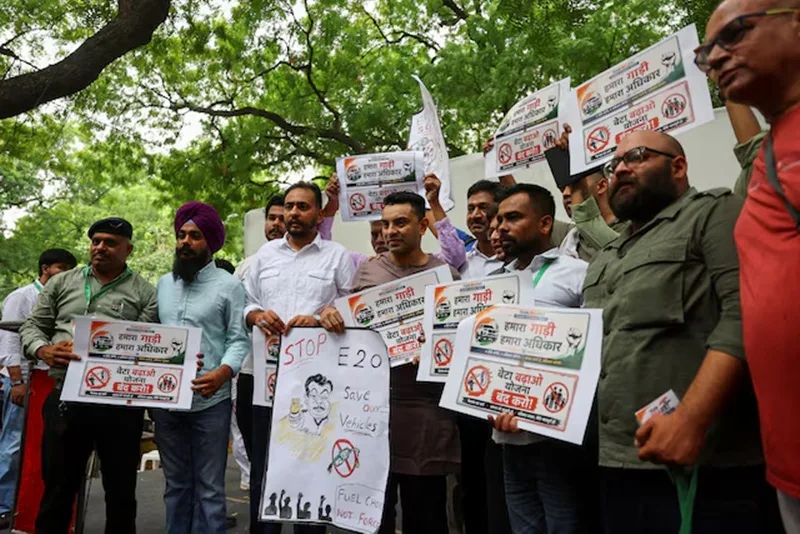
NEW DELHI, July 8 (Reuters) – Indian Prime Minister Narendra Modi’s government is facing mounting anger over a mandatory 20% ethanol-blended fuel policy, with vehicle owners demanding choice and an opposition politician asking carmakers Maruti Suzuki and Toyota to provide clarity.
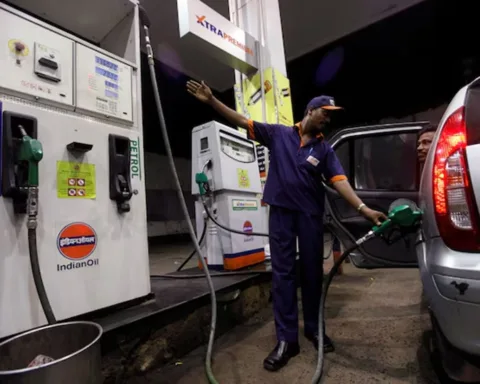
The 20% ethanol-blended petrol, called E20, became the only fuel sold at India’s 90,000 petrol pumps at the end of last year, triggering a public uproar that however dissipated within weeks.
But it’s now again at the centre of controversy after a top government lawyer called E20 an “experiment” in court – and then backtracked on the comments – re-igniting concerns about the fuel affecting the performance of cars and what critics called its hasty rollout.
Hundreds of motorists have posted complaints on X alleging reduced fuel efficiency and increased wear and tear of car parts from E20. One of the main complaints is that they have no option to buy unblended petrol if they prefer.
“Auto companies need to stop hiding and tell us clearly … can your pre-2023 models actually handle E20 fuel?” said X user Aashna. “Stop fooling the public.”
While countries like Brazil have paced ethanol blend increases over decades, the U.S. has capped its standard blend at E10 and sells higher blends only as an option for compatible vehicles.
In India, however, E20 fuel replaced E10 nationwide in 2025, well ahead of its 2030 deadline, even though E20-compliant cars only began hitting the roads in 2023.
Late on Tuesday, opposition politician Arvind Kejriwal held a press conference during which he read from the owner’s manuals of Maruti and Toyota cars, arguing many old cars were only E10 compliant, tapping into simmering public anger over the policy.
“People are only asking for one thing: please give us an option,” said Kejriwal, a former chief minister of the capital Delhi. He has written to Toyota and others demanding clarity on whether their vehicles are E20 compliant, according to letters he posted on X on Wednesday.
Maruti and Toyota Motor did not immediately respond to requests for comment.
GOVERNMENT MINISTER CHALLENGES CRITICISM
Reuters has previously reported that a fuel tank flap and user manual of an Audi Q3 purchased in 2024 in India showed it recommended only E5 and E10 fuel. The fuel tank of a 2024 Mahindra Scorpio SUV was pasted with a warning sticker: “CAUTION. PETROL/E10 FUEL ONLY”.
Mahindra said in a statement that its E20-compliant vehicles could use the fuel, but it did not address what would happen with older cars.
The E20 debate has dominated prime-time television debates and newspaper editorials in recent days. The government says E20 saves imports of crude oil, helps farmers cultivating sugar, the base for ethanol, and lowers emissions.
A lawyer filed a new public interest case at the Supreme Court this week, echoing those concerns. It’s not clear if the court will hear the case amid the new public uproar, given it dismissed challenges to the policy last year.
Modi’s officials and state-run oil companies have been trying to calm nerves. On Tuesday, Transport Minister Nitin Gadkari said he was challenging anyone to prove that their vehicle was damaged because of using E20.
Tehseen Poonawalla, a New Delhi-based entrepreneur and opposition Congress party supporter, has sought a public conversation with the minister on the issue, saying he will bring affected customers to the gathering.