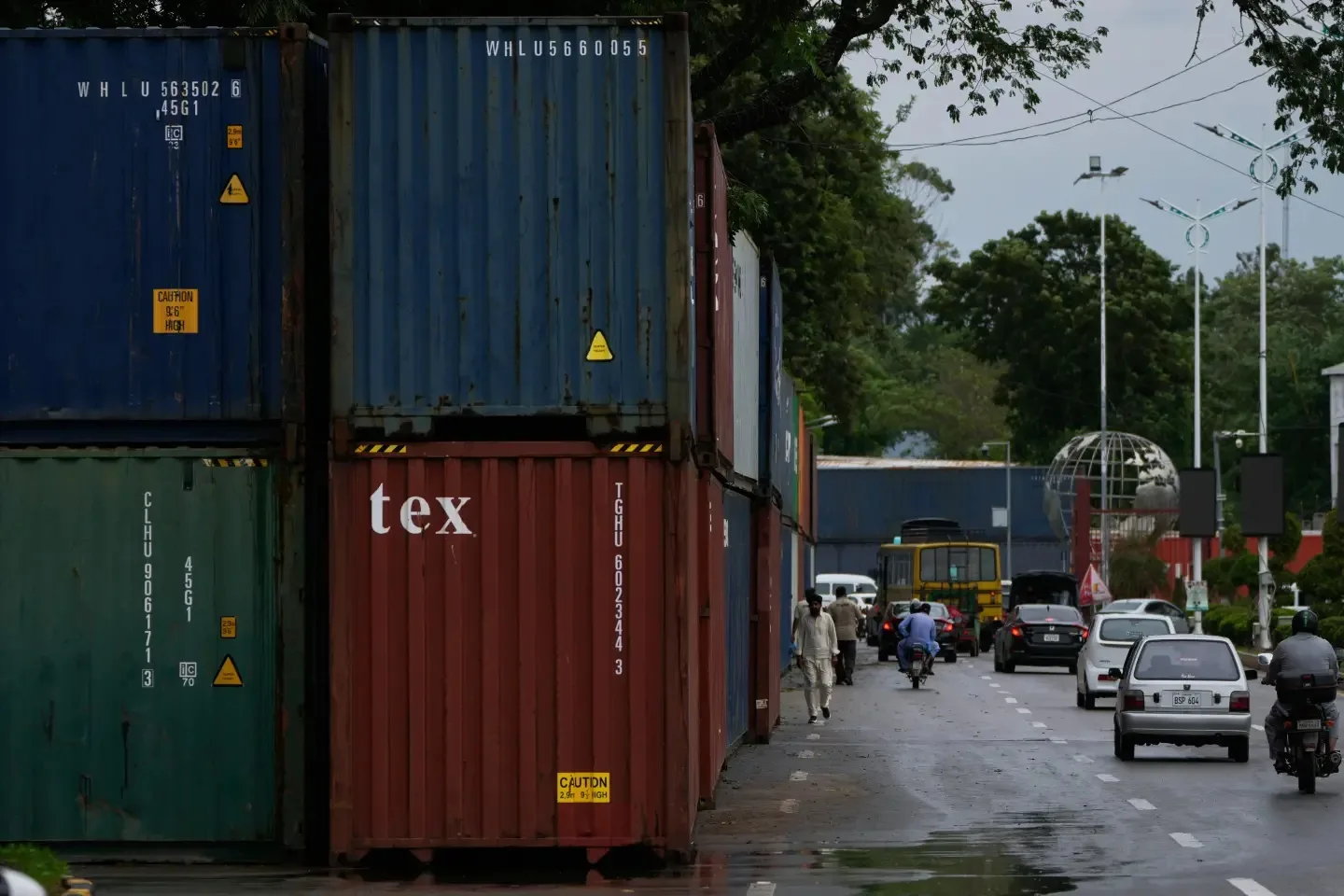
ISLAMABAD, September 29, 2026 (AP) — It’s a familiar sight in Pakistan’s capital whenever a protest is expected: shipping containers lined up along streets or placed across key routes to restrict demonstrators’ movement and keep them from reaching sensitive areas.
For residents, the steel barriers have become an unmistakable warning of what may follow: blocked streets, snarled traffic and long detours across Islamabad and neighboring Rawalpindi.
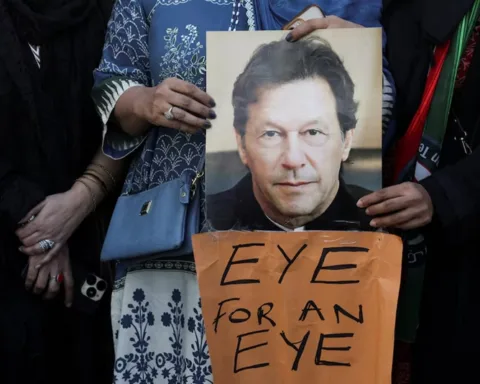
The latest deployment came ahead of a march by supporters of imprisoned former Prime Minister Imran Khan demanding his release. Cranes have lifted red, blue and green containers from trucks and lowered them into place along roads.
Originally scheduled for Sept. 27, the march was postponed until Oct. 4, but many of the containers remain in place. Since last week, police have positioned them along key routes leading to the Red Zone, home to Parliament, government offices and foreign embassies.
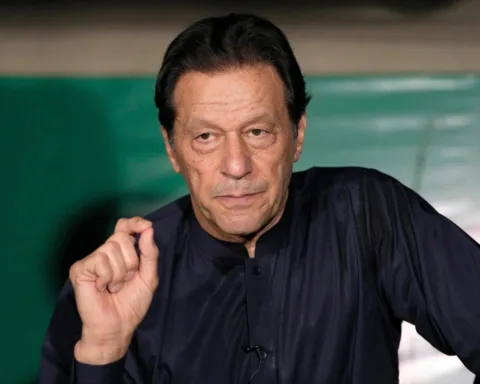
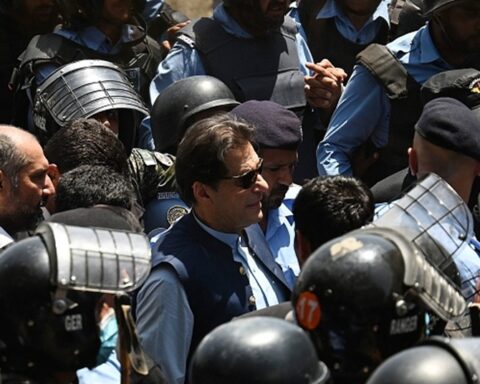
Khan, a former cricket star turned politician and Prime Minister Shehbaz Sharif’s main political rival, has been imprisoned since 2023. He is serving multiple prison sentences following convictions on corruption and other charges. Khan and his Pakistan Tehreek-e-Insaf party say the cases are politically motivated.
Khan was ousted in a parliamentary no-confidence vote in April 2022. Sharif returned to office after lawmakers elected him prime minister following the Feb. 8, 2024, parliamentary election. Khan’s party says its mandate was stolen in that vote, an allegation the government denies.
The containers are hard to miss in the city
Now against Islamabad’s green hills and tree-lined avenues, the rows of brightly colored containers are hard to miss. Some sit beside busy roads, ready to be moved. Others are stacked two high or positioned across traffic lanes, turning broad avenues into narrow, controlled passages.
“It looks like a city of containers,” Islamabad housewife Sahiba Bibi said.
She said this time the disruption began before demonstrators had even set out for Islamabad from across the country, particularly from northwestern Khyber Pakhtunkhwa province, where Khan’s party governs.
PTI’s top leadership said it delayed the march because authorities had blocked key approaches to the capital, including Attock Bridge, a major crossing for convoys traveling from Khyber Pakhtunkhwa. Containers and spiked metal sheets had been placed along the route that Khyber Pakhtunkhwa Chief Minister Sohail Afridi and his supporters were expected to take, party organizers said.
Even where roads remained open, the preparations narrowed traffic lanes and created long lines of vehicles. Commuters searched for alternate routes, while shopkeepers along potential protest paths weighed whether to close their businesses, fearing damage if unrest or clashes broke out.
Authorities say they pay rent to owners of container trucks for the use of the containers. But some drivers say police stop them on highways, seize their vehicles and take their keys.
Rehmat Gul, a container-truck driver, said police stopped him and took his keys before impounding his truck. The container was later placed on a road near Rawalpindi, he said.
When the containers arrive, people know their lives will be disrupted
“Fuel prices have almost doubled because of the ongoing tensions between the United States and Iran,” said Abdul Hafeez, a government employee who commutes from Rawalpindi to Islamabad for work and also drives his children to school. “At a time when we are already struggling to keep our kitchens running, roadblocks force us to travel farther.”
“If the government does not block the roads, we have no problem with these protests,” he said.
For many residents, the containers are no longer merely a security measure. Their arrival signals that another political confrontation is approaching and that ordinary life may be disrupted.
The government, however, says the precautions are necessary.
“PTI has a track record of disruption and vandalism during protests, and its supporters would not be allowed to enter the capital,” Information Minister Attaullah Tarar told reporters in Peshawar last week.
Afridi rejected the government’s characterization, saying PTI’s sole purpose was to hold a peaceful rally demanding Khan’s release.
Authorities used similar measures in November 2024, sealing roads into Islamabad as Khan’s supporters attempted to reach the capital despite a ban on rallies. Police fired tear gas to disperse the protesters.
That experience has taught residents not to wait for a formal road-closure announcement.
Once cranes begin lowering containers into place, many start changing their routes, and some begin stocking up on food.