United Nations, Sep 9 (PTI) Bangladesh Foreign Minister Khalilur Rahman on Tuesday declined to comment on whether Prime Minister Tarique Rahman will attend the BRICS Summit in India, despite New Delhi inviting him to an outreach session of the grouping.
India will host the annual BRICS summit in New Delhi on September 12 and 13, with discussions expected to focus on pressing global challenges, including the economic impact of the West Asia crisis.
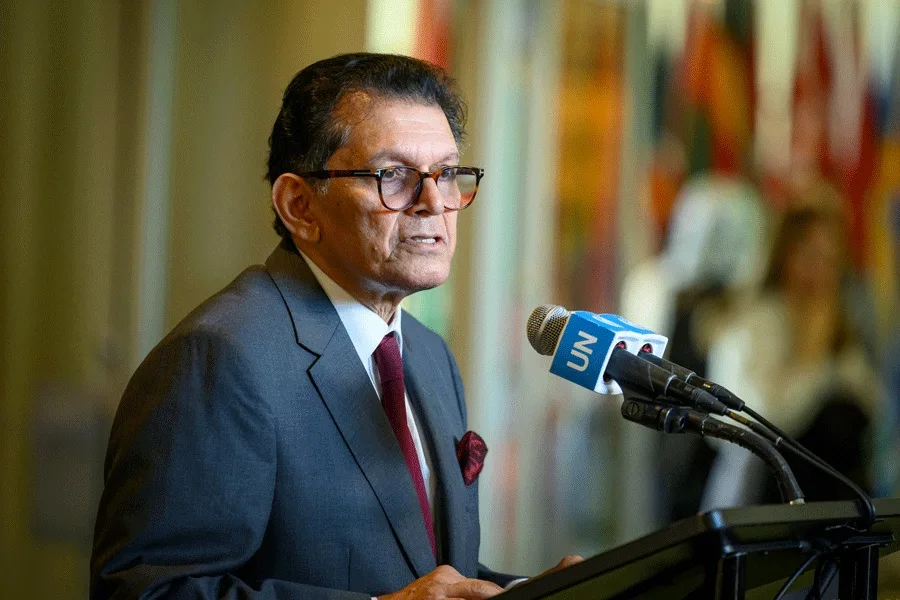
“I’m not here (in a) national capacity, so please forgive me… I will really ask all of you to ask me questions or approach me in my capacity as the President of the General Assembly. If there are bilateral issues, I’m still the Foreign Minister; I’ll speak to you separately,” Rahman said at a press briefing here on Tuesday.
He was responding to a PTI question on whether the Bangladeshi prime minister would attend the BRICS summit.
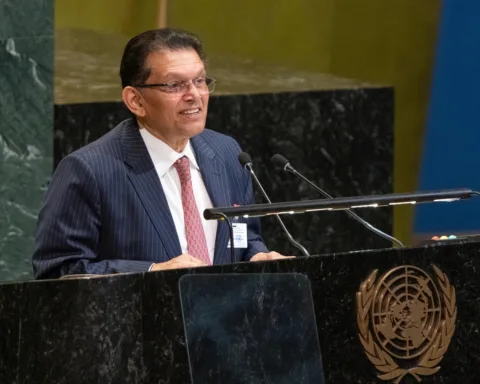
Rahman assumed charge as President of the 81st session of the UN General Assembly on Tuesday, taking over the presidency of the world body’s annual session.
His comments came amid uncertainty over Bangladesh’s participation in the summit, which India is hosting as the current chair of BRICS.
India has invited Tarique Rahman to attend the summit’s outreach session in his capacity as the current chair of the BIMSTEC (Bay of Bengal Initiative for Multi-Sectoral Technical and Economic Cooperation).
BIMSTEC comprises India, Sri Lanka, Thailand, Bangladesh, Myanmar, Nepal and Bhutan.
Dhaka’s participation in the summit is expected to draw attention amid strained ties between Bangladesh and India following New Delhi’s decision to provide political asylum to former prime minister Sheikh Hasina, who fled to India after her ouster in a youth-led uprising in August 2024.
Earlier on Tuesday, Ministry of External Affairs spokesperson Randhir Jaiswal said in New Delhi that there was no update on any confirmation from Dhaka regarding the Bangladeshi prime minister’s participation in the BRICS summit.
BRICS originally comprised Brazil, Russia, India, China and South Africa. The grouping expanded in 2024 to include Egypt, Ethiopia, Iran and the United Arab Emirates, while Indonesia joined in 2025.
The grouping has emerged as an influential forum of 11 major emerging economies, representing around 49.5 per cent of the global population, around 40 per cent of global GDP and around 26 per cent of global trade.