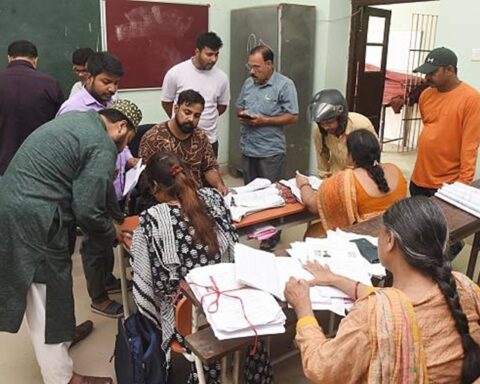

The Special Intensive Revision (SIR) of electoral rolls has generated one of the most important constitutional debates in contemporary India. While the Election Commission of India has described the exercise as an effort to improve the accuracy of electoral rolls, the public discussion has moved far beyond electoral administration. It has reopened fundamental questions concerning citizenship, identity, official documentation and the relationship between the citizen and the sovereign State.
Among the questions debated across the country, one has acquired particular significance:
What is the legal and constitutional status of an Indian passport?
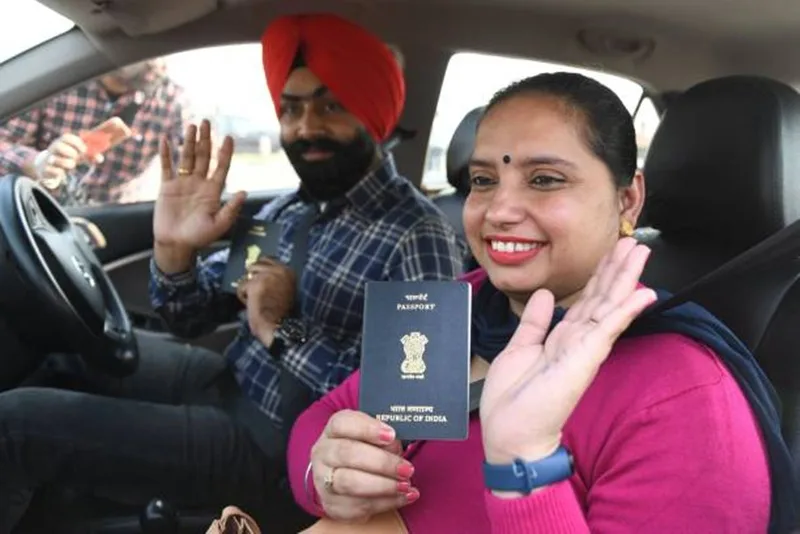
For millions of Indians, the answer appears obvious. The passport is the document that enables international travel, allows entry into foreign countries through visas, secures protection from Indian embassies abroad and identifies its holder as travelling under the authority of the Republic of India.
Yet recent public debate has revealed widespread confusion regarding the distinction between citizenship, nationality, passports and electoral eligibility.
This confusion deserves careful legal examination rather than political interpretation.
The purpose of this editorial is neither to support nor oppose any political position. Instead, it seeks to examine the issue through the Constitution of India, the Citizenship Act, 1955, the Passports Act, 1967, the Passport Preamble and the established principles governing international travel and sovereign recognition.
Only such an approach can provide clarity to citizens.
Citizenship: The Foundation of the Republic
No democratic State can exist without citizens.
Citizens constitute the political community from which democratic institutions derive their legitimacy. Every Constitution therefore defines, either directly or through legislation, the legal relationship between the individual and the State.
The Constitution of India addresses citizenship in Articles 5 to 11.
These provisions determine who became citizens of India at the commencement of the Constitution on 26 January 1950 and empower Parliament to enact legislation governing citizenship thereafter.
Accordingly, Parliament enacted the Citizenship Act, 1955, which continues to regulate the acquisition and termination of Indian citizenship.
Citizenship may be acquired through several legally recognised modes, including birth, descent, registration and naturalisation, subject to statutory conditions.
Citizenship is therefore a legal status.
It creates rights and obligations between the individual and the Republic of India.
Among these rights is eligibility, subject to law, to receive an Indian passport.
Citizenship and Nationality
Although the terms “citizenship” and “nationality” are often used interchangeably, they have distinct meanings in international legal discourse.
Citizenship primarily describes the legal relationship between an individual and the State under domestic constitutional and statutory law.
Nationality describes the individual’s legal bond with the State in international law.
For most Indians, both concepts coincide.
When an Indian passport identifies its holder as an Indian national for international travel, it reflects the legal relationship recognised by the Republic of India.
This distinction becomes important because passports primarily operate in the sphere of international relations.
Parliament and the Citizenship Act, 1955
The Citizenship Act, 1955, enacted under Article 11 of the Constitution, constitutes the principal legislation governing citizenship in India.
The Act prescribes the conditions under which citizenship may be acquired, registered, renounced or terminated.
It also empowers the Central Government to administer citizenship matters.
Importantly, the Act demonstrates that citizenship is determined according to law enacted by Parliament.
No administrative authority, foreign government or private institution possesses the constitutional authority to confer Indian citizenship.
Only India may determine who its citizens are.
This principle reflects the sovereignty of the Republic.
The Passports Act, 1967
If the Citizenship Act determines who belongs to the Republic, the Passports Act, 1967, regulates the international travel documents issued by that Republic.
The Long Title of the Act states that it is:
“An Act to provide for the issue of passports and travel documents, to regulate the departure from India of citizens of India and other persons and for matters incidental or ancillary thereto.”
These words deserve careful attention.
Parliament did not enact the Passports Act merely to print booklets.
It established a statutory framework through which the sovereign Republic of India issues passports and other travel documents after prescribed legal procedures.
The Act authorises the Passport Authority to receive applications, examine supporting material, make inquiries where necessary and refuse passports in circumstances specified by law.
It also empowers the Government to impound or revoke passports obtained through fraud, suppression of material facts or other legally recognised grounds.
These provisions demonstrate that the issuance of an Indian passport is not a routine administrative exercise.
It is a sovereign function exercised under parliamentary authority.
Why Passport Verification Matters
Every Indian passport represents the conclusion of a statutory process.
Applicants submit documentary evidence.
Identity is verified.
Address is verified.
Police verification is conducted wherever applicable.
The Passport Authority evaluates whether the statutory requirements have been satisfied.
Only thereafter is a passport issued.
This rigorous process explains why Indian passports enjoy international credibility.
Governments throughout the world recognise that the Republic of India does not issue passports casually.
The integrity of India’s passport system contributes directly to India’s international reputation.
That reputation has been built over decades through legal procedures established by Parliament and implemented by the Ministry of External Affairs.
The Passport Preamble: A Sovereign Voice
One of the most remarkable features of the Indian passport appears on its opening page.
It reads:
“These are to request and require in the name of the President of the Republic of India all those whom it may concern to allow the bearer to pass freely without let or hindrance and to afford him or her every assistance and protection of which he or she may stand in need.”
These words are not decorative.
They constitute a formal communication from one sovereign State to every other sovereign State.
The request is made in the name of the President of the Republic of India, the constitutional Head of State.
The significance of this language is profound.
It reflects the responsibility assumed by the Republic of India towards the bearer of its passport during international travel.
It also reflects the confidence with which India presents its passport to the international community.
The Passport Preamble therefore symbolises sovereign responsibility, diplomatic recognition and constitutional authority.
It reminds both citizens and foreign governments that the passport is far more than a booklet used at airports.
It is a document carrying the authority, dignity and international standing of the Republic of India.
The Passport in International Law
A passport is a uniquely sovereign document. Unlike a birth certificate, driving licence or voter identity card, a passport is intended for use beyond the territorial boundaries of the issuing State.
The authority to issue a passport is an attribute of national sovereignty. Every independent State has the exclusive right to determine who is eligible to receive its passport, subject to its own constitutional and statutory framework. Equally, every sovereign State decides who may enter its territory through its immigration and visa laws.
The international travel system functions because States trust one another’s passport-issuing authorities. This trust is not blind; it is founded upon the expectation that each country will maintain rigorous legal procedures before issuing passports.
India is part of this international system. The credibility of the Indian passport reflects not only the integrity of the Ministry of External Affairs and the Passport Authorities but also the confidence that other nations place in India’s legal and administrative processes.
ICAO and International Passport Standards
Modern passports are governed by internationally accepted technical standards developed by the International Civil Aviation Organization (ICAO), a specialised agency of the United Nations.
ICAO’s Document 9303 establishes standards for machine-readable travel documents, biometric security features, document authentication and passport design. These standards are intended to promote secure, efficient and reliable international travel.
The Indian passport conforms to these internationally recognised standards. Its biometric and security features enable immigration authorities throughout the world to verify its authenticity.
ICAO standards do not determine citizenship. That remains a matter of domestic law. However, they ensure that passports issued by sovereign States are internationally recognisable, secure and resistant to fraud.
The confidence enjoyed by the Indian passport is therefore supported by both India’s domestic legal framework and internationally accepted technical standards.
The Passport and Consular Protection
International travel involves rights as well as responsibilities.
When Indian citizens encounter difficulties abroad—whether because of illness, accidents, natural disasters, civil unrest, arrest or loss of travel documents—they often seek assistance from Indian Embassies and Consulates.
The Vienna Convention on Consular Relations, 1963, provides the international legal framework within which consular authorities perform such functions.
Indian diplomatic missions issue emergency travel documents, assist citizens in distress, communicate with local authorities and facilitate contact with families where necessary.
These functions illustrate an important constitutional reality.
The Republic of India does not abandon its citizens when they cross international borders. Through its diplomatic missions, it continues to extend protection and assistance to those travelling under the authority of an Indian passport.
This continuing responsibility reinforces the sovereign character of the passport itself.
Why Foreign Governments Accept Indian Passports
One of the strongest demonstrations of confidence in the Indian passport comes from foreign governments.
Every year millions of Indian citizens apply for visas to study, work, conduct business, receive medical treatment or visit other countries.
Before issuing visas, embassies verify the authenticity of the passport and assess whether the applicant satisfies their own immigration laws.
What they do not ordinarily do is conduct an independent investigation into whether the holder satisfies the requirements of the Citizenship Act, 1955.
That responsibility belongs exclusively to the Republic of India.
Foreign governments accept that an Indian passport has been issued under Indian law by competent authorities acting on behalf of the Republic of India.
They rely upon India’s sovereign certification while deciding only whether entry into their own country should be permitted.
This distinction is crucial.
A visa is permission to enter another country. It is not a declaration of Indian citizenship by that foreign country.
Nevertheless, the visa system itself demonstrates the confidence that sovereign States place in passports issued by one another.
Can a Foreign Government Issue a Visa to a Non-Indian Citizen Holding an Indian Passport?
This question has become central to the present public debate.
In ordinary international practice, a foreign government processes a visa application on the assumption that the passport presented has been lawfully issued by the issuing State.
If an applicant presents a valid Indian passport, the embassy ordinarily proceeds on the basis that the Republic of India has issued that passport in accordance with its laws.
The embassy’s function is not to adjudicate Indian citizenship. Its function is to decide whether that passport holder satisfies the visa requirements of the destination country.
Exceptional situations do exist.
A passport may later be discovered to have been forged, fraudulently obtained or revoked by the issuing authority. In such circumstances, visas may be refused or cancelled.
These exceptional cases, however, do not undermine the general international practice of relying upon passports issued by sovereign States.
Indeed, the existence of legal mechanisms to cancel fraudulently obtained passports strengthens confidence in the overall passport system.
The Doctrine of Mutual Confidence Among Sovereign States
International travel would become virtually impossible if every country independently investigated the citizenship status of every foreign passport holder.
Imagine a world in which every embassy had to verify birth records, family history and citizenship documents of every visa applicant before granting permission to travel.
International mobility would slow to a standstill.
Instead, sovereign States follow the principle of mutual confidence.
Each country accepts, in the ordinary course, that another sovereign State has exercised due diligence before issuing its passport.
This mutual confidence benefits all nations.
It promotes international trade.
It facilitates tourism.
It supports higher education.
It enables diplomatic engagement.
It strengthens people-to-people relations.
The Indian passport functions successfully within this international framework because the Republic of India has earned the confidence of the global community through its legal institutions and administrative procedures.
The Passport as an Instrument of National Reputation
Every passport carries the reputation of the nation that issues it.
When immigration officers examine an Indian passport, they are not merely examining the identity of an individual traveller.
They are also assessing the credibility of the Republic of India as the issuing State.
A country whose passports are trusted enjoys smoother international mobility for its citizens.
Conversely, if confidence in a country’s passport system declines because of widespread fraud or weak verification, its citizens may face greater scrutiny, stricter visa requirements and increased travel restrictions.
For this reason, maintaining the integrity of the Indian passport system is not merely an administrative objective.
It is an important aspect of India’s international standing.
The confidence placed in the Indian passport by governments around the world reflects confidence in India’s institutions, its rule of law and its sovereign commitment to secure and reliable travel documentation.
Transition to the Constitutional Debate
The international status of the Indian passport naturally raises an important domestic question.
If the international community relies upon the Indian passport as an official sovereign document for purposes of visas, immigration and consular protection, how should Indian constitutional institutions view that same document within India’s own legal framework?
The answer lies in a careful reading of the Constitution of India, the Citizenship Act, the Passports Act and the constitutional principles governing public administration.
The Special Intensive Revision and the Constitutional Balance
The Special Intensive Revision (SIR) has generated one of the most significant constitutional discussions in recent years. At its core lies a simple but important question: how should a democratic State verify the eligibility of its citizens while preserving confidence in documents issued under its own authority?
The Constitution of India entrusts the Election Commission of India with the responsibility of conducting free and fair elections. Equally, Parliament has enacted laws governing citizenship and the issuance of passports. These constitutional and statutory functions are not in conflict; rather, they are intended to work harmoniously in strengthening Indian democracy.
The objective of the SIR is to ensure that electoral rolls accurately reflect eligible voters. This objective is unquestionably legitimate. However, in pursuing that objective, it is equally important that confidence in sovereign documents issued by the Republic of India is maintained.
A democracy derives its strength not only from accurate electoral rolls but also from public confidence in the institutions of the State.
Parliament’s Intention Under the Passports Act, 1967
The significance of an Indian passport is best understood by reading the Long Title of the Passports Act, 1967, enacted by Parliament:
“An Act to provide for the issue of passports and travel documents, to regulate the departure from India of citizens of India and other persons and for matters incidental or ancillary thereto.”
These words are significant.
Parliament consciously distinguished between “citizens of India” and “other persons.” The Act therefore recognises that passports and travel documents are issued within a carefully regulated statutory framework. It also provides for different categories of travel documents authorised by law.
The Passports Act empowers the Passport Authority to examine applications, verify supporting documents, make inquiries where necessary and refuse, impound or revoke passports in circumstances prescribed by law.
The existence of these safeguards demonstrates that the issuance of an Indian passport is not a mechanical administrative exercise. It is a sovereign statutory function performed under the authority of Parliament.
The Passport Preamble: The Republic Speaks to the World
Perhaps no part of the Indian passport better reflects its constitutional importance than the Passport Preamble itself.
Every ordinary Indian passport carries the following request:
“These are to request and require in the name of the President of the Republic of India all those whom it may concern to allow the bearer to pass freely without let or hindrance and to afford him or her every assistance and protection of which he or she may stand in need.”
This request is not made by an individual passport officer.
It is not issued in the name of a ministry.
It is issued in the name of the President of the Republic of India, the constitutional Head of State under Article 52 of the Constitution.
These words represent a sovereign assurance extended by India to the international community.
When the Republic requests every nation to permit the bearer to travel freely and to extend assistance and protection, it is exercising one of the fundamental attributes of sovereignty recognised throughout the world.
The Passport Preamble therefore transforms the passport from a simple travel document into an official instrument through which the Republic communicates directly with other sovereign States.
Why Foreign Governments Trust Indian Passports
Every year millions of Indians travel abroad for education, employment, business, tourism, medical treatment and diplomatic assignments.
Before granting visas, foreign governments examine the Indian passport presented by the applicant.
Their task is to decide whether the applicant satisfies the immigration laws of their own country.
They do not ordinarily undertake an independent inquiry into whether the holder satisfies every requirement of India’s citizenship laws.
That responsibility belongs exclusively to the Republic of India.
Foreign governments rely upon India’s sovereign certification embodied in the passport.
This principle reflects long-established international practice.
If every country independently investigated the citizenship status of every foreign passport holder, international travel would become virtually impossible.
The global visa system functions because sovereign States place mutual confidence in the passports issued by one another.
International Law and Sovereign Confidence
Modern international travel operates through cooperation among sovereign States.
The International Civil Aviation Organization (ICAO) has established internationally recognised standards for passports and machine-readable travel documents.
The Vienna Convention on Consular Relations, 1963, provides the legal framework within which consular authorities assist and protect their nationals abroad.
These international instruments do not determine who is an Indian citizen. That remains a matter of Indian constitutional and statutory law.
However, they demonstrate the international importance of passports as official documents issued by sovereign States.
Every Indian passport accepted by an immigration authority, every visa affixed by a foreign embassy and every act of consular assistance provided by an Indian mission abroad reflects the confidence placed in the Republic of India’s passport system.
The Evidentiary Importance of an Indian Passport
Every official document serves a different legal purpose.
A birth certificate records the fact of birth.
A driving licence authorises the holder to drive.
An educational certificate records academic qualifications.
An Indian passport performs a unique constitutional and international function.
It is issued under the authority of the Passports Act, 1967, after prescribed verification and in the name of the President of the Republic of India.
For these reasons, a valid Indian passport carries substantial evidentiary value. It is one of the most authoritative sovereign documents issued by the Republic of India.
Its credibility is founded upon the statutory process through which it is issued and the international confidence it enjoys.
Constitutional Harmony
The Constitution of India, the Citizenship Act, 1955 and the Passports Act, 1967 should be read harmoniously.
The Constitution establishes the framework of citizenship.
The Citizenship Act prescribes the legal rules governing citizenship.
The Passports Act regulates the issue of passports and travel documents.
Each statute performs a distinct constitutional function.
Together they reflect Parliament’s intention to regulate citizenship and international travel through the rule of law.
There is no inconsistency in recognising that citizenship is governed by the Constitution and the Citizenship Act while also recognising the high evidentiary and sovereign value of a passport issued after statutory verification.
Public Confidence and Good Governance
Confidence in public institutions is one of the pillars of constitutional democracy.
Citizens expect that documents issued after due legal scrutiny by one public authority will command respect across the institutions of the State unless there is credible evidence of fraud, forgery or statutory invalidity.
The Indian passport occupies a special place among official documents because it represents the Republic of India before the international community.
Protecting the credibility of that document strengthens public confidence, enhances India’s international reputation and reinforces the rule of law.
Conclusion
The debate surrounding the Special Intensive Revision has highlighted the need for greater public understanding of citizenship, passports and constitutional governance.
An Indian passport is unquestionably a travel document under the Passports Act, 1967.
It is also a sovereign document issued after statutory verification, bearing the authority of the Republic of India and carrying the Passport Preamble issued in the name of the President of India.
Every visa granted on its strength, every international journey undertaken with it and every act of diplomatic protection extended to its bearer reflects the confidence that sovereign States place in the Republic of India.
The Constitution of India, the Citizenship Act, 1955 and the Passports Act, 1967 must therefore be understood as complementary parts of a single constitutional framework.
A nation whose passport commands respect across the world should ensure that the credibility of that sovereign document is preserved through clarity of law, consistency of administration and continued public confidence.
For the Republic of India, the passport is not merely a means of crossing international borders. It is a symbol of sovereign responsibility, constitutional governance and the trust that binds the citizen to the nation and the nation to the world.
Official Citations
Constitutional Provisions
1. Constitution of India, Articles 5–11 (Citizenship).
2. Constitution of India, Article 11 (Parliament’s power to regulate citizenship).
3. Constitution of India, Article 52 (The President of India).
Parliamentary Statutes
1. The Citizenship Act, 1955 (Act No. 57 of 1955), as amended.
2. The Passports Act, 1967 (Act No. 15 of 1967).
3. The Passport Rules, 1980, framed under the Passports Act, 1967.
Official Passport Text
Government of India, Passport Preamble, printed in every ordinary Indian Passport:
“These are to request and require in the name of the President of the Republic of India all those whom it may concern to allow the bearer to pass freely without let or hindrance and to afford him or her every assistance and protection of which he or she may stand in need.”
Long Title of the Passports Act, 1967
Parliament of India, The Passports Act, 1967:
“An Act to provide for the issue of passports and travel documents, to regulate the departure from India of citizens of India and other persons and for matters incidental or ancillary thereto.”
Government Publications
1. Ministry of External Affairs, Government of India, Passport Seva Programme.
2. Ministry of External Affairs, Passport Manual and administrative instructions.
3. Election Commission of India, Official Guidelines and Clarifications relating to the Special Intensive Revision (SIR), 2026.
International Instruments
1. International Civil Aviation Organization (ICAO), Doc 9303 – Machine Readable Travel Documents.
2. Vienna Convention on Consular Relations, 1963.
General Principle of International Law
Under customary international law, every sovereign State has the exclusive authority to determine its own nationals in accordance with its domestic law and to issue passports to eligible persons. Other States ordinarily rely on those passports while applying their own immigration and visa laws.
Editorial Disclaimer
This editorial is an independent constitutional and legal analysis prepared for public discussion. It is based on the Constitution of India, the Citizenship Act, 1955, the Passports Act, 1967, official Government of India publications, publicly available Election Commission materials relating to the Special Intensive Revision (SIR), and generally recognised principles of international law and State practice.
The views expressed are those of the Editorial Board of The Sen Times. They are intended to encourage informed constitutional debate and should not be construed as legal advice or as a definitive statement of the law applicable to any individual case.
Questions relating to Indian citizenship, passport entitlement, electoral eligibility or any other legal right or obligation are ultimately governed by the Constitution of India, applicable statutes, judicial decisions and the competent authorities acting within their jurisdiction.
Every effort has been made to ensure factual and legal accuracy as of the date of publication. Readers are encouraged to consult the relevant constitutional provisions, statutes, official notifications and judicial decisions for the most current legal position.