

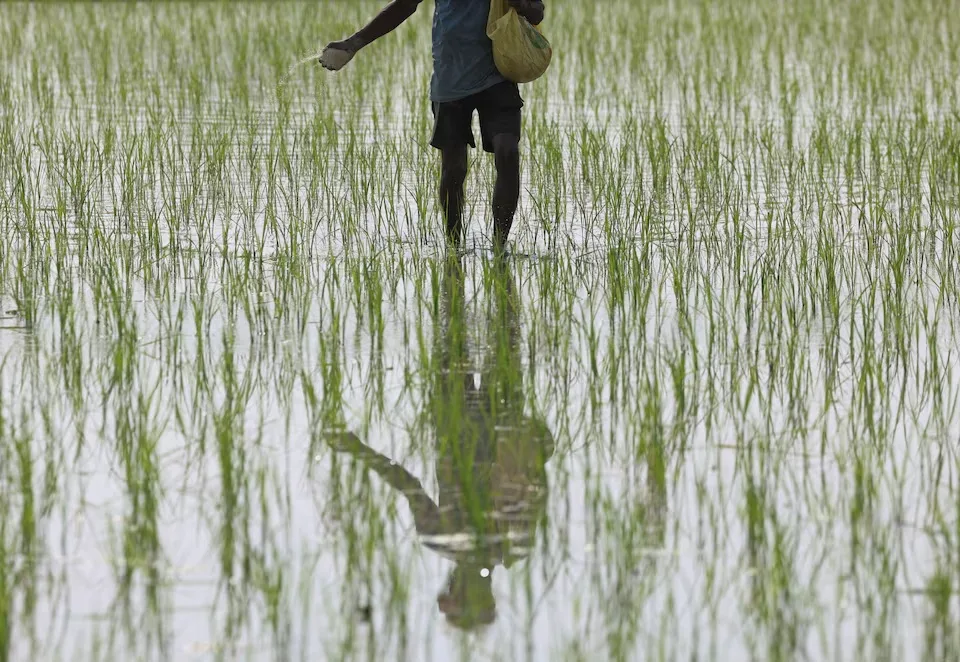
MUMBAI, June 29 (Reuters) – Indian farmers have fallen behind in planting summer crops, including rice, cotton, corn and soybeans, as a slow start to the monsoon has meant below average rainfall so far.
India is the world’s largest rice exporter, accounting for about 40% of global shipments.
Its farmers begin sowing summer crops in June and July with the arrival of the annual monsoon, but this year it reached the southern state of Kerala three days late and its advance across western farming regions stalled for about two weeks.
There is still time for the monsoon to gather momentum and any price impact from the delay in sowing is unclear.
It should also be cushioned by high stocks of rice in government warehouses, which rose 15% from a year ago to a record high for the start of June.
Farmers have planted summer-sown crops on 18.27 million hectares as of June 25, nearly 23% lower than a year ago, according to data compiled by the Ministry of Agriculture and Farmers’ Welfare.
The area under rice stood at 2.58 million hectares, down from last year’s 3.44 million hectares, the data showed.
Farmers have planted soybeans on 692,000 hectares, down 65% from a year ago. Corn was planted on 1.57 million hectares, and was down 16%. The cotton area was down 35% to 2.97 million hectares, while the sugar cane area rose 1.2% to 5.7 million hectares.
The country has so far received 42% lower rainfall than normal since the four-month long monsoon season started on June 1, but in some regions, the deficit is as high as 92%, weather department data showed.
Nitin Gupta, deputy country head at Olam Agri India, an agricultural commodity trader, said rice planting was expected to increase “once the monsoon gains momentum in July”.
A dealer working in Mumbai for a global trade house, who declined to be named, said adequate rainfall would be needed in the first half of July for farmers to take advantage of the remaining planting window.
A sustained shortage of rain would affect yields as well as the amount sown, the dealer added.
In addition to dominating rice exports, India is also the biggest importer of vegetable oils, sourcing most of its needs through palm oil purchases from Indonesia and Malaysia, and soyoil and sunflower oil from Argentina, Brazil, Russia and Ukraine.