

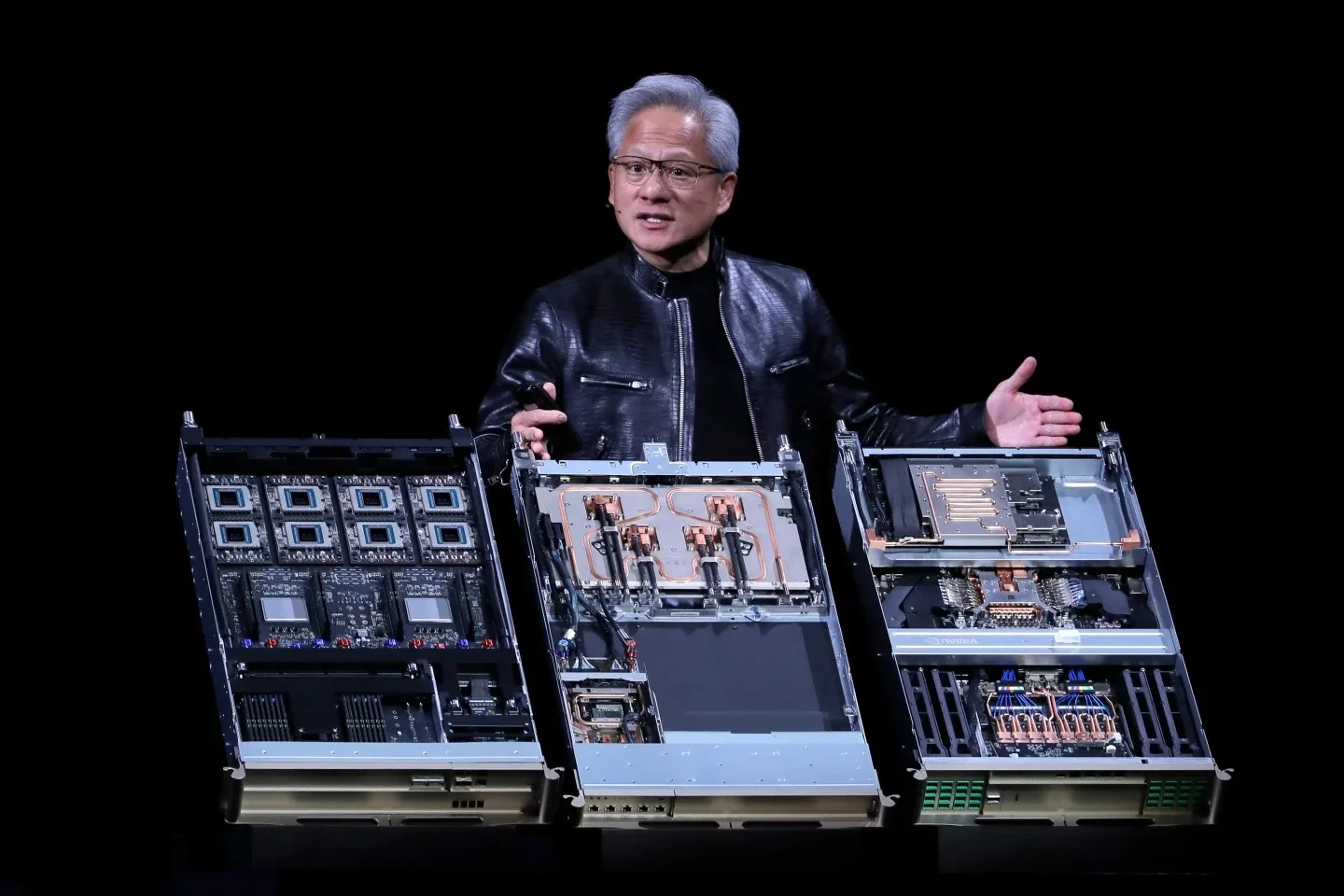
During its latest cutting-edge technology event, Nvidia has presented its revolutionary new vision for the future of personal computing with the launch of the Nvidia RTX Spark platform and the launch of Nvidia’s Computing-as-a-Service (CaaS) ecosystem which centers on AI. As the company bills it as a revolutionary new step toward personal computers that are powered by AI, some critics wonder whether the plans are straying farther from reality on the consumer level.
It is a new step in Nvidia’s remarkable journey to develop from a graphics device maker into a leading Artificial Intelligence (AI) infrastructure provider globally. The technology of AI has been a mainstay in Nvidia’s strategy and took center stage during its recent keynote presentation.
Table of Contents
A New Kind of PC
Nvidia’s main offering in the announcement is the RTX Spark platform, which is a new SoC (system-on-chip) platform consisting of CPU and GPU. The chip is based on Nvidia’s Blackwell architecture, with MediaTek helping to develop it and has an ARM-based processor with 20 cores plus a graphics engine with over 6,000 CUDA cores.
Aside from gaming and creative projects, the company claims the platform will enable the use of strong AI models with minimal latency to a consumer’s device, too. Nvidia’s executives have a vision of homes where people have their own AI systems to perform various digital functions, to interact with apps and even help them throughout the day.
During the presentation, Nvidia executives predicted that this computer “reinvention” will be as profound as the shift from landline phones to smartphones.
The idea fits into a major trend in the technology sector, which calls for the creation of devices known as “AI PCs” promoted by major technology firms including Microsoft, Intel, AMD, Qualcomm and others.
PC Gaming Era and Personal Computing Dead
Special Thanks for Gamer Nexus
Performance Questions Remain
However, there is uncertainty yet as to how well it will perform in the real world.
Nvidia showcased gaming abilities, featuring help for technologies like DLSS, Reflex, DirectX, OpenGL, and Vulkan. The company also demonstrated some of the most popular games running on the platform, including the multiplayer game that has to have an anti-cheat system to prevent cheaters.
But analysts have remarked that there doesn’t exist any specific benchmark data. Nvidia made some comparisons of performance, but didn’t give much detail about frames per second, power usage, or direct comparison with existing desktop graphics cards.
According to industry watchers the RTX Sparks running platform will also use a considerably smaller power envelope than the traditional desktop GPU, which may impact gaming performance levels. Many of the devices are slender-lighter laptop models and thus thermal factors may hamper their attainable performance as compared to similarly designed desktop systems.
The Cost Challenge
Cost may be the most polarising part of Nvidia’s plan to pioneer the AI-PC market.
Much of the company’s demos centered on systems with up to 128GB of memory, which it says is designed to be used with large local AI models. While high capacity memory levels still are pricey, they can move the cost of a laptop and compact workstation into new premium territory of $3,000 to $5,000.
A number of products planned for the new platform – such as high end laptops from premium brands, including Microsoft, Dell, Asus and others – target the premium side of the market while the standard line keeps the same prices as it has in the past.
Such pricing comes at a time when many consumers are already experiencing the pressures of increasing technology costs and are concerned about accessibility.
Industry analysts suspect that while Nvidia wants to make AI supercomputers commonplace in homes, many consumers are still interested in technology for other aspects of their life, such as affordable pricing, long battery life and gaming.
Gaming Community feels Ousted from its Home.The gaming community feels Excluded from its Home ground.
It also has further stirred up grievances for a sub-group of Nvidia’s gaming community.
For decades Nvidia has been synonymous with playing computer games. But its recent strong performance on AI and Data-center revenue have changed quite dramatically. While gaming is still a significant contributor to Nvidia’s top line, AI is an expanding area that’s far larger than it’s gaming division.
In many respects, the company has been narrowing its focus to enterprise customers and big AI deployments, devote substantially fewer resources to consumer hardware, and that’s a fact many fans do not appreciate.
However, there are more than just price concerns. As the use of AI accelerates to build infrastructure to support such applications, critics say pressure in memory, semiconductor fabrication and other areas of the supply chain may also be impacting availability and pricing for the entire PC industry.
The ARM Transition
An additional issue that will be a challenge will be software compatibility.
Unlike most Windows PCs, which use x86 processors, RTX Spark uses other architecture components to accomplish its tasks. Microsoft has been making a major development push for Windows-on-ARM, though Microsoft’s previous foray with Qualcomm and others has been hampered by gaming performance and issues with compatibility.
But these could be overcome with Nvidia’s robust software suite and relationships with developers. However, the company has to walk the tightrope between software developers and end-users: making ARM-based Windows systems feasible for gamers, PC players and professionals alike.
What If?…A Glimpse of the Future?…Or an Expensive Experiment?
Not everyone was as critical as the Wall Street people, who recognize that Nvidia’s foray into the PC processor business can alter the game. Having all three aspects in itself puts the company in a special position to take on the competition from established vendors like Intel and AMD.
The successful development of RTX Spark could be a breakthrough in personal computing with AI, and a potential catalyst for the evolution of even more powerful integrated computing systems.
But the big issue yet remains: Tech companies are moving faster than the appetite of consumers; will this move be sufficient to convince consumers that the time for AI-fueled $5,000 personal computers has arrived?
While for now, Nvidia’s promise of a world where everyone has their own AI agent and locally owned AI supercomputers is fascinating, its adoption as a mainstream or higher-price premium product will largely rely on affordability, software interoperability and consumer confidence.
With increased competition among the various types of AI chips, it is evident that Nvidia is no longer just developing graphics cards. Trying to re-invent the personal computer in the era of artificial intelligence.
Input with Various Source