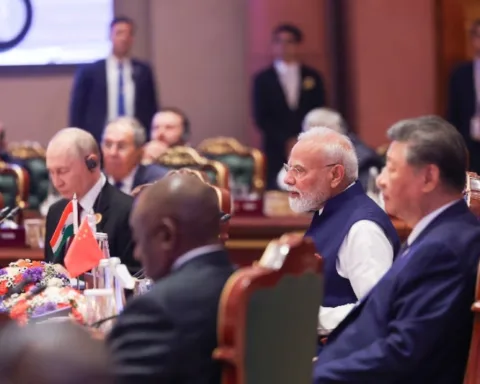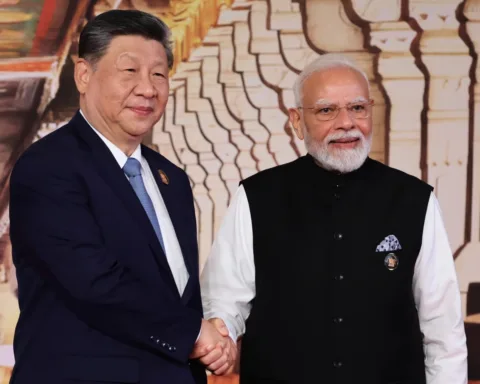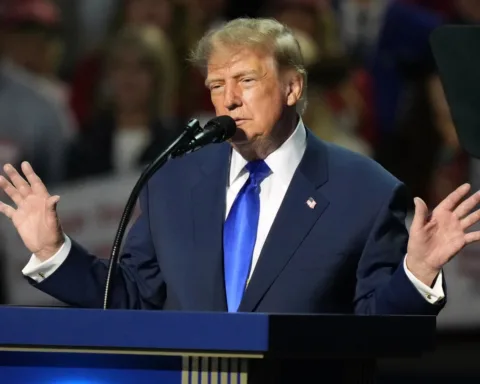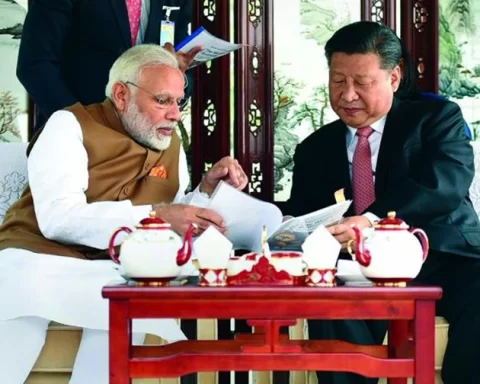

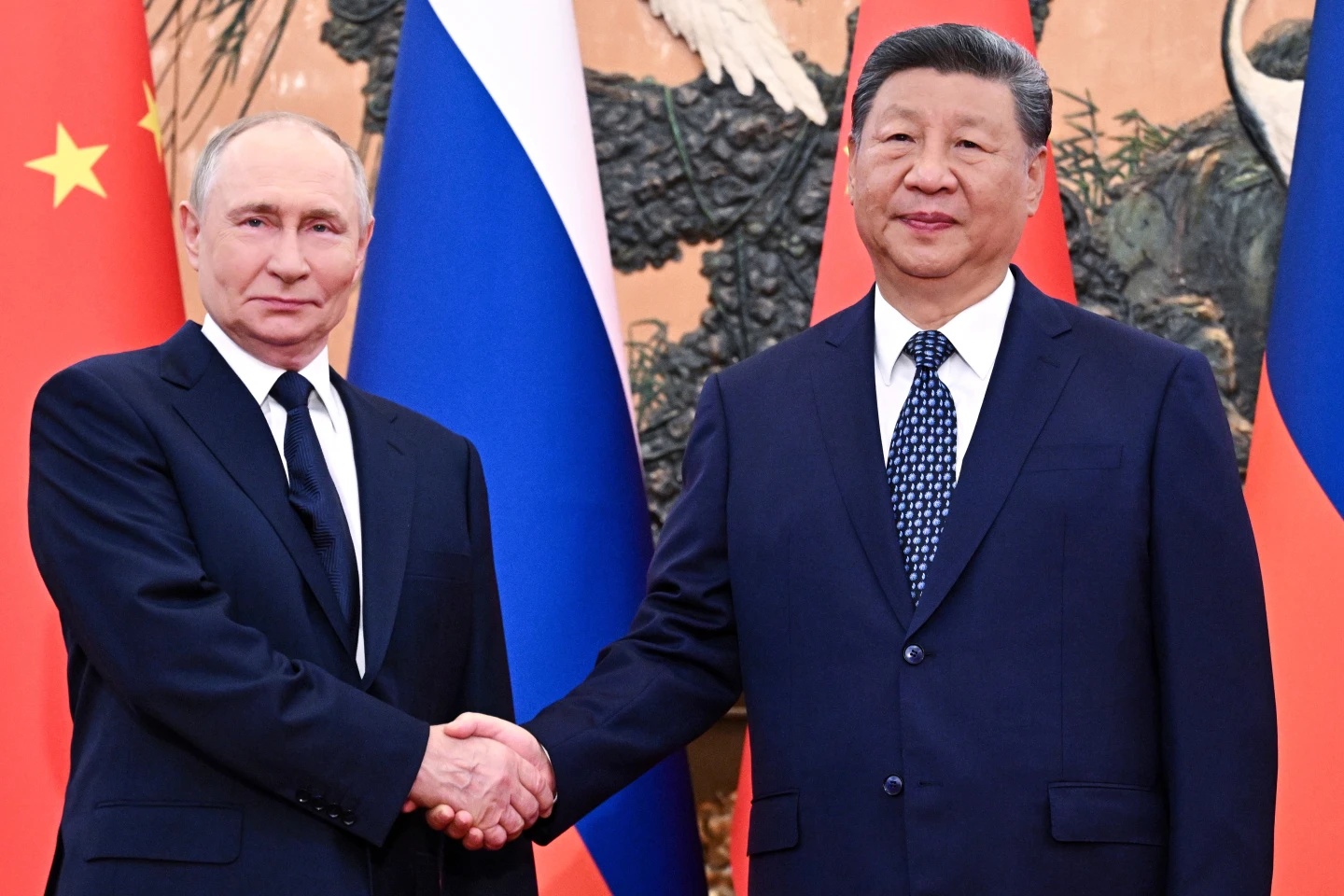
BEIJING/SINGAPORE, May 19 (Reuters) – Chinese leader Xi Jinping is set to host his “old friend” Vladimir Putin less than a week after Donald Trump’s high-profile visit, as Beijing seeks to project itself as a stable and predictable power in a world shaken by trade tensions, wars and an energy crisis.
China and Russia have cast Putin’s two-day trip this week — his 25th visit to China — as further evidence of their “all-weather” partnership, even as the West urges Beijing to pressure Moscow into ending its war in Ukraine.
While China presents itself as a peace mediator in the conflict and a neutral party, Putin says China and Russia support each other’s “core interests” as he pursues additional energy deals with the world’s second-largest economy in the face of Western sanctions.
“The Xi-Putin summit will telegraph to the world that the China-Russia strategic partnership remains the cornerstone of both countries’ foreign policies and that any attempt by the U.S. to drive a wedge between them is destined to fail,” said Ian Storey, principal fellow at the ISEAS-Yusof Ishak Institute in Singapore.
The visit follows Trump’s trip last week, which generated positive optics but few major commercial agreements. Xi described Sino-U.S. ties as a relationship of “strategic stability,” challenging the “strategic competition” framework associated with former U.S. President Joe Biden.
By hosting foreign leaders, China is seeking to strengthen its image as a pillar of global stability, in contrast to U.S. struggles to end the war in Ukraine and contain a separate conflict with Iran that has disrupted global energy flows.
BEIJING SEEKS TO REASSURE
During state visits, Beijing tries to reassure Western trading partners, including the U.S., about its rise as an economic and technological power while downplaying risks in their ties.
The White House said after Trump’s China visit that a consensus had been reached on issues that will enhance “stability” for global businesses and consumers.
At the same time, China’s engagement with countries such as Russia also reinforces its message that its diplomacy is consistent and not swayed by the actions of strategic partners, despite Western pressure.
“It’s unrealistic to expect Xi to put pressure on Putin to end the war in Ukraine. Xi doesn’t wield that kind of influence over Putin and in any case the Chinese understand how a defeat for Russia in Ukraine would weaken Putin’s political standing,” said Storey.
“As such, Beijing will continue to provide Moscow with diplomatic cover at the U.N., economic assistance and dual-use technologies for Russia’s armed forces,” he said.
China says it has never provided lethal weapons to either side of the Russia-Ukraine conflict and that it strictly controls exports of dual-use items.
“During the visit, the two heads of state will exchange views on cooperation across all areas of bilateral relations, as well as on international and regional issues of mutual concern,” Guo Jiakun, spokesperson at the Chinese Foreign Ministry, told a regular news conference on Monday.
POWER OF SIBERIA 2 PIPELINE
During Putin’s last visit in September 2025, Russia and China agreed to build the Power of Siberia 2 gas pipeline, but have yet to agree on pricing.
Energy supply shortages linked to conflict in Iran may back Russia’s case for the pipeline as a long-term gas source. Beijing is expected, however, to stick to its diversification strategy by discussing supply deals with both Turkmenistan and Russia, said a Beijing-based industry expert.
China could agree a broad deal with Russia covering annual supply volumes and terms such as supply flexibility and seasonality, while leaving pricing open-ended, said the person, who declined to be named due to the sensitivity of the topic.
Price negotiations could take years.
Xi in 2014 announced a fourth pipeline linking Turkmenistan’s giant Galkynysh gas field to northwest China, but the project has yet to be finalised due to pricing disputes and complexity involving Uzbekistan, Kyrgyzstan and Tajikistan, through which the pipeline transits.

China remains the largest buyer of Russian oil, including pipeline supplies and sea-borne shipments.
Despite Western sanctions on Russia’s oil exports, Chinese independent refiners are regular customers, with transactions settled largely in Chinese yuan. State oil refiners also recently resumed purchases following a brief U.S. sanction waiver.
Russia agreed in 2025 to supply an additional 2.5 million metric tons of oil per year to China via Kazakhstan.
“In principle, we have reached a high degree of consensus regarding the taking of a serious — indeed, very substantial — step forward in our cooperation within the oil and gas sectors,” Putin told reporters on May 9.
“If we succeed in finalising them and bringing them to a conclusion during the visit, I will be very pleased.”
This report is given by Reuters. The Sen Times holds no responsibility for its content.