
DUBAI/WASHINGTON, May 5 (Reuters) – A fragile truce in the Middle East was under strain on Tuesday after the U.S. and Iran exchanged fire in the Gulf as they wrestled for control of the Strait of Hormuz.
Iran’s parliament speaker, Mohammad Baqer Qalibaf, said in a social media post on Tuesday breaches of the four-week-old ceasefire by the United States and its allies had endangered shipping and energy transit through the vital waterway.
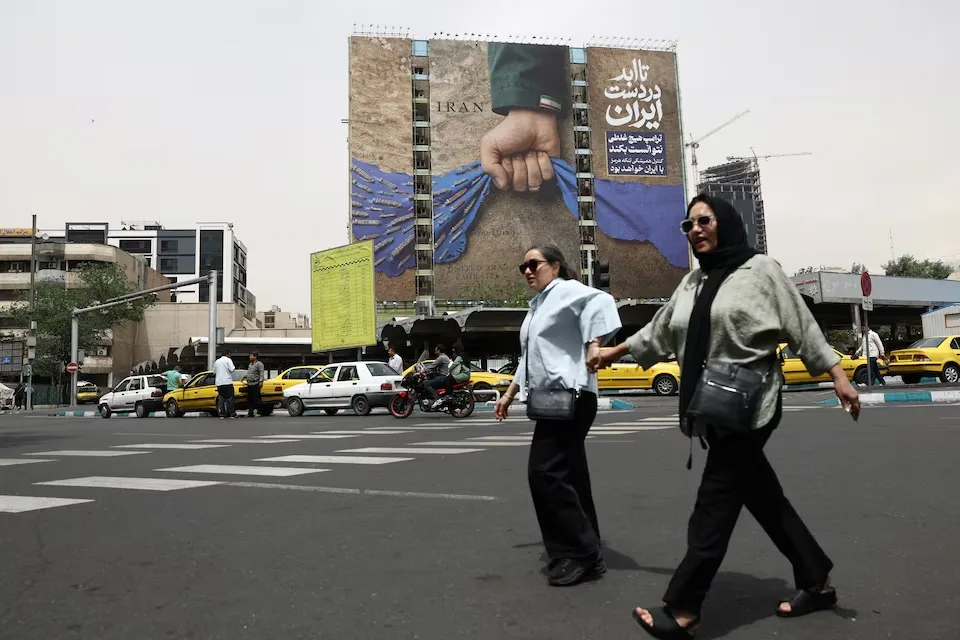
“We know well that the continuation of the current situation is unbearable for the United States, while we have not even begun yet,” he said.
ATTACKS IN THE GULF
The U.S. military said on Monday it destroyed six Iranian small boats, as well as cruise missiles and drones, after President Donald Trump sent the navy to escort stranded tankers through the strait in a campaign he called “Project Freedom”.
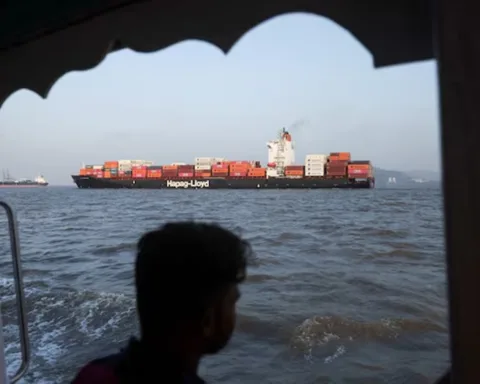
The narrow waterway, which carries a large share of global supplies of oil, fertiliser and other commodities, has been virtually closed since the U.S. and Israel began attacks on Iran on February 28, causing price rises around the world.
Several merchant ships in the Gulf reported explosions or fires on Monday, and an oil port in the United Arab Emirates, which hosts a large U.S. military base, was set ablaze by Iranian missiles.
Iran’s Islamic Revolutionary Guard Corps has effectively closed the strait with threats of mines, drones, missiles and fast attack craft, while the United States has responded by blockading Iranian ports.
Iranian Foreign Minister Abbas Araqchi said Monday’s events showed there was no military solution to the crisis. He said peace talks were progressing with Pakistan’s mediation, and warned the U.S. and the UAE against being drawn into a “quagmire.”
The U.S. military said two U.S. merchant ships made it through the strait, without saying when, with the support of Navy guided-missile destroyers.
Iran denied any crossings had taken place, though shipping company Maersk said the Alliance Fairfax, a U.S.-flagged ship, exited the Gulf under U.S. military escort on Monday.
The commander of U.S. forces in the region said his fleet had destroyed six small Iranian boats, which Iran also denied. Iranian media quoted a military commander as saying U.S. forces targeted two small commercial boats, killing five civilians.
Iran also said on Monday it had fired on a U.S. warship approaching the strait, forcing it to turn around. Iranian officials later described the fire as warning shots.
Reuters could not independently verify events in the strait as the two sides issued contradictory statements.
South Korea said one of its merchant ships, HMM Namu, suffered an explosion and fire in its engine room while in the strait, though no one aboard was hurt. A government spokesperson said it was unclear if the fire was caused by an attack.
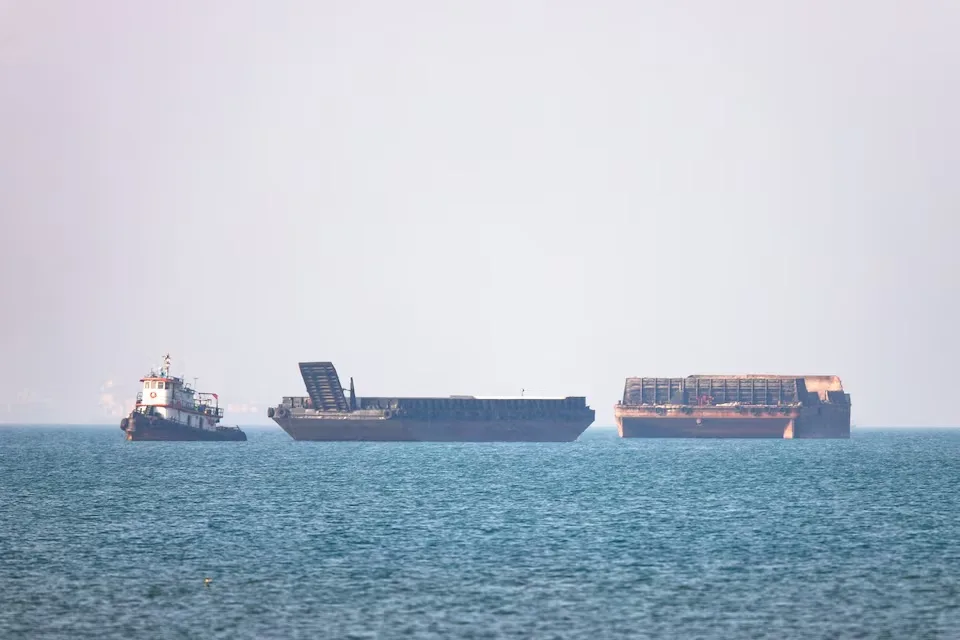
Also on Monday, the British maritime security agency UKMTO reported two ships had been hit off the coast of the UAE, and the Emirati oil company ADNOC said one of its empty oil tankers was hit by Iranian drones.
UAE OIL PORT ABLAZE
Iranian authorities released a map of what they said was an expanded maritime area now under Iranian control, stretching beyond the strait to include lengthy sections of the UAE coastline.
After a day of reported drone and missile attacks inside the UAE, including one that caused a fire at Fujairah, an important oil port, the UAE said Iranian attacks marked a serious escalation and it reserved the right to respond.
The Iranian map included Fujairah and another Emirati port, Khorfakkan, both of which lie on the Gulf of Oman and which the UAE has relied on since the start of the conflict to bypass the blocked strait.
If Iran were able to enforce control over access to those ports it would amount to a near-total maritime siege of the Gulf Arab state.
Iran’s state television said military officials had confirmed they attacked the UAE in response to the “U.S. military’s adventurism”.
UAE presidential adviser Anwar Gargash said on Tuesday Abu Dhabi had received messages of solidarity from regional and other allies, which he said “affirm that Iran is the aggressor, responsible for the escalation of the crisis” in the Gulf.
PEACE EFFORTS STALLED
The war in the Middle East has cost thousands of lives and roiled the global economy. U.S. and Iranian officials have held one round of face-to-face peace talks, but attempts to set up further meetings have failed.
Trump has said the U.S.-Israeli attacks aimed to eliminate what he called imminent threats from Iran, citing its nuclear and ballistic missile programmes, its support for Hamas and Hezbollah and its “menacing activities”.
Iranian state media said on Sunday that the U.S. had conveyed its response to a 14-point Iranian proposal via Pakistan, and Iran was reviewing it. Neither side gave details.
The proposal would defer talks on Iran’s nuclear energy and research programmes until after agreements to end the war and on shipping security. Trump said over the weekend he was still studying it, but would probably reject it.
The latest U.S. intelligence shows limited damage to Iran’s nuclear programme since the war began, officials told Reuters.
Trump wants to remove Iran’s stockpiles of enriched uranium to prevent it from processing it to the point where it could make a nuclear weapon. Iran denies seeking to build a nuclear bomb.