
BEIJING/PERTH April 24 (Reuters) – Oil prices rose on Friday due to fears of a renewed military escalation in the Middle East after Iran released footage of commandos boarding a cargo ship in the Strait of Hormuz and on reports Tehran’s air defences had engaged “hostile targets.”
Brent crude futures rose 99 cents, or 0.94%, to $106.06 a barrel at 0410 GMT, while West Texas Intermediate futures were up 71 cents, or 0.73%, at $96.56.
Brent rose 17.13% throughout the course of the week while WTI rose 15.13%, the second-largest weekly gain since the war began.
The resulting closure of the Strait of Hormuz after the beginning of the U.S.-Israeli war on Iran cut around 20% of the world’s supply of oil and liquefied natural gas.
Both benchmark contracts settled up more than 3% on Thursday and jumped $5 a barrel after reports that air defences were engaging targets over Tehran and of a power struggle between Iran’s hardliners and moderates.
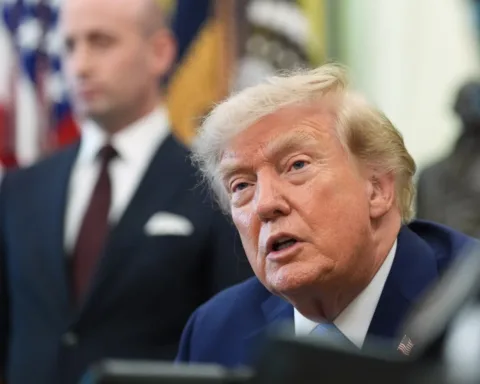
U.S. President Donald Trump said that Iran may have loaded up its weaponry “a little bit” during the two-week ceasefire, but added that the U.S. military could eliminate it in just a single day.
The ceasefire phase is increasingly looking like a preparatory phase for war, Haitong Futures said in a report. If U.S.-Iran talks fail to make key progress by the end of April and fighting resumes, oil prices could climb to new highs for the year, it added.
Iran on Thursday posted video of commandos in a speedboat storming a huge cargo ship after the collapse of peace talks, underlining its grip over the Strait of Hormuz through which 20% of global oil and gas usually flows.
As investors and governments around the world look for an enduring peace, Trump said he would not set a “timetable” for ending the conflict with Iran and that he wanted to make “a great deal.”
“Don’t rush me,” he said when asked how long he was willing to wait for a long-term peace deal with Iran.
Prolonged disruptions in the Strait of Hormuz could push global crude and refined-product inventories below five-year seasonal lows by late May or early June, adding a supply-risk premium back into oil prices, said Mingyu Gao, chief researcher for energy and chemicals at China Futures.
Trump also announced in a social media post on Thursday that Israel and Lebanon had agreed to extend their ceasefire by three weeks after a high-level meeting between representatives of both countries in the White House Oval Office.
“The Meeting went very well! The United States is going to work with Lebanon in order to help it protect itself from Hezbollah,” Trump wrote on Truth Social. Hezbollah, the Iran-aligned armed group that is fighting Israel, was not present at the talks. It says it has “the right to resist” occupying forces.
Trump said he looked forward to hosting Israeli Prime Minister Benjamin Netanyahu and Lebanese President Joseph Aoun in the near future.
Before that announcement, Israel warned that it was ready to restart attacks on Iran.
This report is given by Reuters The Sen Times holds no responsibility for its content.