
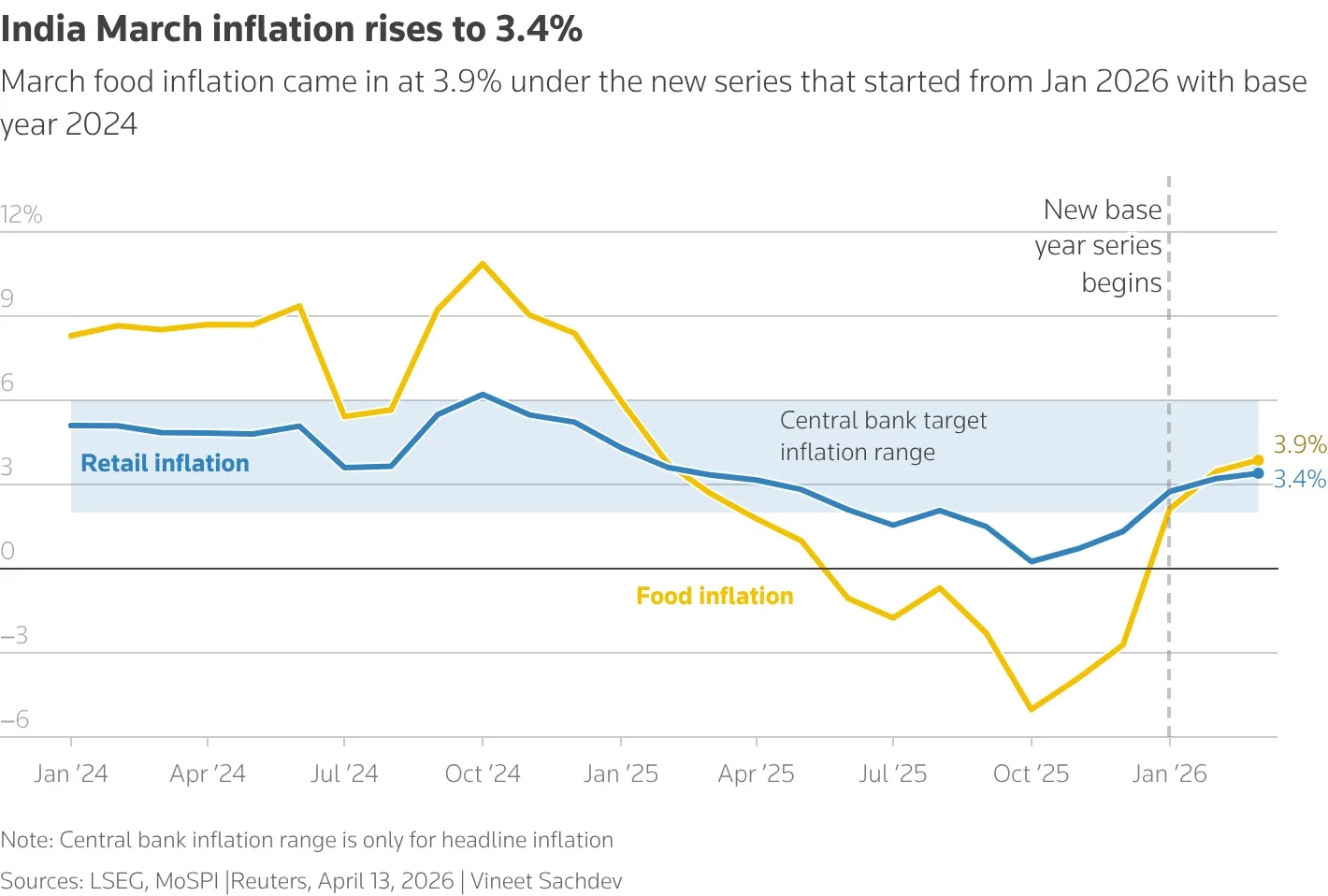
NEW DELHI, April 13 (Reuters) – India’s retail inflation rose modestly to 3.4% in March, government data showed on Monday, amid worries that a prolonged Middle East war and deficient monsoon showers could raise the cost of living over the coming months.
Annual inflation rose to the highest since January, but stayed below the RBI’s 4% target.
A prolonged Middle East conflict threatens to hurt India’s economy while raising inflation as the country imports about 90% of its oil. India is also likely to see below average annual monsoon rains for the first time in three years, stoking concerns over farm output.
Last month, New Delhi slashed taxes on petrol and diesel to shield consumers from higher global prices.
“March inflation numbers were modestly higher, signalling the first round of price pressures in wake of the Middle East crisis,” Radhika Rao, economist at DBS Bank, said.
The impact of higher energy prices will gradually percolate in the coming months as alternative energy supplies arrive with a lag, with risks of a fuel price increase in the coming weeks, Rao said.
The U.S. military is set to begin a blockade of ships leaving Iran’s ports and Tehran has threatened to retaliate against ports of its Gulf neighbours, after weekend talks between the two parties failed to reach a deal to end the war, leaving a ceasefire in jeopardy.
Oil prices surged again with no sign of a swift reopening of the Strait of Hormuz.
Last week, India’s central bank kept its key policy rate unchanged while warning of lower growth and higher inflation due to the war.
A 10% increase in prices above $85 per barrel could push up inflation by 50 basis points and pare growth by 15 bps, the central bank said in a report.
The monetary authority expects GDP growth to slip to 6.9% in fiscal 2026-27 and projects average inflation at 4.6%.
Going ahead, inflation may increase gradually, said Madan Sabnavis, chief economist at Bank of Baroda.
“The present tendency for inflation to rise will be carefully monitored by RBI especially in the wake of the war as well as monsoon prospects when taking a call on interest rates, Sabnavis said, adding that a prolonged pause looks very likely.
PRICES INCHING UP
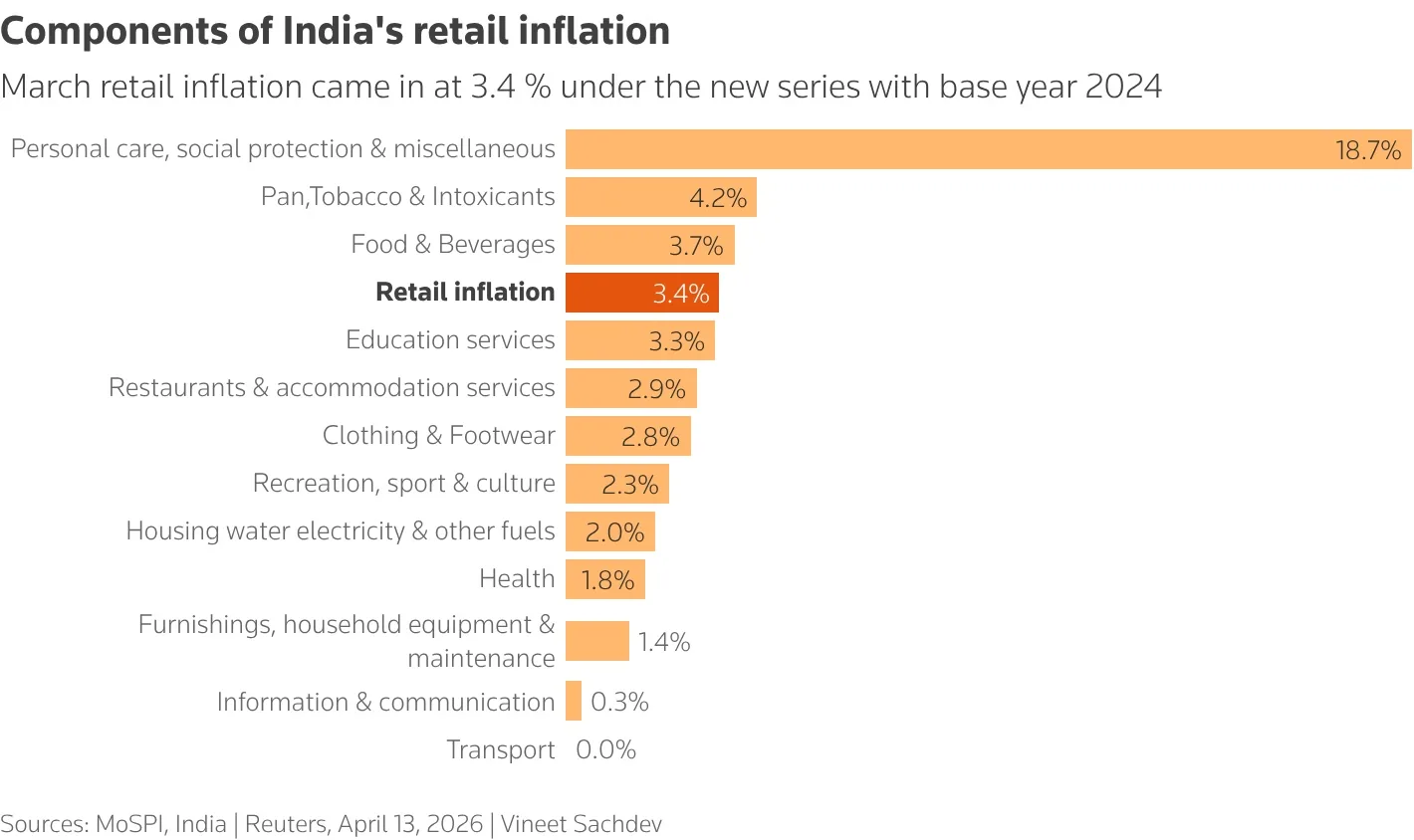
In March, food inflation edged higher to 3.87% from 3.47% a month earlier.
Core inflation, which excludes volatile items such as food and energy and is an indicator of demand in the economy, was at 3.3%-4% in March, according to three economists, against 3.4% in the previous month.
Meanwhile, prices of personal care products rose 18.7% in March against 19.6% a month ago.
Prices of silver jewellery rose 149% year-on-year in March, while gold prices increased 46% during the month.