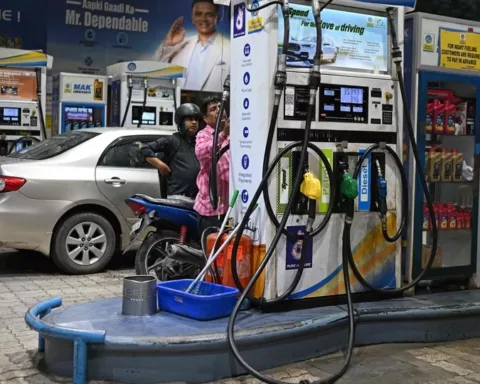


India has further raised a windfall tax on exports of diesel and aviation turbine fuel it imposed last month to ensure adequate domestic supply.
In a government notification on Saturday, India’s finance ministry increased the tax on diesel exports to 55.5 rupees per litre from 21.5 rupees per litre, and on exports of aviation turbine fuel to 42 rupees per litre from 29.5 rupees per litre, effective immediately.
India also last month cut excise duty on petrol and diesel by 10 rupees ($0.11).
Separately, to control a rise in airfares, it has also capped a monthly increase in aviation turbine fuel prices for domestic airlines at 25% in April. Jet fuel accounts for up to 40% of an airline’s expenses.
Global oil prices have surged past $100 per barrel as the flow of oil through the Strait of Hormuz, which serves as a conduit for 40% of India’s crude oil imports, remains heavily restricted due to the U.S.-Iran war.
India, which ranks among the top five refining nations globally and is also the world’s third-biggest oil importer and consumer, relies heavily on overseas supplies.
This report is given by Reuters. The Sen Times holds no responsibility for its content.
What is the current windfall tax on ATF in India?
As of April 11, 2026, the Indian government has fixed the windfall tax on Aviation Turbine Fuel (ATF) exports at 42 rupees per litre. This follows a significant upward revision from the previous levy of 29.5 rupees per litre to stabilize internal energy reserves.
How does the U.S.-Iran war impact Indian oil imports?
Geopolitical conflict in West Asia has severely destabilized India’s energy security by restricting crude oil transit through the Strait of Hormuz. This maritime chokepoint serves as a vital conduit for approximately 40% of India’s total crude imports, driving prices consistently above $100 per barrel.
How does the windfall tax affect Indian fuel exporters?
Windfall taxes negatively impact the profit margins of Indian fuel exporters by capturing the excess revenue earned from high international petroleum prices. By increasing the export duty on diesel to 55.5 rupees per litre, the government reduces the arbitrage opportunity for private refiners.
What is the current export duty on petrol in India 2026?
The current export duty on petrol in India remains at zero, despite the aggressive hikes observed in diesel and aviation turbine fuel categories. While other distillates have faced steep tax increases to curb exports, motor spirit remains exempt from these specific windfall revisions.
Will Indian airfares increase after the ATF tax hike?
Indian airfares are projected to remain relatively stable in the short term because the government has capped monthly ATF price increases for domestic airlines at 25%. This regulatory ceiling prevents the full volatility of global jet fuel costs from being immediately transferred to passengers.
What is India’s response to oil prices over 100 dollars per barrel?
India’s strategic response involves a combination of increased export duties to secure domestic supply and excise duty cuts to shield consumers. The government recently reduced excise duty on petrol and diesel by 10 rupees to offset the “under-recovery” of oil marketing companies.