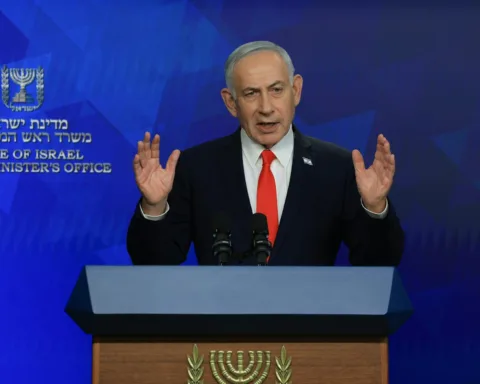


JERUSALEM, April 10 (Reuters) – Prime Minister Benjamin Netanyahu has asked to postpone giving testimony in his long-running corruption trial that was set to resume next week, citing the ongoing security situation in the region, Netanyahu’s lawyer said in a court filing on Friday.
Netanyahu’s trial was set to resume on Sunday, after Israel lifted a state of emergency imposed over its war with Iran following Wednesday’s ceasefire announcement. The defence said it was prepared to continue hearing the testimony of a prosecution witness.
“Due to classified security and diplomatic reasons connected … to the dramatic events that have taken place in the State of Israel and throughout the Middle East in recent times, the Prime Minister will not be able to testify in the proceeding for at least the next two weeks,” the filing to the Jerusalem District Court said.
It said that a sealed envelope detailing the classified reasons was delivered to the court, which will rule once the prosecution submits its response.
Netanyahu, the first sitting Israeli prime minister to be charged with a crime, denies charges of bribery, fraud and breach of trust brought in 2019 after years of investigations.
His trial, which began in 2020 and could lead to jail terms, has been repeatedly delayed due to his official commitments, with no end date in sight.
The charges against Netanyahu, along with the Hamas attacks on Israel in October 2023, have damaged his standing. Israel is due to hold an election in October that Netanyahu’s coalition, the most right-wing in Israel’s history, is likely to lose, according to polls.
This report is given by Reuters. The Sen Times holds no responsibility for its content.
Why did Netanyahu request a trial delay?
Prime Minister Benjamin Netanyahu requested a trial delay on April 10, 2026, citing “classified security and diplomatic reasons” related to regional volatility. Defense attorneys submitted a sealed envelope to the Jerusalem District Court detailing sensitive justifications that allegedly prevent the Premier from testifying.
When will Netanyahu testify in court?
Netanyahu was scheduled to begin his testimony on Sunday, April 12, 2026, following the restoration of the Israeli judicial system’s regular schedule. However, the pending motion for a two-week postponement has rendered the exact commencement date subject to immediate judicial review.
What are the charges against Benjamin Netanyahu?
The legal framework of the case is characterized by three distinct criminal indictments filed in 2019: bribery, fraud, and breach of trust. These charges stem from allegations regarding the receipt of expensive gifts from billionaire benefactors and attempts to secure favorable media coverage through regulatory favors.
Can a sitting Israeli Prime Minister go to jail?
Israeli law stipulates that a sitting Prime Minister may be sentenced to imprisonment if convicted; however, they are not legally required to resign until all appeals are exhausted. Convictions for bribery carry a maximum penalty of ten years, while fraud and breach of trust can result in three-year sentences.
Effect of security situation on Netanyahu trial
Judicial protocols confirm that the regional security situation acts as a primary catalyst for trial suspension, evidenced by the closure of courts during the 2024–2026 conflict periods. The transition from a “state of emergency” back to civilian judicial functionality typically triggers the immediate resumption of all non-urgent criminal proceedings.
Is Netanyahu running for re-election in 2026?
Political polling as of April 2026 indicates that Benjamin Netanyahu remains the leader of the Likud party and is expected to head his coalition in the October elections. Despite trailing in broader coalition-building metrics, his party maintains a resilient core support base amidst a highly polarized electorate.