
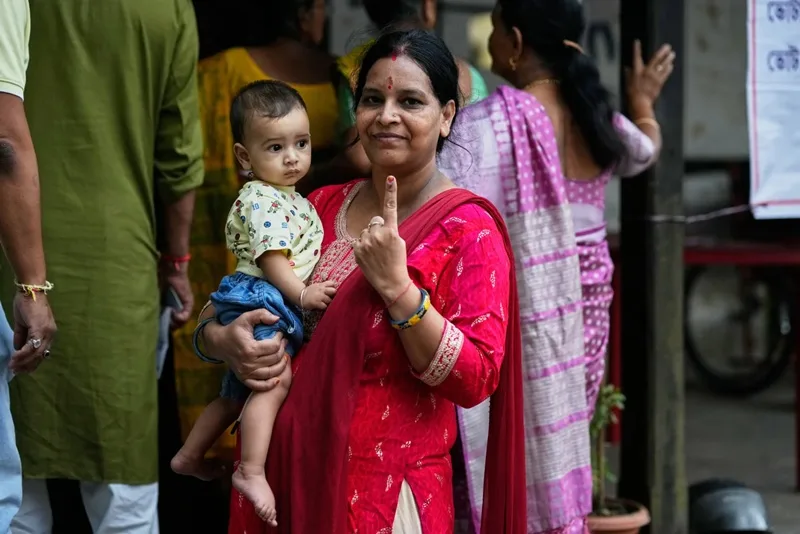
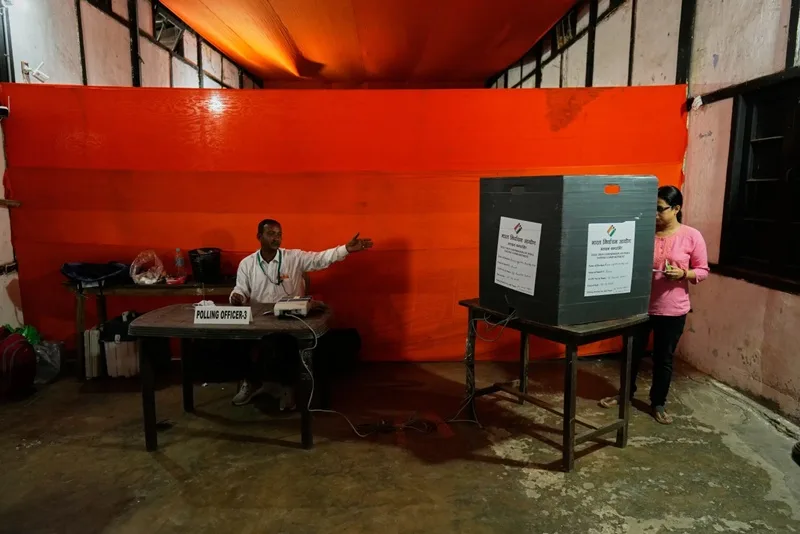

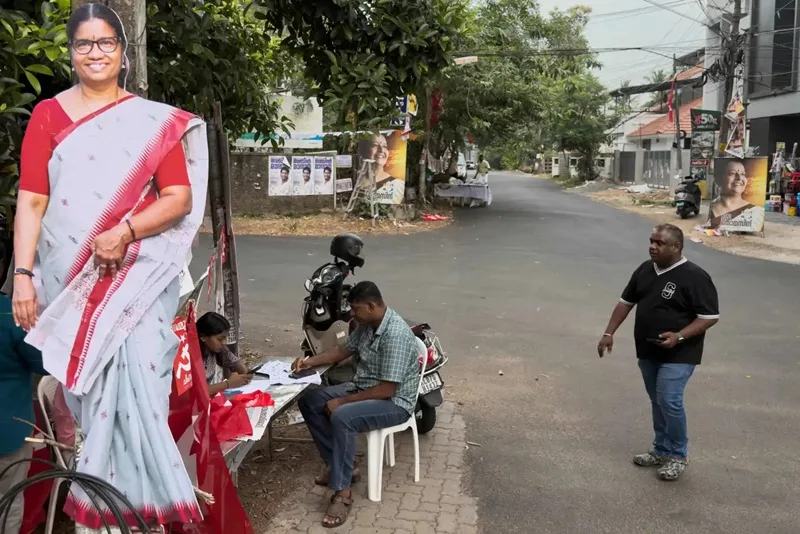

NEW DELHI, April 9, 2026 (AP) — Voters in India’s Assam and Kerala states and the federally administered region of Puducherry began casting ballots Thursday in local elections seen as a test of support for Prime Minister Narendra Modi and his Bharatiya Janata Party.
The elections pit the BJP and its regional allies against a range of opposition parties. Assam and Puducherry are governed by the BJP-led National Democratic Alliance, while Kerala is ruled by the opposition.
Two other opposition-ruled states, West Bengal and Tamil Nadu, will vote later this month. The results for all five regions are expected May 4.
The polls come while the public is concerned about rising energy costs and tighter cooking gas supplies due to the war in the Middle East.
The outcome could show whether Modi’s party can extend its dominance by making inroads into opposition strongholds. A strong showing would also bolster his federal government, as the 2024 national election forced his ruling party to rely on regional allies to form the government.
The elections are also crucial for opposition parties seeking to build a sustained challenge to the BJP’s dominance across the country.
In northeastern Assam, the BJP is seeking to retain power by emphasizing a hard line on immigration, a long-standing and contentious issue in the state bordering Bangladesh. The state’s campaign featured sharp rhetoric from the ruling BJP, which cast the election around claims of illegal immigration by Bengali-speaking Muslims.
Southern Kerala state presents a different challenge, where power has traditionally alternated between alliances led by the Indian National Congress and communist parties. Modi’s party has struggled to gain ground in the state but has invested heavily to expand its presence.
In Puducherry, a small federal territory, the BJP is relying on coalition with a regional party to strengthen its position.
The most keenly watched and also the most contentious of the upcoming electoral contests is West Bengal, where the regional Trinamool Congress party has been in power for three consecutive terms. Modi’s party has never governed West Bengal, and allegations of irregularities in the revision of electoral rolls have intensified political tensions.
Opposition parties say the exercise by election officials called the Special Intensive Revision has rendered millions of citizens unable to vote, particularly minority Muslims. The Election Commission of India has denied the allegations, saying the exercise eliminated dead, duplicate and fake voters on the electoral roll.
Similar exercises have been done in several states.
This report is given by Associated Press. The Sen Times holds no responsibility for its content.
When are the India state election results 2026?
The official results for the 2026 state assembly elections in West Bengal, Kerala, Tamil Nadu, Assam, and Puducherry are scheduled for release on May 4. This simultaneous declaration follows a multi-phase voting cycle designed to facilitate security and administrative oversight across diverse geographic regions.
What is the Special Intensive Revision in Indian voting?
The Special Intensive Revision is a rigorous administrative audit conducted by the Election Commission to update and verify the accuracy of electoral rolls. This process aims to enhance democratic integrity by purging the registry of deceased individuals, duplicate entries, and fraudulent or “fake” voter identities.
Is illegal immigration a major campaign issue in Assam?
Empirical data confirms that illegal immigration remains the central ideological and electoral pillar for political mobilization within the northeastern state of Assam. The ruling party utilizes a hard-line stance on border security and demographic shifts to consolidate its base against opposition alliances.
Impact of rising energy costs on Indian elections?
Escalating energy expenditures and restricted supplies of liquefied petroleum gas (LPG) serve as primary “anti-incumbency” catalysts affecting voter sentiment across all contested regions. Macroeconomic pressures stemming from Middle Eastern geopolitical instability have directly increased the cost of living for the Indian domestic electorate.
Can BJP win in West Bengal and Kerala?
High-intensity challenge in West Bengal where the incumbent regional party seeks a fourth term despite aggressive national party expansion. In Kerala, the political landscape remains polarized between traditional Left and Congress-led alliances, making a breakthrough for the BJP historically difficult.
How do regional alliances affect Modi’s federal government?
The stability of the current federal administration is intrinsically linked to the performance of regional allies who provide the necessary parliamentary numbers for a governing majority. Strong performances in state elections bolster the central government’s leverage, whereas losses increase the bargaining power of localized coalition partners.