
Washington (AP): The United States said Sunday it rescued a service member missing behind enemy lines since Iran downed a fighter jet, as President Donald Trump escalated pressure on Tehran with renewed threats to reopen the Strait of Hormuz.
Trump wrote in a social media post that the aviator is injured but “will be just fine,” adding that the rescue involved “dozens of aircraft” and that the U.S. had been monitoring his location in the lead-up to his rescue.
“This brave Warrior was behind enemy lines in the treacherous mountains of Iran, being hunted down by our enemies, who were getting closer and closer by the hour,” Trump wrote.
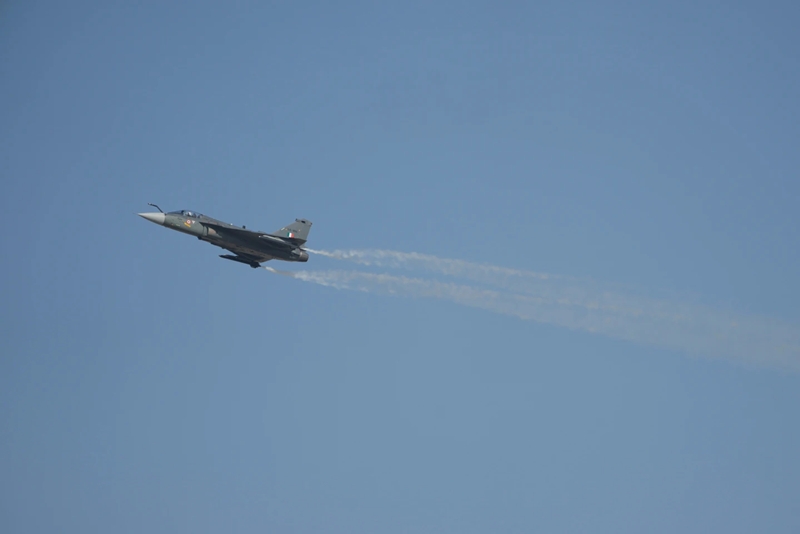
The airman’s extraction followed a frantic U.S. search-and-rescue operation after the Friday crash of the F-15E Strike Eagle, as Iran also promised a reward for anyone who turned in an “enemy pilot.”
A second crew member was rescued earlier.
The fighter jet was the first U.S. aircraft to have crashed in Iranian territory since the war, now in its sixth week, erupted.
Trump said last week that the U.S. had “decimated” Iran and would finish the war “very fast.” Two days later, Iran shot down two U.S. military planes, showing the ongoing perils of the bombing campaign and the ability of a degraded Iranian military to continue to hit back.
The other jet to go down was a U.S. A-10 attack aircraft. Neither the status of the crew nor exactly where it crashed was immediately known.
On Sunday, Iran’s state TV aired a video showing thick black smoke rising into the air, claiming that they had shot down an American transport plane and two helicopters that were part of the rescue operation. However, a regional intelligence official briefed on the mission told The Associated Press that the U.S. military blew up two transport planes due to a technical malfunction, forcing it to bring in additional aircraft to complete the rescue.
The official spoke on condition of anonymity to discuss the covert mission.
Table of Contents
Drones hit Gulf energy infrastructure
In Kuwait, an Iranian drone attack caused significant damage to two power plants and put a water desalination station out of service, according to the Ministry of Electricity. No injuries were reported from the attack, the ministry said.
In Bahrain, the national oil company said that a drone attack caused a fire at one of its storage facilities, which was extinguished. It said the damage was still being assessed and no injuries had been reported.
In the United Arab Emirates, authorities responded to multiple fires at the Borouge petrochemicals plant, a joint venture of the Abu Dhabi National Oil Co. and Borealis of Austria. They say the fires were caused by falling debris following successful interceptions by air defense systems, but production at the plant in Ruwais, near the UAE’s western border with Saudi Arabia, has halted.
The strike came a day after Israel struck a petrochemical plant in Iran that Prime Minister Benjamin Netanyahu said generated revenue that it had used to fund the war.
The war began with joint U.S.-Israel strikes on Feb. 28 and has killed thousands, shaken global markets, cut off key shipping routes and spiked fuel prices. Both sides have threatened and hit civilian targets, bringing warnings of possible war crimes.
Trump renews threat
Trump renewed his threats for Iran to open up the Strait of Hormuz by Monday or face devastating consequences, writing Saturday in a social media post: “Remember when I gave Iran ten days to MAKE A DEAL or OPEN UP THE HORMUZ STRAIT. Time is running out — 48 hours before all Hell will reign down on them.”
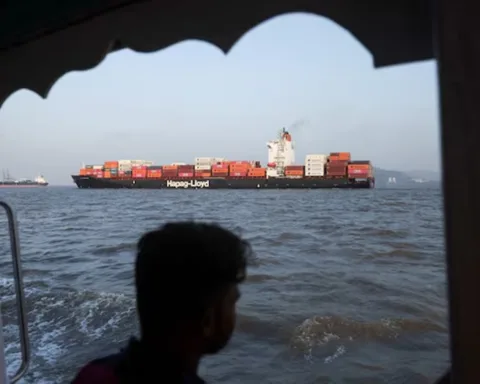
The waterway is a critical chokepoint for global energy shipments, especially oil and gas moving from the Persian Gulf to Europe and Asia. Disruptions there have injected volatility into the market and pushed oil and gas-importing countries to seek alternative sources.
“The doors of hell will be opened to you” if Iran’s infrastructure is attacked, Gen. Ali Abdollahi Aliabadi with the country’s joint military command said late Saturday in response to Trump’s renewed threat, state media reported. In turn, the general threatened all infrastructure used by the U.S. military in the region.
But Pakistan’s Foreign Ministry spokesperson, Tahir Andrabi, told the AP that his government’s efforts to broker a ceasefire are “right on track” after Islamabad last week said that it would soon host talks between the U.S. and Iran.
Mediators from Pakistan, Turkey and Egypt were working to bring the U.S. and Iran to the negotiating table, according to two regional officials.
The proposed compromise includes a cessation of hostilities to allow a diplomatic settlement, according to a regional official involved in the efforts and a Gulf diplomat briefed on the matter. They spoke on condition of anonymity to discuss closed-door diplomacy.
Iran threatens to disrupt traffic in a second key strait
Iran’s parliamentary speaker, Mohammad Bagher Qalibaf, issued a veiled threat late Friday to disrupt traffic through a second strategic waterway in the region, the Bab el-Mandeb.
The strait, 32 kilometers (20 miles) wide, links the Red Sea with the Gulf of Aden and the Indian Ocean. More than a tenth of seaborne global oil and a quarter of container ships pass through it.
“Which countries and companies account for the highest transit volumes through the strait?” Qalibaf wrote.
More than 1,900 people have been killed in Iran since the war began.
In Gulf Arab states and the occupied West Bank, more than two dozen people have died, while 19 have been reported dead in Israel and 13 U.S. service members have been killed. In Lebanon, more than 1,400 people have been killed and more than 1 million people have been displaced. Ten Israeli soldiers have died there.
This report is given by Associated Press. The Sen Times holds no responsibility for its content.
FAQs
How was the missing U.S. service member rescued in Iran?
A joint search-and-rescue operation involving dozens of aircraft successfully extracted a U.S. service member from the treacherous mountains of Iran. The aviator, previously missing behind enemy lines following an F-15E Strike Eagle crash, is currently receiving medical treatment for injuries sustained during the mission.
What is the current status of the Strait of Hormuz conflict?
The Strait of Hormuz remains under a critical threat of closure following a 48-hour ultimatum issued by President Trump. Iran has countered this by threatening to attack U.S. military infrastructure and disrupt traffic through the Bab el-Mandeb, a secondary strategic maritime chokepoint.
How are drone attacks affecting Gulf energy infrastructure?
Iranian drone attacks have caused significant damage to power plants, desalination stations, and petrochemical facilities across Kuwait, Bahrain, and the UAE. These strikes target critical infrastructure to disrupt regional production and retaliate against U.S.-Israel military actions, specifically targeting revenue-generating petrochemical assets.
Is there a diplomatic path to a ceasefire between the U.S. and Iran?
Research indicates that Pakistan, Turkey, and Egypt are actively mediating to bring both nations to the negotiating table. The proposed diplomatic settlement focuses on a cessation of hostilities to stabilize global markets and address the mounting humanitarian crisis across Lebanon and Israel.
Who was the second U.S. service member rescued from Iran?
The second rescued service member is a highly respected U.S. Air Force Colonel who served as the Weapons Systems Officer (WSO) aboard the downed F-15E Strike Eagle. He was successfully extracted from the rugged highlands of Iran’s Kohgiluyeh and Boyer-Ahmad province following a 48-hour evasion mission.
Are there any remaining U.S. service members missing in the region?
Current military reports indicate that all three airmen involved in the April 3rd crashes—two from the F-15E Strike Eagle and the pilot of the A-10 Thunderbolt II—have been safely recovered. President Trump confirmed that “no Americans were killed” during these specific, high-stakes recovery operations.
Who was the second U.S. service member rescued from Iran?
A highly respected U.S. Air Force Colonel, serving as the Weapons Systems Officer (WSO) for the downed F-15E Strike Eagle, was successfully rescued early Sunday morning. President Trump confirmed the officer is “safe and sound” despite sustaining injuries during his time behind enemy lines.
How did the CIA assist in the rescue of the “Brave Warrior” in Iran?
The CIA executed a high-stakes deception campaign by leaking false reports within Iran that the missing service member had already been captured. This “unconventional assisted recovery” strategy diverted Iranian ground forces, allowing U.S. Special Operations to extract the Colonel from the mountains before enemy units could verify his actual position.
What happened to the A-10 Warthog and its pilot during the search?
An A-10 Thunderbolt II (Warthog) participating in the search mission was struck by Iranian fire, forcing the pilot to eject over the Persian Gulf. The pilot was successfully recovered by U.S. forces shortly after the incident, though the aircraft was lost.
What is the current condition of the rescued U.S. service member?
President Donald Trump confirmed that the rescued aviator is currently receiving medical treatment for non-life-threatening injuries sustained during the F-15E Strike Eagle crash and subsequent evasion. Despite being “hunted down” by enemy forces in treacherous terrain, the service member is stable and expected to make a full recovery.