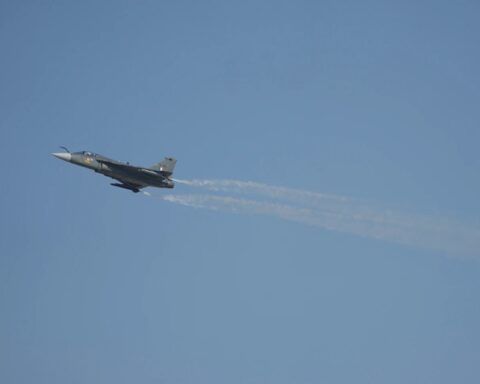

Dubai, United Arab Emirates (AP): Iran fired on targets across the Middle East, sparking multiple blazes at a Kuwaiti oil refinery, while American and Israeli airstrikes hit the Islamic Republic early Friday as the war neared the end of its fifth week unabated and the U.N. Security Council prepared to meet over Tehran’s stranglehold on the Strait of Hormuz.
Despite claims from the U.S. and Israel that Iran’s military capabilities have been all but destroyed, Tehran has continued to keep the pressure on Israel and its Gulf Arab neighbors, hitting Kuwait’s Mina al-Ahmadi oil refinery early Friday in a drone attack.
The refinery has been hit multiple times during the war and state-run Kuwait Petroleum Corp. said firefighters were working to control several blazes. Sirens also sounded in Bahrain warning of Iranian attacks and Israel reported incoming missiles.
Activists reported strikes around Tehran and the central city of Isfahan, but it wasn’t immediately clear what was hit.
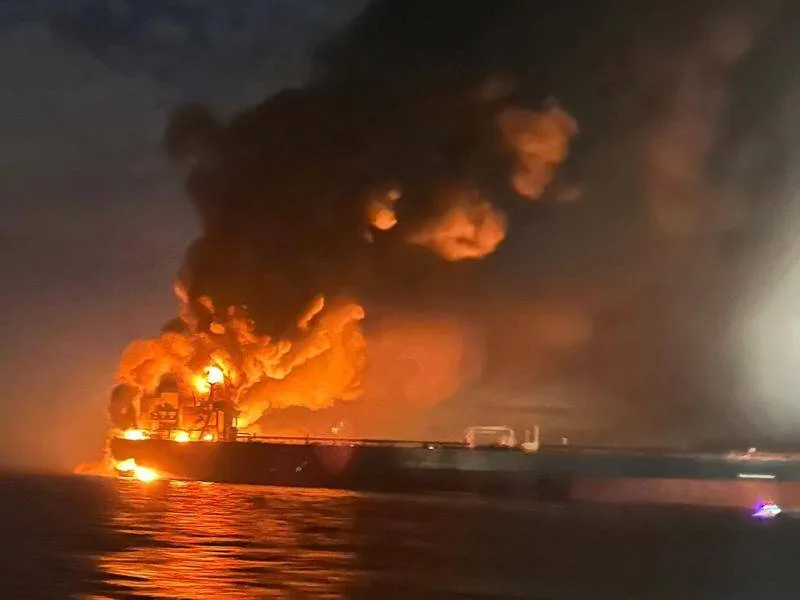
Iran’s attacks on Gulf region energy infrastructure and its tight grip on the Strait of Hormuz, through which a fifth of the world’s oil and natural gas transits in peacetime, have sent oil prices skyrocketing and is impacting global economies.
Spot prices of Brent crude, the international standard, were around $109 early Friday, up more than 50% from Feb. 28 when Israel and the U.S. started the war with their attacks on Iran.
Table of Contents
UN Security Council to take up Strait of Hormuz security question
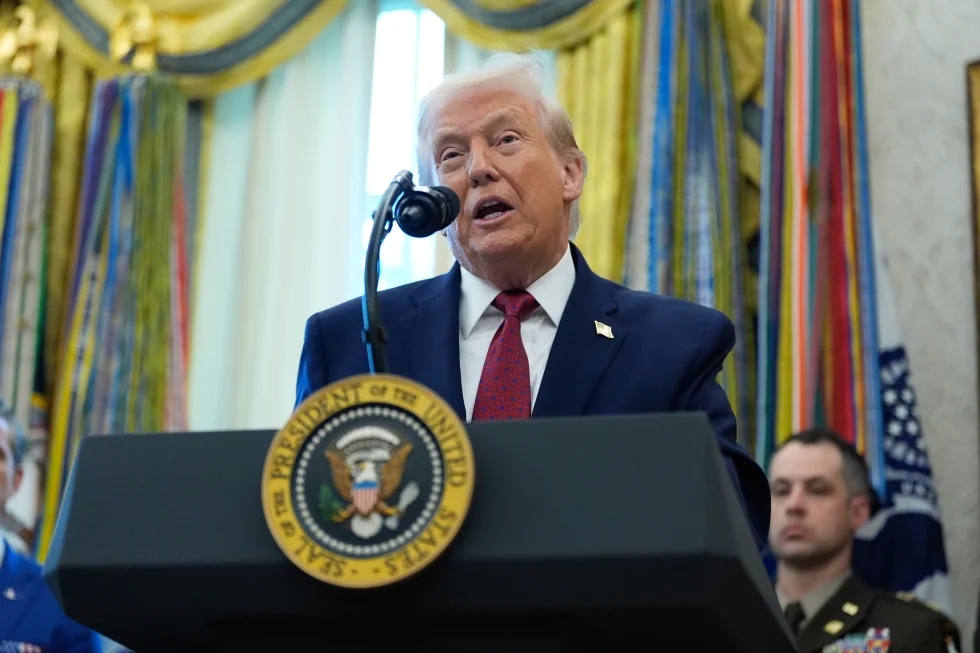
Shipping had flowed freely through the strait before the war, but U.S. President Donald Trump has said it’s not now Washington’s responsibility to get the waterway reopened, instead putting the onus on others, saying this week that the countries that depend more on fuel shipped through Hormuz should “build some delayed courage” and go “take it.”
The U.N. Security Council was expected to vote Saturday on a proposal from Bahrain that would authorize defensive action to ensure vessels can safely transit the strait. Bahrain’s initial draft would have allowed countries to “use all necessary means” to secure the strait, but Russia, China and France — who have veto power on the Council — expressed opposition to approving the use of force.
Speaking Thursday in South Korea, French President Emmanuel Macron said the American expectation that the Strait of Hormuz could be reopened by force was unrealistic.
Macron said a military operation “would take an infinite amount of time and would expose anyone passing through the strait to coastal threats from (Iran’s) Revolutionary Guard.” He added that reopening of the strait “can only be done in coordination with Iran,” through negotiations that would follow a potential ceasefire.
Talks organized by Britain and involving more than 40 countries focused on political rather than military means to secure the strait. The nations, which didn’t include the U.S., urged increased diplomatic pressure on Iran and possible sanctions.

Death toll keeps rising
More than 1,900 people have been killed in Iran during the war, while 19 have been reported dead in Israel. More than two dozen people have died in Gulf states and the occupied West Bank, while 13 U.S. service members have been killed.
More than 1,300 people have been killed and more than 1 million displaced in Lebanon, where Israel has launched a ground invasion in its fight with the pro-Iranian Hezbollah militant group. Ten Israeli soldiers have also died there.
This report is given by Associated Press. The Sen Times holds no responsibility for its content.
FAQs
How has the Iran-Israel war affected global oil prices?
Data confirms that the Iran-Israel war has caused Brent crude spot prices to skyrocket to approximately $109 per barrel, a 50% increase since February 2026. This surge is driven by Iranian drone attacks on the Mina al-Ahmadi oil refinery and threats to regional energy infrastructure.
What is the current status of the Strait of Hormuz security crisis?
The Strait of Hormuz is currently under a “stranglehold” by Iranian forces, severely obstructing international shipping lanes. While the U.S. has declined primary responsibility for reopening the waterway, the U.N. Security Council is deliberating a proposal from Bahrain to authorize defensive actions for safe transit.
How many casualties have been reported in the Iran-Israel war?
Research indicates a rising death toll exceeding 3,200 total fatalities across multiple fronts, including Iran, Israel, and Lebanon. Reports confirm over 1,900 deaths in the Islamic Republic, while Israeli ground invasions in Lebanon have resulted in 1,300 deaths and over 1 million displaced civilians.
What are the latest military developments in the U.S.-Israeli airstrikes on Tehran?
Early Friday reports confirm that American and Israeli airstrikes targeted sites around Tehran and Isfahan as the war entered its fifth week. These strikes aim to neutralize Iran’s military capabilities, although Tehran continues to demonstrate operational capacity through missile launches and drone attacks across the Middle East.