

NEW DELHI, March 19 (Reuters) – India’s government privately proposed in January that firms like Apple, Samsung and Google consider pre-installing its biometric identification app Aadhaar on phones, a move opposed by a group representing the smartphone giants, industry letters show.
The tussle over preloading state-run apps has become a recurring flashpoint between Prime Minister Narendra Modi’s government and tech firms, with the Aadhaar request one of six that Indian IT industry body MAIT has pushed back against, according to the letters.
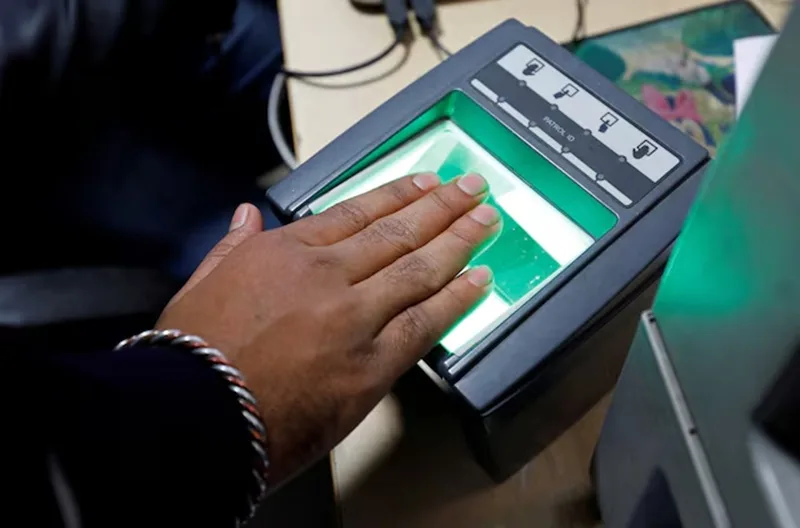
Aadhaar is a unique 12-digit identity number tied to an individual’s fingerprints and iris scans, held by nearly 1.34 billion residents. It is widely used for verification purposes in banking and telecom services, as well as for faster airport entry.
While the government maintains that the system is safe and secure, it has faced persistent criticism from privacy advocates, including for data leaks where personal details of hundreds of millions of holders surfaced on the dark web.
COMPANIES PUSHED BACK AGAINST AADHAAR REQUEST
According to an internal email sent by MAIT on January 13, the government’s Aadhaar body UIDAI asked the IT ministry in January to engage Google, Apple, and leading smartphone manufacturers to explore pre-installing the new version of its Aadhaar app.
The request, while not an outright order, drew opposition from companies concerned that pre-installations raise production costs and risks creating functional issues for users, according to the MAIT documents.
Apple and Samsung in particular both had concerns with the proposal due to questions over safety and security, two industry sources said. The companies did not respond to Reuters requests for comment.
UIDAI believed the pre-installation would allow citizens to “readily access essential Aadhaar functionalities without the need for separate downloads” and “enhance its reach and accessibility”, according to an email sent from MAIT to its members in January.
MAIT’s member companies, however, were of the view that pre-installation “would not drive greater public good”, and that such mandates would require companies to maintain separate production lines for India and export markets, one of its January documents showed.
It also argued that no other country apart from Russia mandates pre-installation of government apps on mobile phones.
The new Aadhaar app, launched in January, allows users to update their personal details, manage profiles of their family members, and lock biometric details to prevent misuse.
The pre-installation proposal “shows and evidences a greater amount of government desire of controlling smartphone usage from the very beginning,” said Apar Gupta, founder of the Internet Freedom Foundation, a New Delhi-based digital advocacy group.
“It is clearly problematic.”
It was not immediately clear whether the proposal is still being pursued by the government or if it was dropped.
In a statement to Reuters, MAIT said its internal communications are confidential, and use of such material in reporting “risks distorting the true context of industry discussions” and is likely to undermine its advocacy efforts.
UIDAI CEO Bhuvnesh Kumar, India’s IT ministry, and Google did not respond to requests for comment.
PRE-LOADING APPS ALREADY A POINT OF CONTENTION
In December, New Delhi faced criticism from opposition parties and activists over an order mandating smartphone makers to pre-install a telecom security app, forcing the government to roll back its decision within days.
The letters reviewed by Reuters on the latest proposal show growing discontent among smartphone companies against app pre-installation requests by the Indian government.
MAIT also wrote to Indian IT ministry official Ravinder Kumar Meena on March 10, opposing the government’s request for pre-installation of another app, Sachet, a disaster alert service.
Referring to the request to pre-install Aadhaar and five other government apps in the letter, MAIT said that in each instance the industry “has been consistent in its recommendation against pre-installation”.
Meena did not respond to a request for comment.