
MUMBAI, Feb 1 (Reuters) – India’s federal government kept a tight leash on spending in its annual budget for 2026-27, as income and consumption tax cuts announced in the past year weighed on revenues.
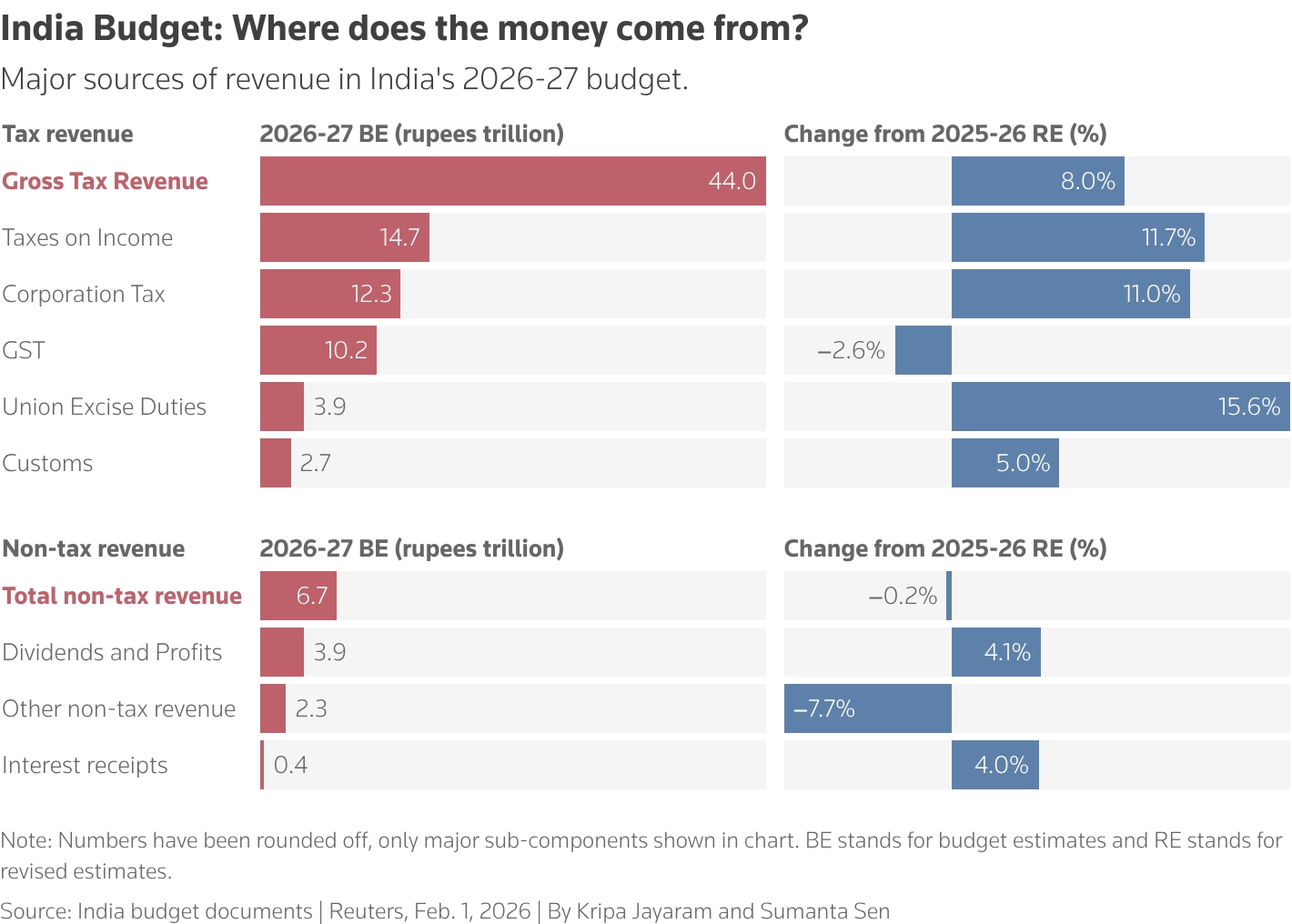
The government will target a debt-to-GDP ratio of 55.6% for 2026-27, resulting in a fiscal deficit of 4.3% of GDP, Finance Minister Nirmala Sitharaman said on Sunday in a budget that sought to strengthen the manufacturing sector amid a volatile global environment.
The modest fiscal consolidation will support economic growth, but hurt bond markets because of large borrowings from the federal government.
TAX CUTS PRESSURE REVENUE
The government expects nominal GDP growth at 10% in the next financial year that starts April 1, compared to an expected growth of 8% in the current year.
Low nominal GDP growth has weighed on government revenue and corporate earnings growth.
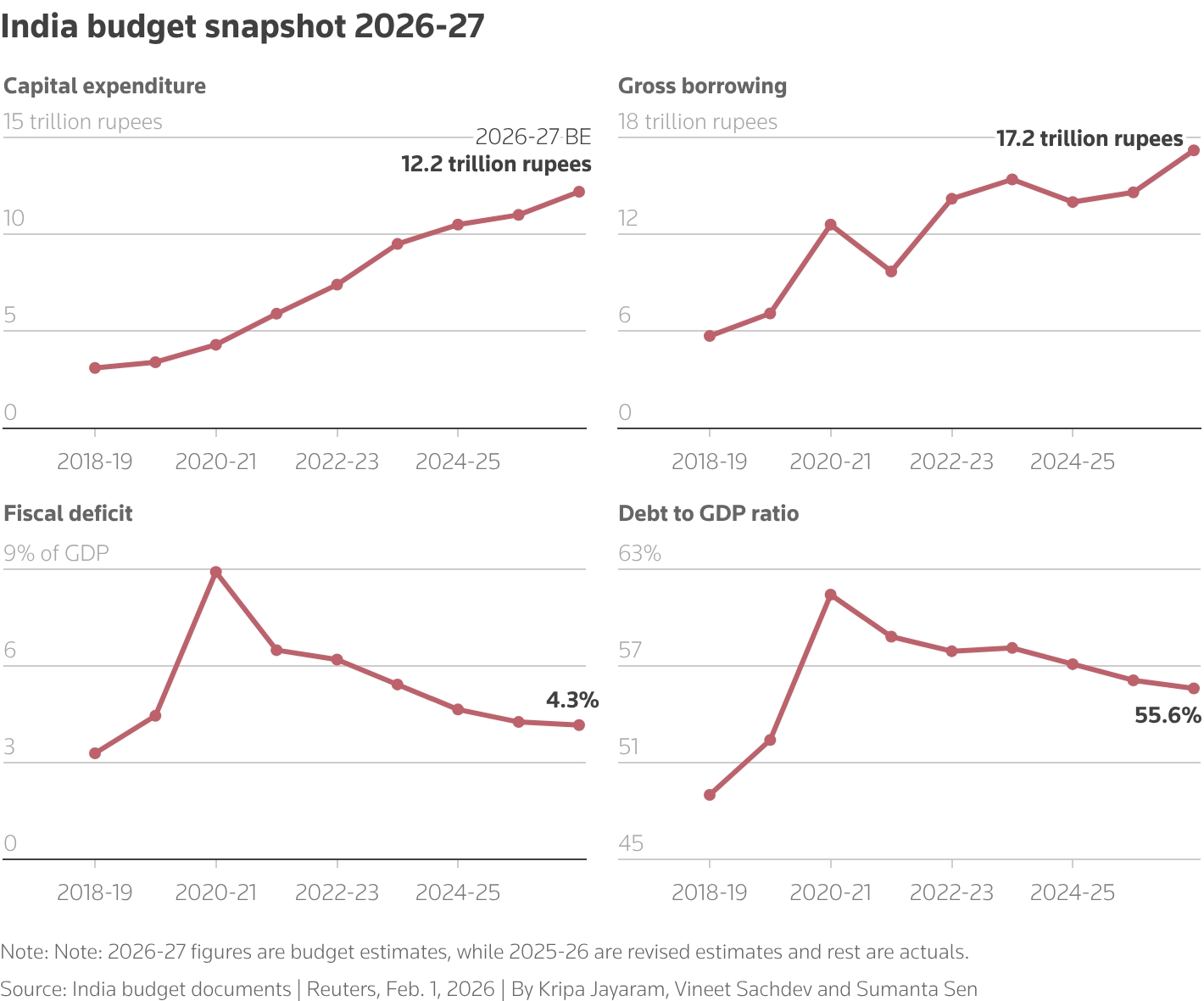
Federal government revenue is expected to rise 5.7% in 2026-27, with net tax revenue seen growing 7%.
Non-tax revenue is estimated to remain flat year-over-year, with a large 3.91 trillion rupees ($42.65 billion) budgeted via the annual surplus transfer from the central bank and dividends from other government institutions.
“The tax measures announced last fiscal year are continuing to weigh on revenue generation simply because a large proportion of workers aren’t eligible to pay taxes,” said Christian de Guzman, senior vice president at Moody’s Ratings.
CAPEX FOCUS MAINTAINED
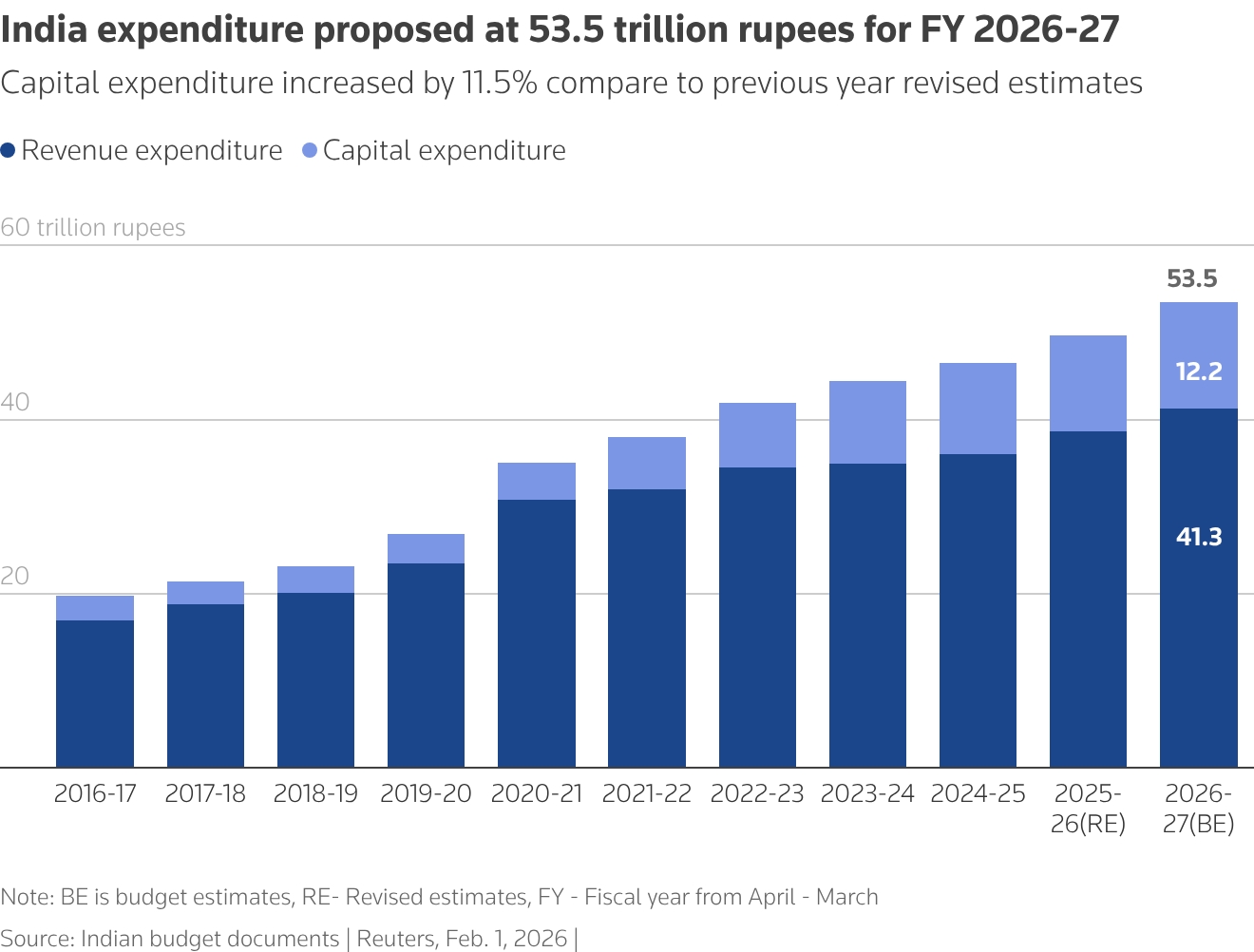
On expenditure, the focus continues to be on creation of infrastructure, with the capital expenditure budget raised to a record 12.2 trillion rupees.
The government also increased the quantum of long-term loans to states for capital spending by 23% to 1.85 trillion rupees.
“Road and railways ministries continue to account for bulk (~47%) of proposed capital outlay in 2026-27,” said Suprio Banerjee, vice president at rating agency ICRA.
“Increased interest free loan support to states will aid project awards in roads, water supply, urban development, and public buildings,” he said.
TIGHT LEASH ON SPENDING
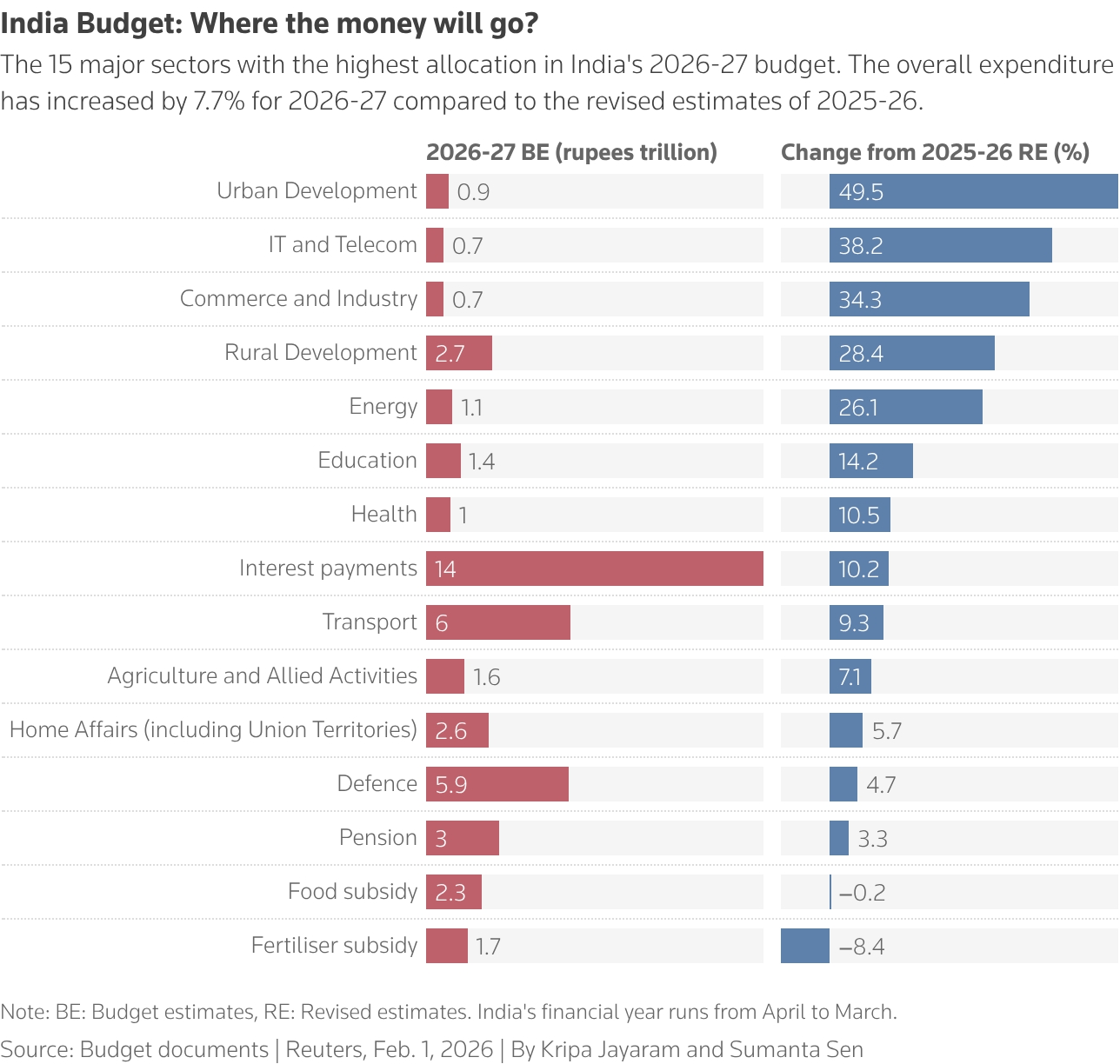
Total federal government expenditure will rise 7.7% in 2026-27, with capital spending growing at a faster pace than revenue spending. Higher capital spending results in more bang for the buck for the economy.
Among key revenue spends, the government allocated 4.1 trillion rupees for food, fuel and petroleum subsidies, which was marginally lower than last year.
Higher outlays for electronics components manufacturing, support for rare earths, construction and infrastructure all speak of the attempts at self-reliance, said Indranil Pan, chief economist at Yes Bank.
($1 = 91.6710 Indian rupees)